
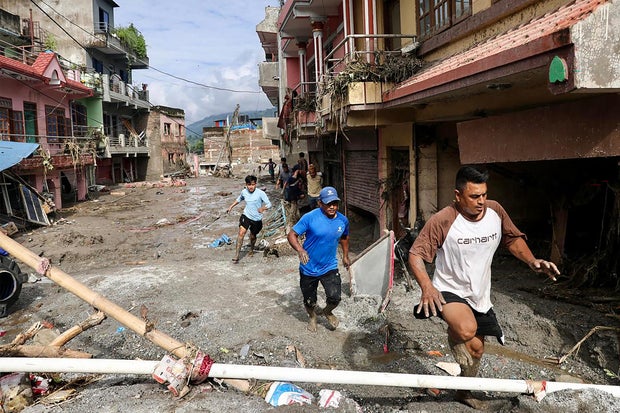
Rescue teams are actively searching for hundreds of individuals who went missing after devastating floods and mudslides struck communities along the Nepal-China border following a glacier collapse. The National Disaster Risk Reduction and Management Authority in Nepal reported that 826 people are missing, with the death toll reaching 165 on Thursday.
Nepalese authorities are concentrating efforts on severely impacted districts such as Nuwakot and Rasuwa. The Chinese state broadcaster, CCTV, reported 558 missing individuals in Tibet, including 260 foreigners. It stated that two villagers have been rescued, and at least three people had died by Thursday morning. Hikmat Singh Ayer from Nepal’s Tourism Board noted that 33 Americans are among the missing.
Devastating flash floods have obliterated villages, impacting homes, roads, bridges, and power plants. Videos from regional news and social media platforms show torrents of water destroying infrastructure. Drone footage captured in Nepal on Wednesday revealed the extent of damage, including destroyed roads and buildings buried in mud resembling cement.
When I reached Dhunge bazaar, in half an hour, the flood came and damaged all the market. People were preparing to go to office then,” commented resident Shoyam Rajbhandari.
Search and rescue operations have intensified. Helicopters from the army and private sectors have been deployed since the early morning. Brigadier General Raja Ram Basnet of the Nepalese army confirmed the rescue of more than 100 people, including evacuations from Trishuli hydropower facilities.
In Tibet, heavy mudslides have left areas around Gyirong Port covered in thick mud, disrupting roads and communication. CCTV highlighted a barrier lake emerging near the port, complicating rescue efforts. The Chinese military is deploying aircraft and specialized teams to the area.
Global reactions are being observed. U.S. Secretary of State Marco Rubio expressed solidarity with the Nepali people, offering humanitarian assistance. The U.S. Embassy extended condolences and announced a $500,000 grant for relief efforts. The Dalai Lama conveyed prayers and condolences to those affected by the tragedy.
The U.S. Geological Survey clarified initial reports of an earthquake, updating its findings to categorize the event as a glacial collapse. This determination was based on seismic data and satellite imagery.
Avalanches from glaciers were identified by climate experts as the probable cause of the flash floods in Nepal and Tibet. The abrupt rise of water levels in the Trishuli river underscored the flood’s severe intensity. Climate emergencies in the region, prompted by melting glaciers, are heightening risks.
The situation underscores the pressing threats posed by climate change. This marks the second flood in 14 months on the Lhende Khola river, highlighting the unstable Himalayan ice system’s threat to local populations and infrastructure. Last August, similar floods occurred due to high temperatures causing glacial overflow.
Research indicates accelerated glacier melting across the Hindu Kush Himalaya region, addressing a critical worldwide issue. The Himalayan range, home to some of the planet’s highest peaks, faces heightened vulnerability from weather extremes like monsoons and glacier melt, driven by climate change.