
Changes in Alabama’s Voting Process
Willie Dixon and Mary Gatson sat in the fellowship hall of Beulah Primitive Baptist Church in Lowndes County, Alabama. They were discussing the abrupt changes in the state’s voting districts as they awaited a Congressional town hall. Dixon remarked, “Create enough chaos, and people will give up and go home.”
Voters in parts of Alabama faced another trip to the polls this primary season. This followed a U.S. Supreme Court decision that dismantled a key section of the 1965 Voting Rights Act. The decision deemed it unconstitutional to draw district lines based on race, prompting Alabama to rush redistricting to consolidate Republican power before the mid-term elections.
Impact on Black Voters and Democratic Representatives
In May, Alabama’s Republican-controlled legislature reconfigured four of the state’s seven districts. This move reshaped a largely-Black district drawn in response to a court ruling. Willie Dixon and Mary Gatson, attendees of the town hall, expressed concerns about the changes discouraging Black voters.
Dixon and Gatson criticized these changes as unfair. They viewed the reconfiguration as a challenge to representation efforts, reminiscent of the historical struggle for Black voting rights symbolized by the Selma to Montgomery voting rights march.
Response from Democratic Representatives
Democratic Rep. Terri Sewell, one of two Black Democrats in Alabama’s Congress, advocated for fair representation. With only six white Republicans alongside them, Black representation stands at odds with the state’s demographics. According to Sewell, over a quarter of Alabama’s population is Black.
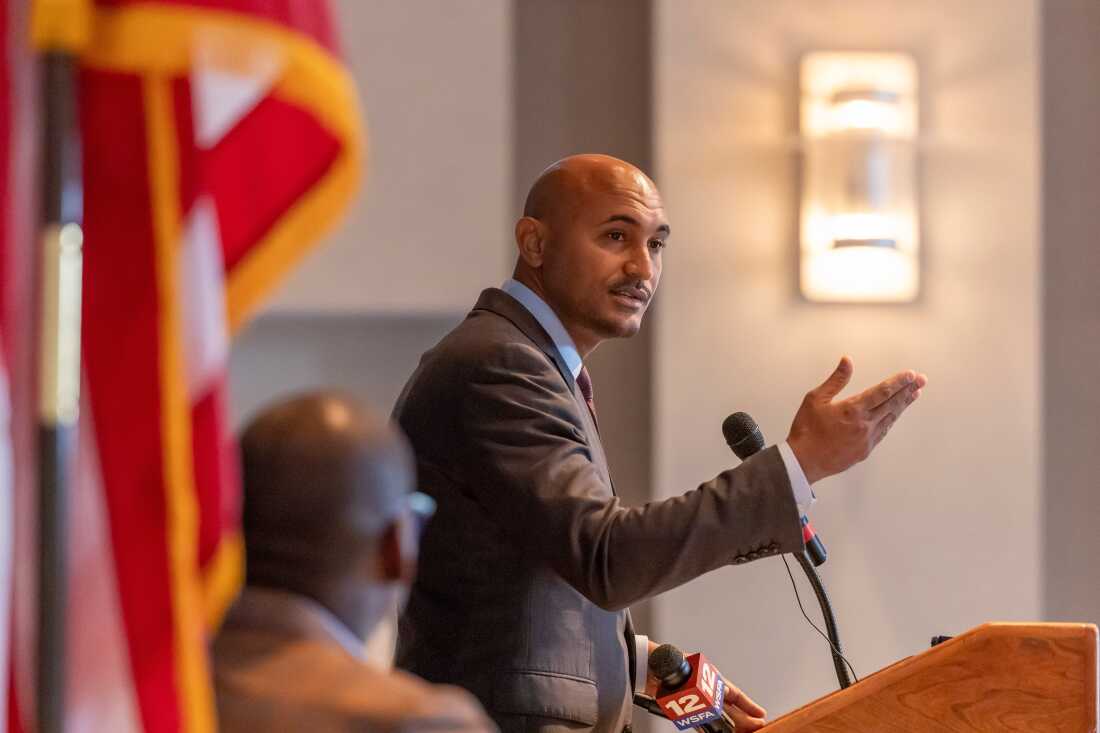
Rep. Shomari Figures, who faces a tougher reelection path due to redistricting, also voiced his concerns. Initially elected due to a court-mandated redistricting, Figures finds himself without Mobile in his district. “This isn’t about losing a majority Black seat,” he stated. Despite the challenges, he remains optimistic about his reelection prospects.
Republican Strategy and Opportunities
Once the lone Republican candidate, Hampton Harris noted the confusion caused by redistricting. The reconfiguration attracted five more Republican candidates. Harris shared concerns that unclear voting boundaries and dates might demobilize voters.
Local Republican figures, like Barbour County Commission President Jerry McGilvray, welcomed the new district map. They believe it aligns more with local agricultural interests.
Alabama’s open primary system adds another layer of complexity, with state Democrats encouraging votes for perceived weaker Republican candidates to gain a general election advantage.
Political Landscape and Future Implications
The frontrunner for the Republican nomination in the 2nd Congressional District is Rhett Marques. With endorsements from President Trump and Congress, he aims to utilize the newly-drawn district for Republican general election gains.
Marques, previously running for the 1st Congressional District, sees redistricting as a strategic advantage not just for state control but potentially for Congress as well. With these developments, the stakes for representation and political influence in Alabama remain significant.