
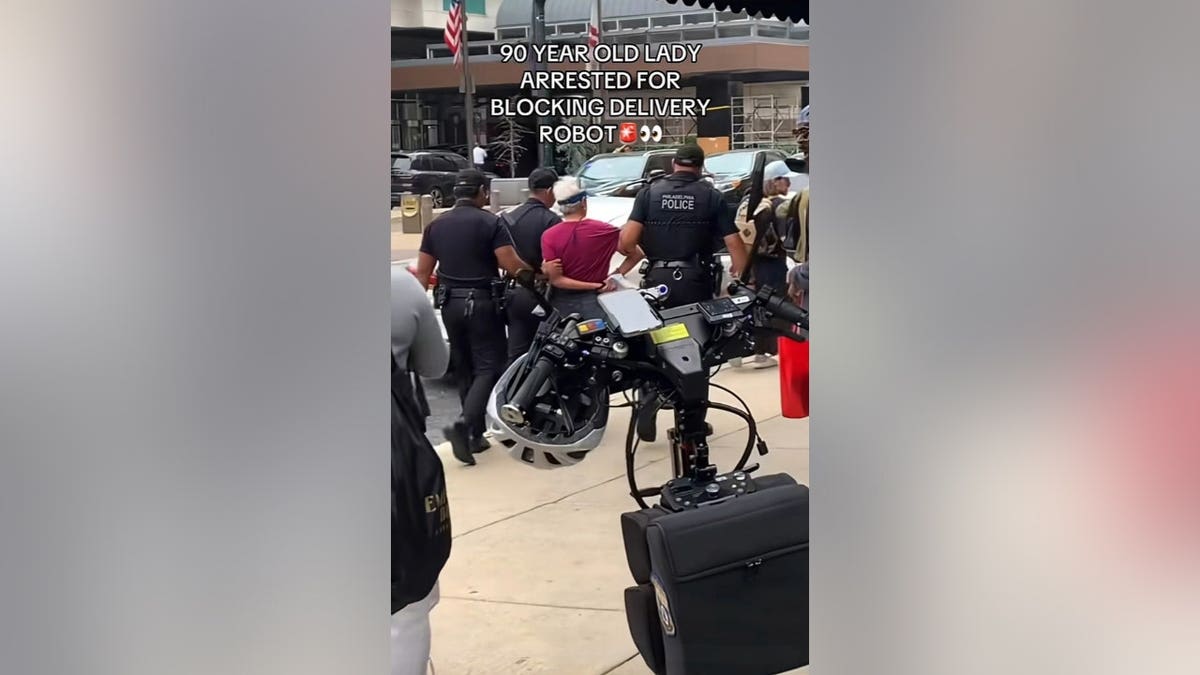
A recent incident in Philadelphia involving a food delivery robot and a retired professor has raised questions about the use of autonomous machines in public spaces. The encounter highlights the debate concerning robots taking over human jobs and pedestrian rights on sidewalks.
Incident Involving Delivery Robot
On October 14, Carolyn Marvin, a retired University of Pennsylvania professor, chose not to step aside for an Uber Eats delivery robot. Instead, she stood in its path near Reading Terminal Market. Her protest led to police intervention and her subsequent arrest.
Marvin has been known to block delivery robots as part of a protest. She argues that her actions are protected under her First Amendment rights, believing robots displace human workers in the delivery sector. Marvin plans to contest her disorderly conduct citation and continue her protests.
Concerns About Job Displacement
Marvin’s objections extend beyond shared spaces. She views delivery robots as threats to jobs traditionally held by humans. Robots complete deliveries without earning tips or wages, prompting companies to invest in automation to cut costs.
Although Uber states that its robots complement rather than replace human delivery workers, the potential impact on jobs remains a concern for those in the industry.
Pennsylvania Law on Delivery Robots
Despite Marvin’s arrest, Pennsylvania’s laws do not give delivery robots automatic precedence on sidewalks. The state’s vehicle code treats these devices as pedestrians, requiring them to adhere to pedestrian traffic rules but yield to human pedestrians and cyclists.
Furthermore, operators must inform local municipalities before deploying robots. Cities can ban their use if deemed hazardous, leaving open questions about urban management of automated machines.
Advantages and Challenges of Delivery Robots
Despite public backlash, companies continue investing in delivery robots for their potential benefits. These machines can navigate city streets using cameras and sensors, making short-distance deliveries more efficient.
The program in Philadelphia began in March 2026, with robots handling deliveries for several restaurants. Some customers may opt out of robot deliveries, but options depend on service areas.
Public Reaction and Safety Concerns
Philadelphia’s experience with delivery robots mirrors similar challenges in other cities. Incidents of robots blocking pathways highlight concerns, especially for individuals with mobility issues.
Accidents involving these machines, such as minor collisions with pedestrians, add to public frustration. As delivery robots become more common, questions about safety and accessibility continue to arise.
Implications for Residents
Delivery robots may soon be a common sight in neighborhoods with bustling dining scenes. Residents must consider safety, accessibility, and job implications as these machines roll out.
In Pennsylvania, delivery robots must display operator contact details, aiding residents in reporting issues. Active participation in local government decisions can influence where and how robots operate.
For those reliant on delivery work, transparency from companies about the role of automation is essential. Conversations about job security and workers’ rights are crucial as automation expands.