
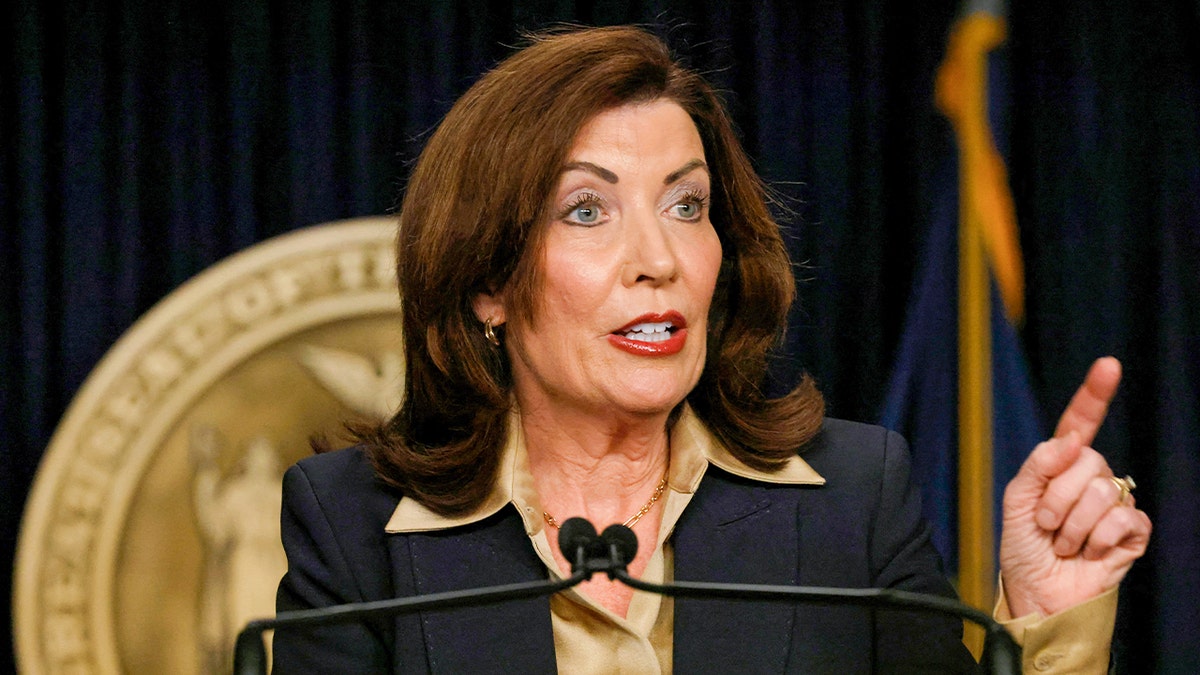
New York Governor Kathy Hochul announced that the state has prohibited formal civil immigration-enforcement agreements between local law enforcement and ICE. She expressed that the focus should be on addressing local crime. However, a DHS spokesperson warned this could lead to an increased presence of federal agents in communities. About 15 county sheriffs are challenging the ban in federal court.
The DHS spokesperson stated, “Politicians who restrict local law enforcement from collaborating with DHS cause our officers to be more visible as we work to apprehend criminals released from jails back into communities.” Citing data, DHS noted that seven of the top ten safest U.S. cities cooperate with ICE, opposing Hochul and Attorney General James’s decisions to release individuals from jail.
Hochul maintains that local officers should prioritize local crime over civil immigration enforcement.
DHS mentioned several cases in New York involving noncitizens arrested or convicted of serious crimes, including attempted murder and child endangerment, who were released despite ICE detainers. ICE eventually detained all five individuals, with one deported to Mexico.
Governor Hochul defended the state’s ban on 287(g) agreements, emphasizing the need for local crime focus rather than targeting families and hardworking individuals. A federal court upheld the Local Cops, Local Crimes Act, with the state committed to collaborating in addressing violent offenses.
In a Morning Joe interview, Hochul clarified the prohibition of these agreements in New York. The law, effective since May, bans state and local entities from entering or maintaining 287(g) agreements, which allow local personnel to perform federal immigration functions under ICE supervision.
Hochul’s office clarified that the law does not stop jails from notifying ICE of potentially deportable individuals or transferring detainees, within local law limits. The state Department of Corrections must inform federal authorities upon receiving noncitizens. Despite this, 15 New York sheriffs have sued the administration, claiming the law unlawfully limits their federally authorized powers.
Led by Sheriff Kyle Bourgault, the lawsuit argues that the ban overreaches and disrupts independently elected sheriffs’ authority. Notably, Rensselaer County is cited as one agency not dissolving a current 287(g) agreement. Attorney General Letitia James filed a suit against Rensselaer County, seeking to end the agreement.
A federal judge recently denied the Justice Department’s call for a preliminary injunction against the 287(g) ban, letting the new law take effect. Meanwhile, 15 sheriffs are pursuing emergency relief in their separate case.