
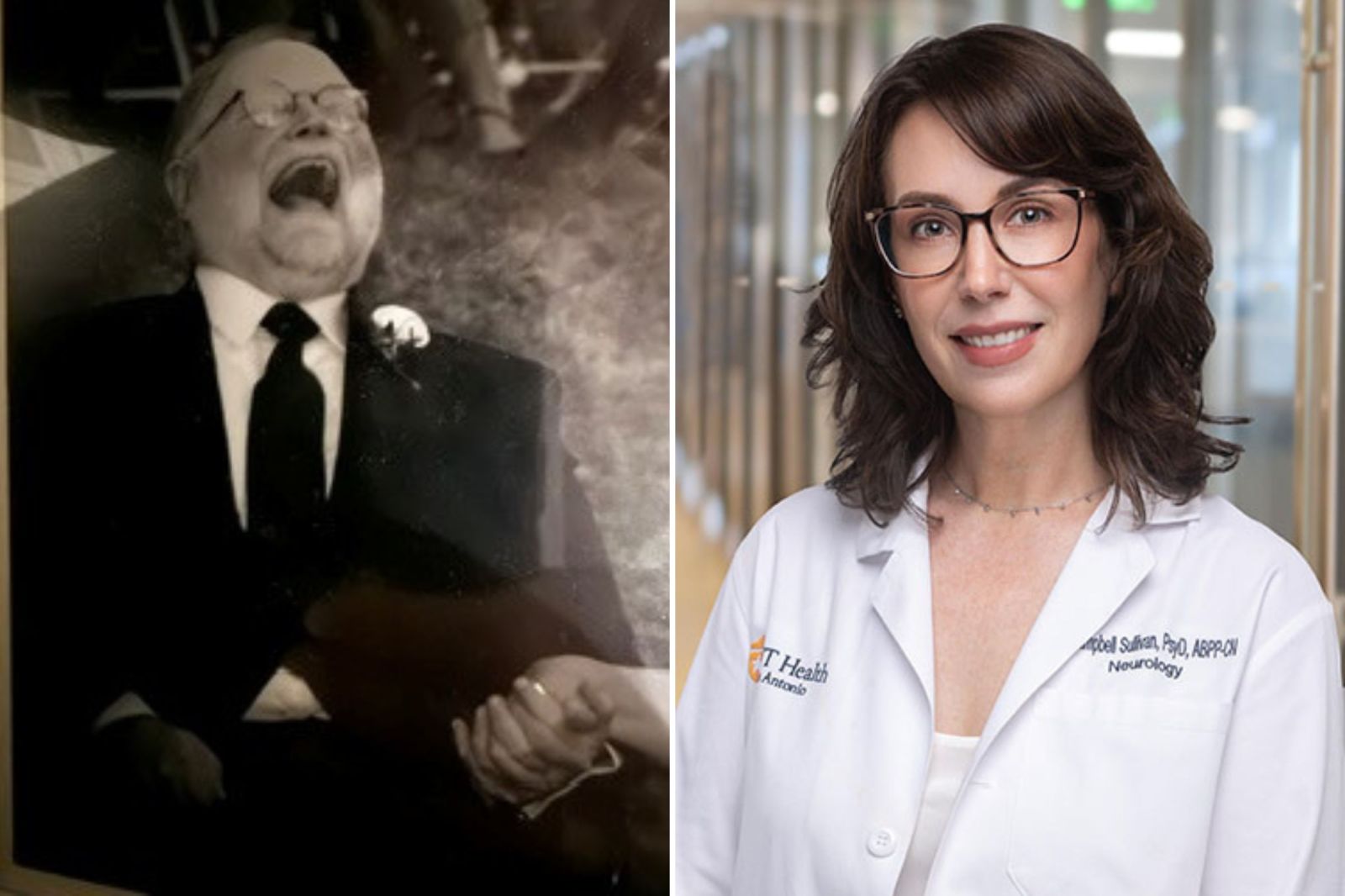
Growing up in Bellville, Texas, I was unfamiliar with neuropsychologists, who manage conditions like dementia. This field was something I entered almost by accident. During my first master’s program, I began working as a psychometrist, administering neuropsychological tests. This role suited me well. During my training at the University of California, San Francisco, I discovered my knack for working with patients with significant personalities, many of whom had frontotemporal dementias (FTD). My background in a family of vibrant personalities, including my father, who encouraged my aspirations, shaped this compatibility.
In 2003, my father began facing mobility issues, initially thought to be due to back surgery complications. His condition deteriorated over time, requiring aids from a cane to a wheelchair. Around 2006, he showed behavioral changes, such as more shallow conversations and juvenile humor. These changes were stark, such as publicly licking a plate during Christmas dinner, a behavior unlike his gentlemanly demeanor. Additionally, he made adverse financial decisions. As an only child, understanding these changes felt isolating. At the time, I couldn’t link his symptoms to amyotrophic lateral sclerosis (ALS) related to FTD.
“I knew something was wrong, but didn’t understand how the motor and behavioral symptoms fit together.”
Lack of awareness about the connection between ALS and FTD complicated recognizing his symptoms. He passed away in 2011 when I was a fellow at Johns Hopkins. I then focused my training on atypical neurodegenerative diseases. Later, I contributed to establishing a new clinic in San Antonio.
Over the past decade, the clinic has increasingly focused on patients with atypical cases, particularly FTD and ALS, which remain misunderstood. These patients show various changes in personality, language, and movement, beyond the typical memory loss associated with dementia. This leads families to take years to comprehend the situation, often feeling guilty for not recognizing symptoms sooner. My personal experience with my father has heightened my sensitivity to shifts in personality and behavior among patients and their families.
“FTD and ALS are profoundly misunderstood.”
In 2021, my aunt began showing mobility issues related to familial ALS-FTD, linked to a TARDBP gene variant, which affects a small percentage of ALS cases. Her diagnosis was supported by a philanthropic fund due to her financial constraints. Conveying this diagnosis to her daughters was challenging. Although no cures for these diseases exist, decisions concerning genetic testing are crucial, and my family’s experience has deepened my empathy in these matters.
“You don’t have to navigate these diseases alone.”
My work now involves encouraging patients and families to support research through participation. Families gain pride from contributing to understanding these conditions, as demonstrated by my aunt’s decision to donate her brain for research. I’m proactive in supporting families dealing with ALS and FTD by directing them to beneficial non-profit organizations.
A. Campbell Sullivan, a clinical neuropsychologist and professor, works at UT Health San Antonio’s Glenn Biggs Institute. She co-directs the South Texas Frontotemporal Dementia Program and lives in San Antonio with her three daughters. She enjoys non-scientific podcasts in her leisure time.