
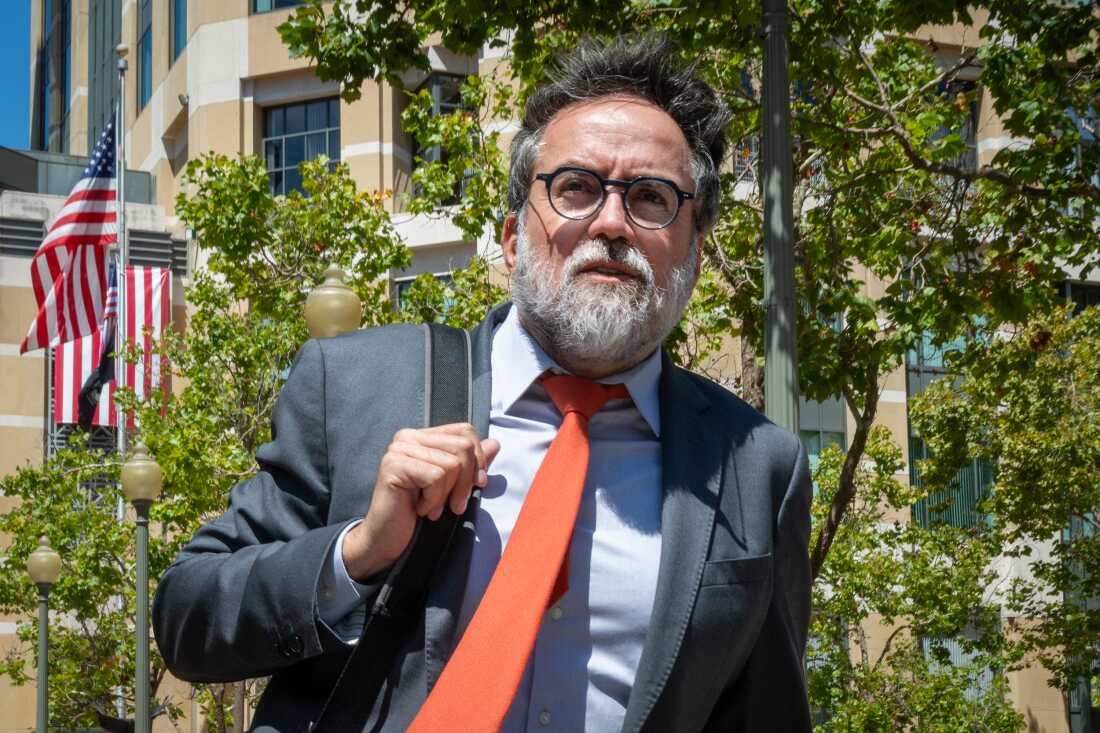
On August 19, 2026, Arturo Béjar, a former Meta engineer, left the Ronald V. Dellums Federal Building & United States Courthouse in Oakland, California. Béjar is a whistleblower testifying in a critical child safety trial against Meta. He stated that Meta fostered a culture obsessed with user numbers, sidelining safety concerns.
Béjar claimed that CEO Mark Zuckerberg had the power to change this but chose not to. He said, “At the end of the day, it was the company culture that Mark had created that made it so that it was practically impossible to deliver features that addressed the wellbeing and safety issues that we’ve been talking about.”
Béjar is a crucial witness for a coalition of states, including California, Colorado, Kentucky, and New Jersey, which sued Meta. They claim Meta violated consumer and child data protection laws and misled the public about the risks of its platforms. Attorneys argue Meta designed Facebook and Instagram to hook young users using features like infinite scrolling and the “like” button. Meta has denied these allegations.
Paul Schmidt, an attorney, countered that Meta was aware of the risks to teens and took measures to address them. He insisted the company did not deceive the public. The state attorneys have not confirmed if they will call Zuckerberg as a witness.
Béjar, who worked on safety issues at Meta for eight years, testified in federal court in Oakland. He stated that Zuckerberg misled the public in his denial of prioritizing profit over safety. Béjar highlighted a Facebook post from 2021, where Zuckerberg disputed claims by another whistleblower, Frances Haugen. Béjar asserted, “Based on my experience at Meta, that is not an accurate statement.”
Bejar testified about internal studies indicating risks for teens on Facebook and Instagram. While these studies surveyed users, including teens, about harmful content, efforts to introduce safety features were difficult. Béjar accused Meta of favoring user engagement and revenue over safety at nearly every turn. He remarked that safety was “not a meaningful priority.”
Béjar’s tenure at Facebook spanned from 2009 to 2015, focusing on cyberbullying. He returned from 2019 to 2021 as a consultant on Instagram’s wellbeing team, driven by concern for his daughter’s experience on the platform.
In 2023, Béjar testified before a Senate committee, claiming Meta promoted content harmful to teens. He also gave an interview to The Wall Street Journal, detailing his concerns.
The ongoing case in the U.S. District Court for the Northern District of California examines Meta’s accountability not for content, but for features designed to encourage compulsive use. The states argue these designs financially benefited the company. More users mean more targeted ads, and consequently, more profit for Meta.
Thousands of lawsuits claim social media companies, including Meta, contribute to addictive behavior and youth mental health issues.
Under cross-examination, Meta’s attorney, Brian Stekloff, questioned Béjar about his colleagues’ competency and whether safety risks were resolved. Béjar respected his co-workers, but acknowledged unresolved safety issues. He criticized features like video autoplay, “like” counters, and infinite scroll as dangerous for teens. He said safety features were “designed to fail” because they were optional, not default. Béjar likened this to needing to manually activate an airbag in a car, noting, “Most people will not turn the setting on.”
The trial is anticipated to last six weeks. The Chan Zuckerberg Initiative, founded by Mark Zuckerberg and Dr. Priscilla Chan, supports NPR financially.