
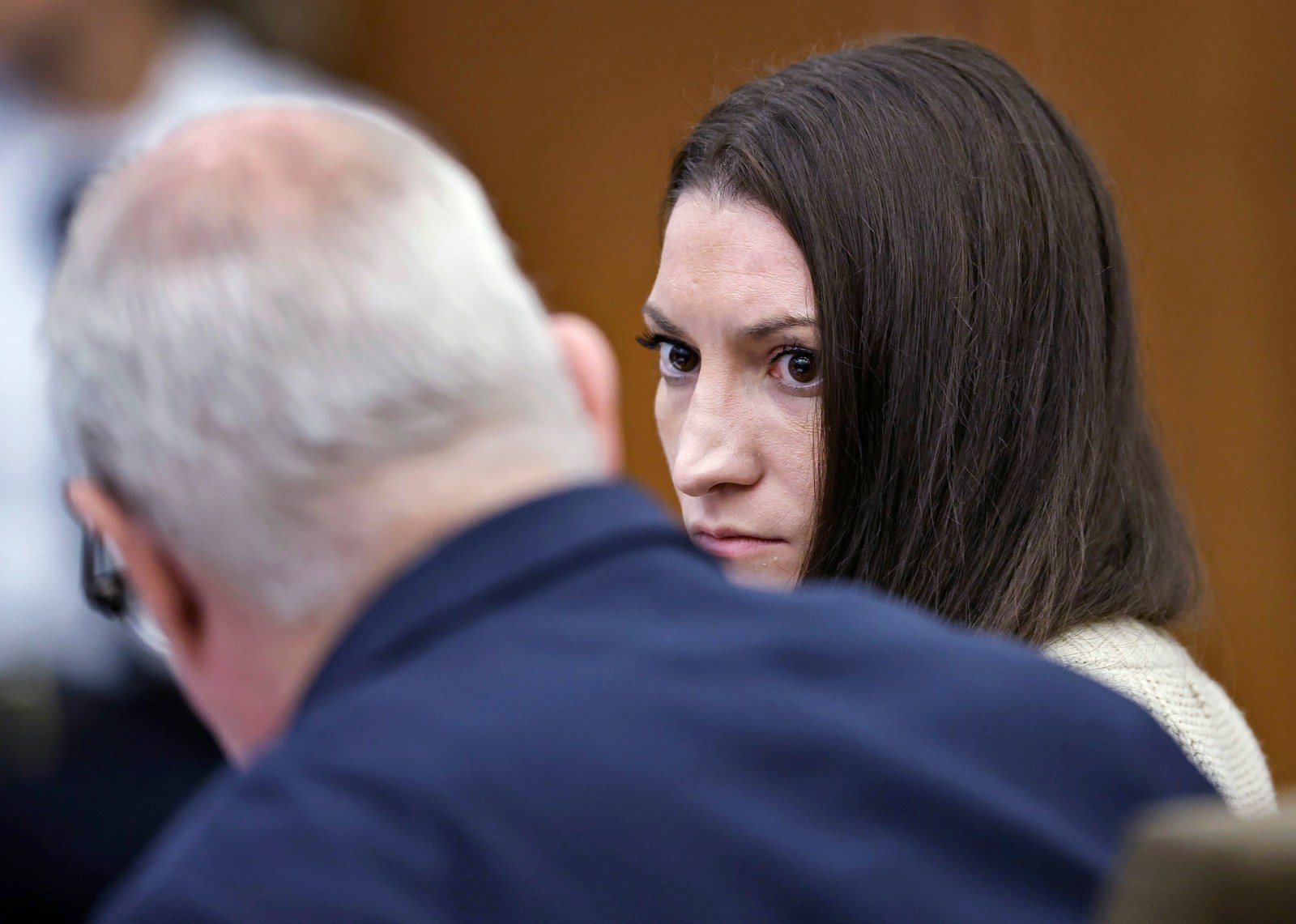
The closing phase of Lindsay Clancy’s murder trial saw fierce exchanges as defense attorney Kevin Reddington challenged prosecution psychiatrist Dr. Avram Mack’s opinion that Clancy was severely depressed, but not psychotic, when she killed her three children. Prosecutors sought to counter the defense’s claim that Clancy suffered from postpartum psychosis, absolving her of criminal responsibility.
Cross-Examination of Dr. Mack
Mack, who testified Clancy had major depressive disorder but no psychosis, faced cross-examination by Reddington after his earlier testimony. Mack asserted that psychosis does not inherently prevent someone from distinguishing right from wrong. This point was crucial for Reddington.
“There’s no reason why psychosis in and of itself inhibits a person from knowing right from wrong,” said Mack.
The defense attorney scrutinized Mack’s qualifications and past testimonies. Reddington referenced cases where Mack’s testimony faced criticism, urging jurors to question his conclusions.
Reddington challenged Mack’s understanding of postpartum psychosis, alleging confirmation bias in Mack’s evaluations. Heated exchanges led to judge interventions, and jurors attentively responded, taking notes.
Disagreement Among Prosecution Experts
Complicating the case, prosecution experts Dr. Mack and Dr. Kirk Heilbrun interviewed Clancy simultaneously yet diagnosed her differently. Mack identified major depressive disorder, while Heilbrun pointed to bipolar II disorder. Despite differing in diagnosis, both dismissed postpartum psychosis as a cause.
Controversial Religious Reference
A contentious moment unfolded when Heilbrun mentioned Clancy’s Catholic beliefs and queried her about suicide being a “mortal sin.” Reddington objected, alleging misconduct and sought a mistrial. Judge William Sullivan rejected the motion but instructed jurors to ignore religious aspects of the testimony.
Judge Sullivan dismissed the jury amid heightened tensions, impacting trial proceedings.
Prosecution’s Theory on Clancy’s Motives
Heilbrun negated the defense’s psychotic command theory, suggesting Clancy’s serious suicide attempt motivated her actions, aiming to keep her children from suffering. Heilbrun outlined symptoms like depression, anxiety, and suicidal thoughts but differentiated them from psychosis.
The Defense vs. Prosecution Narrative
Monday’s trial intensified the jury’s challenge: Was Clancy’s alleged command hallucination credible, or did she act through a lucid yet desperate suicidal episode? The defense emphasized Clancy’s postpartum psychosis claims, contrasting prosecution experts who portrayed her as deeply depressed but lucid.
The prosecution argued Clancy was severely mentally ill, yet legally responsible, maintaining she understood and managed her actions prior to the murders.
Medication’s Role in Clancy’s Mental State
The discussion extended beyond psychosis, considering psychiatric medications’ impact on Clancy’s mental state. Edward L. Jones III proposed potential medication links, paralleling Clancy’s case to David Crespi’s medication-related murders.
Jones suggested scrutiny of medications like Zoloft and Prozac, highlighting reports of severe agitation and behavioral changes. FDA data contained numerous adverse reports related to medications prescribed to Clancy. While not direct evidence, Jones suggested medication’s role warranted exploration alongside psychiatric evaluations.
Jones’s perspective derived from previous case studies, suggesting medication effects could explain Clancy’s pre-murder behavior changes. The defense’s psychotic break claim contrasted with prosecution experts disputing psychosis.
Upcoming Trial Developments
The trial nears conclusion with continued testimony expected from Heilbrun and other witnesses. Closing arguments are anticipated, with the jury facing two stark narrative choices. The verdict hinges on whether Clancy’s alleged voice signified genuine psychosis or a rationale for her deeply troubled yet comprehensible actions.