
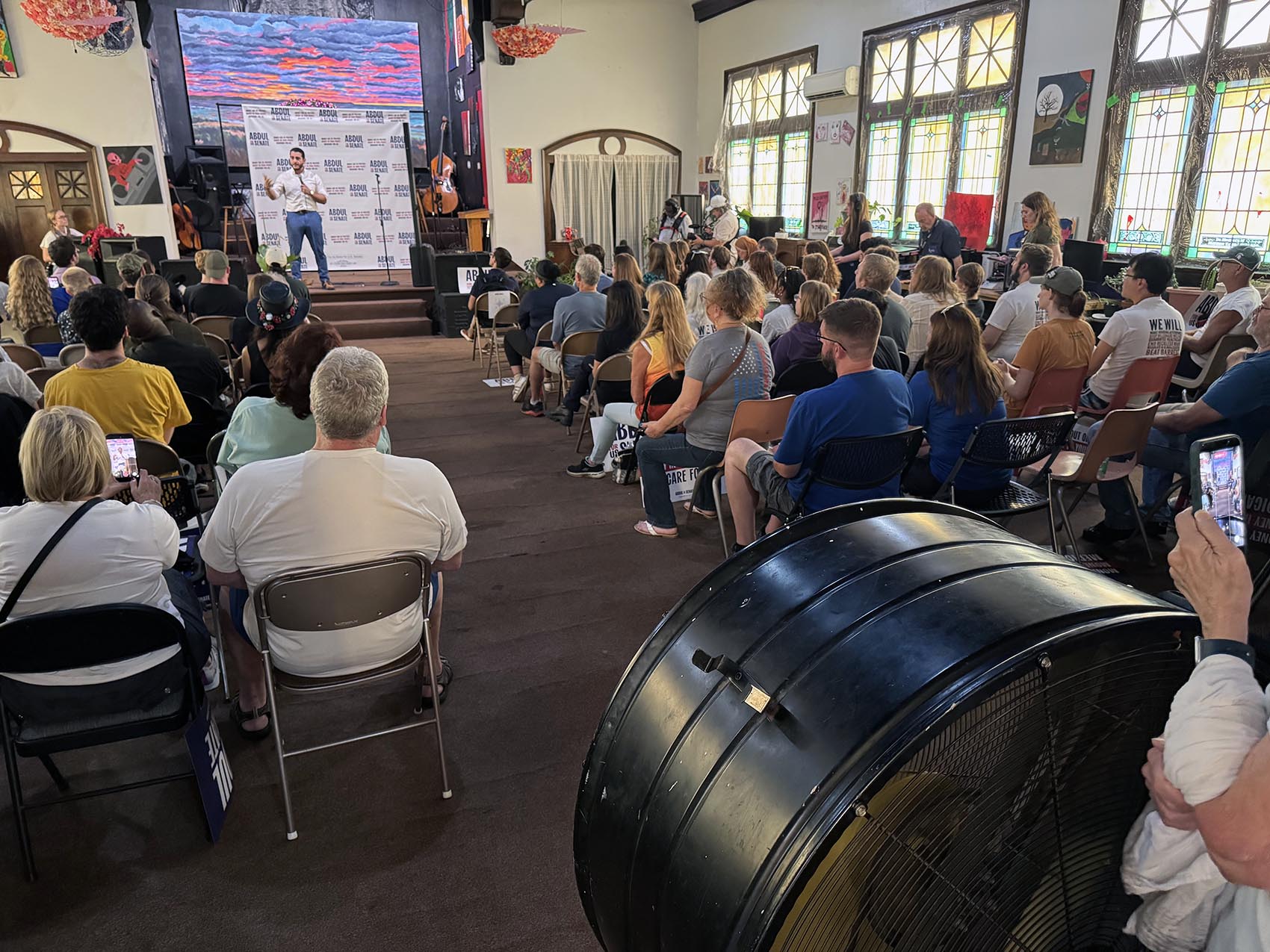
For a couple of days last week, I had a firsthand experience of the most intense political race happening in the United States—the Michigan U.S. Senate Democratic primary featuring Congresswoman Haley Stevens and former Public Health Director Abdul El-Sayed. Along with producer Sam Weber, we headed to Detroit with several questions in mind. How do these candidates present themselves in reality? What are the main issues concerning Michigan residents? Could this primary difference be problematic for Democrats in the upcoming November elections?
Field Observations
Both Stevens and El-Sayed appeared more compelling in person compared to the portrayals in media coverage. Stevens demonstrated impressive perseverance, reinforcing her commitment to persistent effort for Michigan. In contrast, El-Sayed captivated younger, progressive voters with his charisma and intelligent discourse.
The settings for their campaigns varied significantly. El-Sayed spoke at The Fledge, an innovative space that included a decorative mushroom and a cat, while around 100 attendees listened attentively. On the other hand, Stevens addressed her audience in a Chamber of Commerce room with 23 individuals and later with 16 members of the ‘Blue Brigade’—a dynamic group of Democratic women.
Michigan Voters’ Key Concerns
Voter priority issues included the influence of money in politics, economic challenges, and views on Israel. Jason Peck from the United Auto Workers emphasized economic struggles, citing unaffordable living costs. Dorice Steiner, a University of Michigan mom, expressed disillusionment with both political parties and the necessity to remove substantial donor influence to preserve democracy. Andy Rogers noted a shift in public awareness regarding the power dynamics dominated by money.
Conversely, Stevens supporters like Tyler McCastle highlighted healthcare woes, while Cindy Groene condemned the overwhelming impact of financial contributions on elections. However, she acknowledged the pragmatic need to secure election funds. Zach Nessel, a Michigan Attorney General’s son, highlighted rising concerns regarding antisemitism following recent events in Israel.
We visited The People’s Kitchen in Lansing during lunch and recommend the excellent food served. Owner Douglas Mulkey candidly shared the challenges of maintaining fair wages amid inflation, showing keen interest in the upcoming election while maintaining a supportive environment for staff.
An additional subject gaining traction is the debate over data centers in Michigan, potentially influencing other regional races, including the 7th Congressional District battle involving William Lawrence, a progressive opponent of data center development.
The Democratic Divide and Future Implications
While we encountered one voter hesitant to support an opposing candidate if their preferred choice lost, the primary divide seemed less hostile compared to the 2016 Clinton/Sanders split, indicating potential for greater unity moving forward.
If Democrats successfully rally behind a chosen candidate, they must still contend with Republican candidate Mike Rogers, who has secured backing from the former President while maintaining a balanced political stance.
This election is regarded by many as indicative of future Democratic Party trends, though it may not necessarily dictate the party’s direction outright. Observations show an increasing presence of progressives gaining ground nationwide, adding to overall trend lines without definitive foresight.
Both camps expressed admiration for some aspects and messages from the opposition, highlighting underlying commonalities. Alongside practical considerations of winning, voters reflected deeper introspection on desired representation. The push for unconventional solutions and political bravery appears to favor El-Sayed, with future discussions centered around aligning shared objectives.
Continued support for reliable journalism and open discussion is crucial in maintaining democracy’s foundations.