
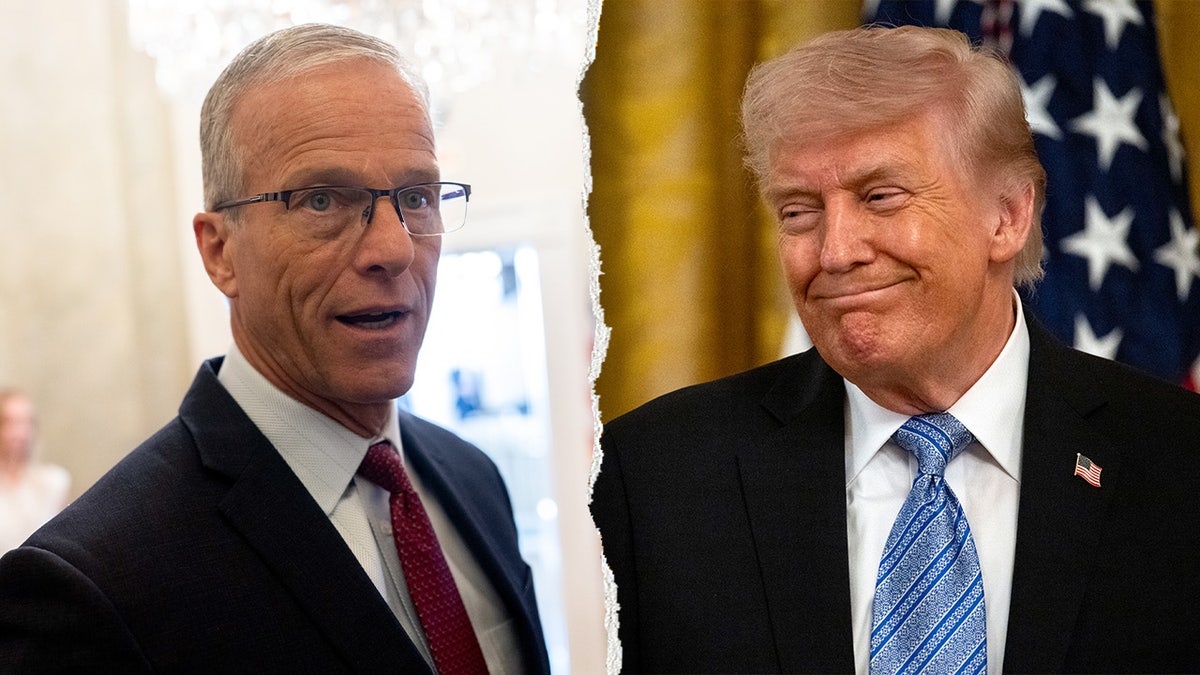
Reports suggesting a fallout between President Donald Trump and Senate Majority Leader John Thune are exaggerated, according to Thune. In an interview with Fox News Digital, the South Dakota Republican leader clarified, “I’ve heard from him twice this morning already. He called me over the weekend, and so we talk. I don’t bother him; I’m not calling him every day.”
Last week, Trump made comments questioning if Thune was fit for leading Senate Republicans. This raised concerns about the relationship between the president and the Senate’s top Republican. However, Thune dismissed these speculations, pointing out their conversations over recent days since Trump’s remark.
The tension centers on the SAVE America Act, which stalled in the Senate. Trump is eager for the election integrity package to pass. Despite Trump’s comments, Thune doesn’t see them as personal. He mentioned both share the goal of achieving results, though they have different views on how to proceed. “Most of mine are constrained by what’s achievable in an institution like the Senate that has procedural roadblocks,” Thune explained.
Thune stated they have open discussions but isn’t worried about their relationship, highlighting Trump’s determination to keep pushing for the act. “I know he’s going to push as hard as he can. That’s his business model,” Thune emphasized.
The SAVE America Act has been a focal point for Trump, Senate Republicans, and their supporters. Thune hears the desire for its passage both online and within his conference. As the Senate rushes to address other critical tasks, such as preventing a government shutdown and confirming nominees, passing the act remains challenging due to Senate composition.
A group of Republicans opposes the act, and Thune noted that every Senate Democrat has rejected it on multiple occasions. Thune, an original co-sponsor of the act’s predecessor, expressed interest in budget reconciliation to bypass Democratic opposition. However, achieving the required 50 votes and maintaining unity against “crazy democratic amendments” remain obstacles.
Thune’s role includes assessing what can realistically be achieved in the Senate. He remarked on the difficulty of securing necessary votes, saying, “I keep asking the question, am I the only one in this town that can count to 50?” He highlighted the certainties: Democrats won’t support the act and 50 Republicans won’t eliminate the filibuster. These are unchangeable facts.
In contrast to the House, Senate proceedings require bipartisan support to overcome the filibuster. Thune’s perspective reflects the Senate’s unique role in balancing diverse state interests. He emphasized that the Senate’s design prevents autocratic control, explaining, “This place was supposed to be difficult, so that no dictator could master it.” Despite the frustration of procedural hurdles, he remains focused on outcomes.