
Flooding Concerns in Hawaii Due to Tropical Storms
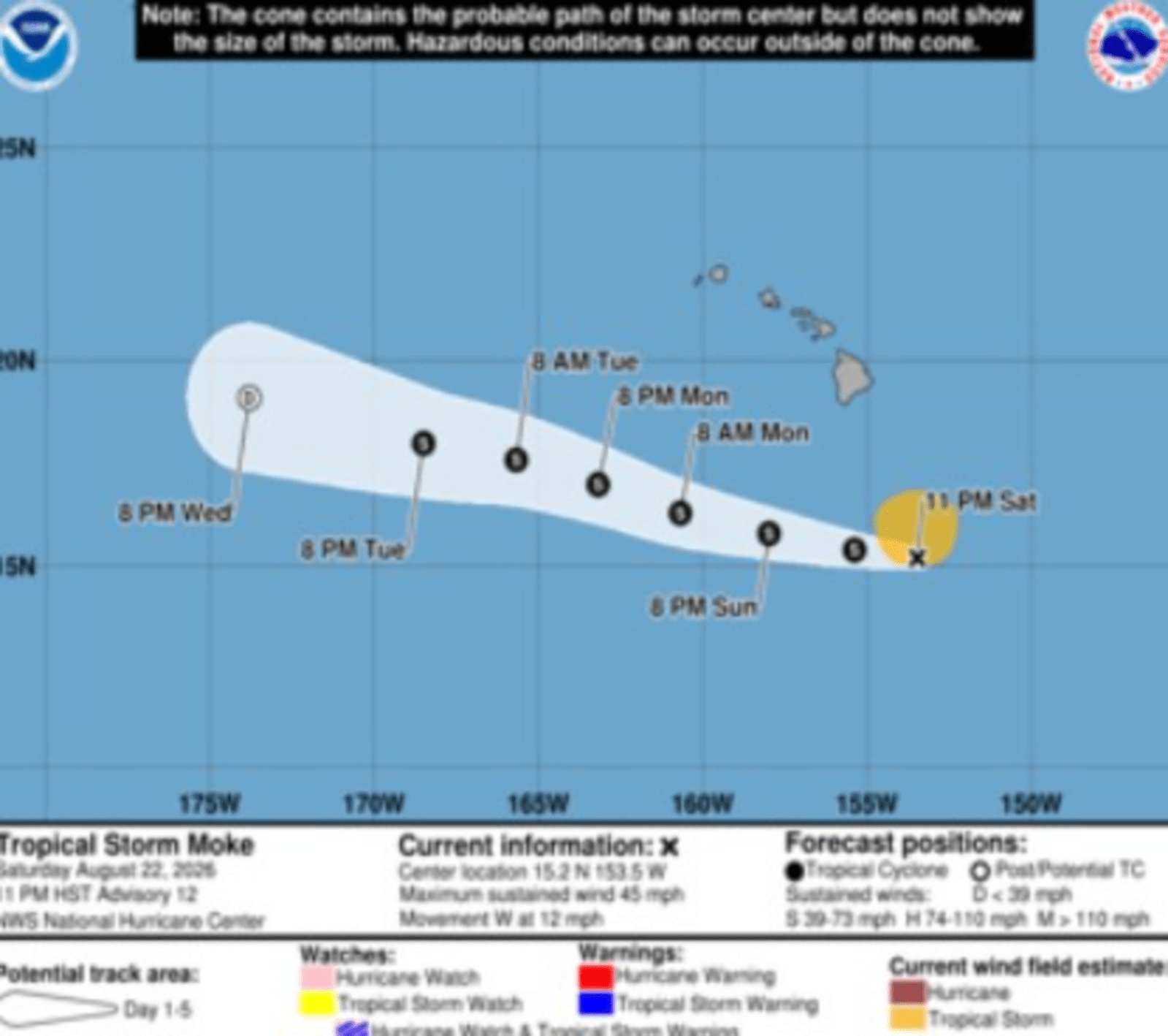
The U.S. state of Hawaii is facing significant flooding risks as Tropical Storm Moke arrives, following damage from Tropical Storm Lala. The National Hurricane Center (NHC) warned of winds up to 45 mph on Saturday evening, with Moke expected to pass south of the Big Island on Sunday. Heavy rain will start affecting the Big Island, spreading westwards throughout the day.
Animated weather visuals highlight rainfall forecasts, predicting 5 to 10 inches with possible peaks of up to 15 inches. Eastern Maui might receive 3 to 6 inches on average, while the rest of the islands anticipate 1 to 2 inches of rain.
“This rainfall may produce life-threatening flooding and mudslides for the windward and southeast Big Island, particularly in steep terrain already impacted by Lala,” the NHC stated in their advisory.
Hawaii has already been dealing with severe weather conditions. Tropical Storm Lala, which hit earlier this month, caused considerable damage, with 3.5ft of rain falling in some areas over 48 hours. Damage included 100 homes and six bridges, leaving over 100,000 residents without electricity. Governor Josh Green confirmed one fatality in a related car accident.
Preparation and Community Response
Maui County Mayor Richard Bissen highlighted potential issues such as flooding, debris, fallen trees, and power outages, urging community preparedness. The mayor acknowledged that even moderate rain could exacerbate problems given prior storm damage.
Randy Collins, Hawaii’s emergency management director, identified further risks in ongoing cleanup efforts, including those posed by heavy equipment. Past threats, such as Hurricane Fausto in July, which weakened near Hawaii, demonstrate ongoing storm vulnerabilities.
2026 Hurricane Season Overview
The 2026 hurricane season is notable, with fewer named storms compared to historical averages. The season, which started with Tropical Storm Arthur in mid-June affecting the U.S. Gulf Coast, continues under the influence of an extended El Niño, producing warmer ocean waters conducive to cyclone development.
Despite lower activity, with few named storms and no hurricanes thus far, Hurricane Lala’s eye passed near the Big Island, highlighting weakened protection due to changed sea and weather conditions.
Hawaii typically remains shielded from tropical cyclones owing to cooler ocean temperatures and robust wind conditions. However, the shifting El Niño pattern has impacted this natural defense, affecting storm formation and progression.