
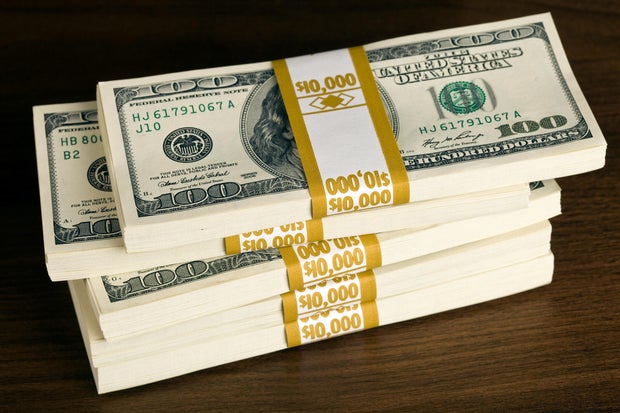
Placing $50,000 into a 3-year certificate of deposit (CD) might be a wise choice for those wanting to safeguard their funds. Financial conditions vary for everyone, so whether this amount is a large part of your savings or a smaller fraction, it is important to consider options that protect and grow your capital.
Currently, inflation still exceeds the Federal Reserve’s 2% target, and rate hikes are back on the agenda. This environment makes a CD account a reasonable option to explore. CDs have fixed interest rates, ensuring a guaranteed return, unaffected by market shifts. With high rates presently available, particularly for 3-year terms, securing your $50,000 in such an account ensures stability for 36 months without the need to adapt to market changes.
Maintaining a CD account until its maturity date might be challenging, and withdrawing funds early could incur penalties. However, the benefits on maturity can be significant. So, how much interest could you earn with a 3-year CD opened today?
Potential Earnings
Currently, a 3-year CD can offer a top rate of 4.50%. Though these rates differ by institution, researching options is key before committing. Here is what a $50,000 3-year CD could earn:
- At 4.35%: $6,812.95 upon maturity
- At 4.40%: $6,894.66 upon maturity
- At 4.50%: $7,058.31 upon maturity
A $50,000 investment could yield returns between $6,813 and $7,058, based on current options. Online accounts often provide better rates than traditional banks, making it worthwhile to explore these possibilities. Begin the process online to maximize your interest earnings.
Conclusion
For those aiming to stabilize their $50,000 during turbulent market conditions, a 3-year CD presents notable advantages. With potential returns surpassing $6,800 and assured protection from market swings, it offers a feasible and fruitful option. Ensure you can maintain the account to maturity, as premature withdrawal could negate all accumulated interest due to potential penalties.