
Earth is set to cast a shadow over the moon, offering a spectacular view for much of the world. This partial lunar eclipse will mask nearly 96% of the moon’s surface between Thursday night and Friday. The Americas will have the prime view, contrasting with last month’s total solar eclipse visible in Europe.
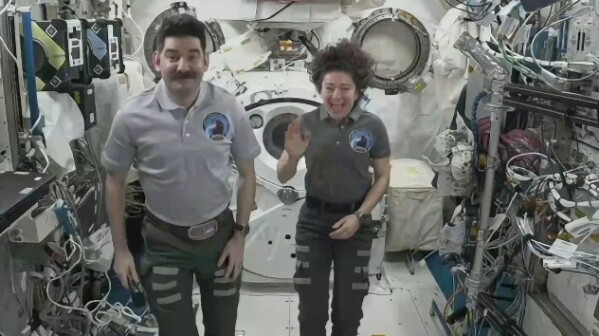
Currently, the moon is a focal point for NASA due to the Artemis II mission. The mission achieved a significant lunar flyby, paving the way for plans to establish a base with people and robots on the moon in the coming years. Speaking from the International Space Station, NASA astronaut Jack Hathaway emphasized the vibrant activity of the space program.
Following the solar eclipse seen over Greenland, Iceland, and Spain, this lunar event continues the celestial theme. Such eclipses occur in pairs because of the precise alignment of the sun, moon, and Earth. This alignment makes the moon and sun appear the same size, a fascinating natural occurrence.
The lunar eclipse is estimated to reach billions worldwide, with good visibility across the Americas, Europe, Africa, and the Middle East. For those in space, such as the astronauts aboard the International Space Station, the event offers a rare perspective of these cosmic phenomena, as noted by Jessica Meir, the station’s commander.
The moon will adopt a reddish-orange hue, characteristic of a partial eclipse, though it will not be a complete blood moon.
The partial phase will last over three hours, while the entire event from start to finish stretches 5 ½ hours. It will reach its peak shortly after midnight Eastern Daylight Time.
Nearly 1 billion people across the Americas are expected to have a complete view of the phenomenon. Over 3 billion viewers, amounting to 44% of the world’s population, will see at least part of the eclipse. However, in Europe, Africa, and the Middle East, the moon will set before the eclipse concludes, while in Hawaii and parts of the Pacific, it will rise after the eclipse begins.
This marks the second lunar eclipse of the year and the fourth eclipse overall. The next total lunar eclipse visible from Asia and Australia is slated for New Year’s Eve 2028. Observers in the Americas will have to wait until 2029 for a full lunar eclipse.
The Associated Press receives backing for its Health and Science Department from the Howard Hughes Medical Institute and the Robert Wood Johnson Foundation, though it maintains sole editorial responsibility.