
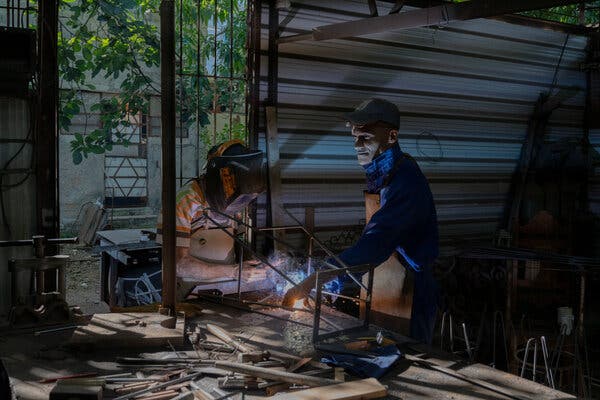
The Cuban government has announced a significant restructuring of its economy in response to deepening financial troubles. This crisis, marked by lengthy power outages and intensified U.S. sanctions, necessitates a bold approach. Cuba’s package of 176 measures aims to foster more private enterprise and reduce the state’s control over economic activities.
While Cuban officials deny that these steps are intended to appease the Trump administration, many experts view the denial with skepticism. Official statements continue to highlight the crucial need to revive the faltering economy, all while maintaining the socialist identity of the nation.
This new economic blueprint, swiftly approved by Cuba’s legislature, signals a substantial departure from the past. Since the 1959 revolution, the Cuban government maintained full control over commercial activities. Now, for the first time, the regime is offering to loosen its grip.
The proposed changes include enabling private banking and allowing Cubans to own multiple businesses and properties. However, economists remain cautious. They argue that transitioning to a mixed economy, akin to those in Vietnam or China, would be challenging unless U.S. sanctions are lifted.
The effectiveness of these measures hinges significantly on the willingness of the Trump administration to relax its economic policies toward Cuba. Without such adjustments, the viability of Cuba’s restructuring plans remains uncertain.