
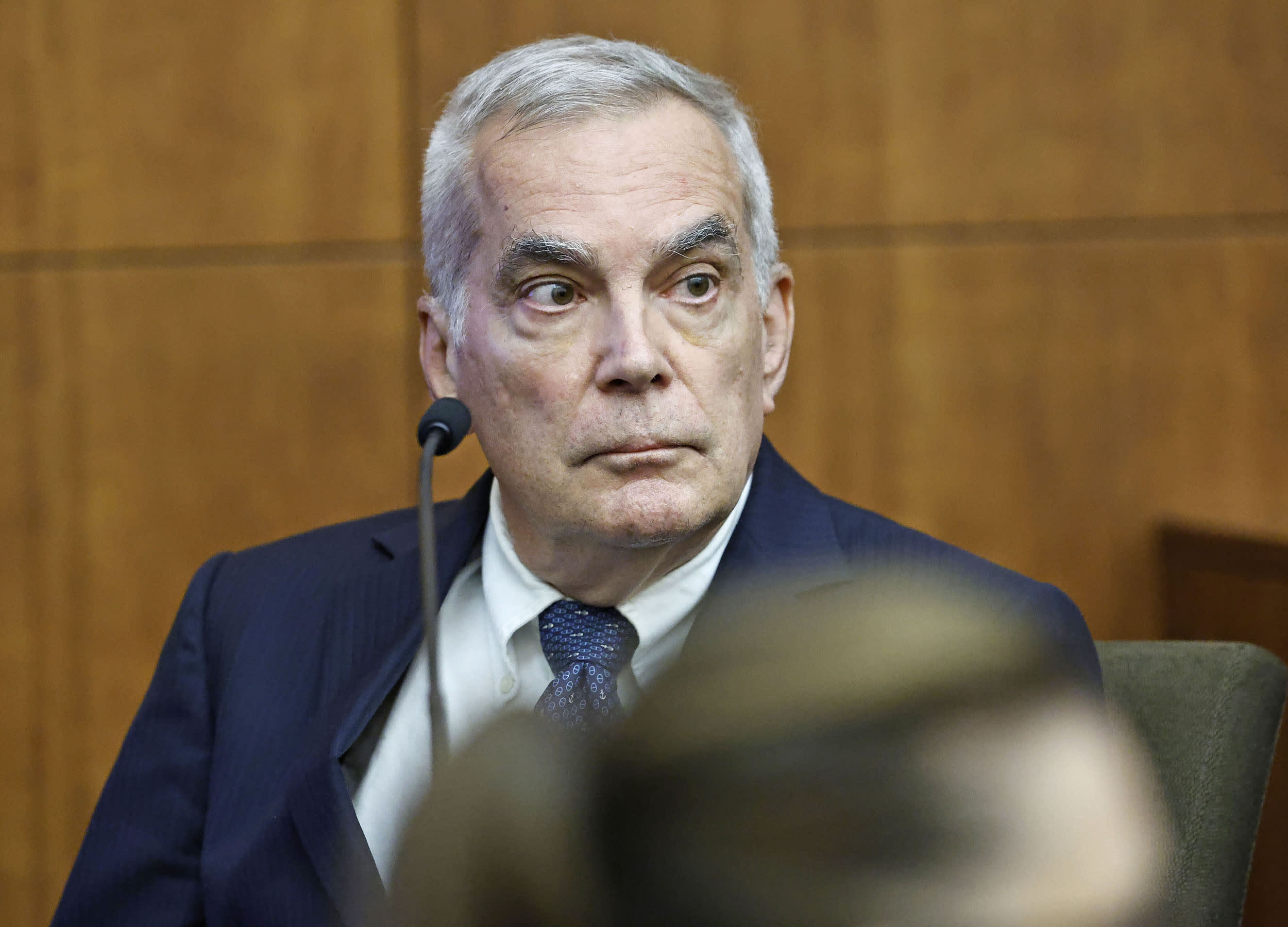
Court Wraps Up for the Day
The court adjourned today with Judge William Sullivan informing the jury that evidence presentation will likely conclude tomorrow. He mentioned that closing arguments are expected on Thursday, delaying deliberations until Friday. He urged the jury to keep an open mind, emphasizing, “You’ve heard a lot of evidence, but you haven’t heard all of it yet.”
Challenging Testimony for the Clancy Family
During the testimony, Clancy’s father appeared distressed as details emerged about how Clancy killed her three children. Clancy was visibly emotional, lowering her head and wiping her eyes.
Details of the Children’s Deaths
Clancy allegedly took each child to the basement and strangled them. The sequence began with 3-year-old Dawson in Patrick Clancy’s office, followed by 5-year-old Cora in a living room area, and finally, 8-month-old Callan. Clancy reported hearing a voice instructing her to kill but not specifying how. She described feeling like she wasn’t in control, but Saathoff highlighted that children possess a strong will to survive.
Evidence of Premeditation?
Saathoff noted Clancy’s failure to mention crushing pills during her suicide attempt, pointing out the use of lemonade as a potential cover for pill bitterness. This line of inquiry may suggest premeditation and calculated decision-making.
Inconsistent Recollection
Clancy provided conflicting accounts of events, according to Saathoff. Her story about interactions with her ex-husband and hearing voices was inconsistent, raising questions about her credibility.
Unusual Nature of Hallucinations
Saathoff found it unusual that Clancy only reported hearing voices on the day of the killings. She hadn’t reported such experiences to mental health professionals previously, and the voices stopped immediately after the act, which is atypical.
Witnesses and Payment
Saathoff clarified he wasn’t paid by the district attorney, as his work ties to his salary at the University of Virginia. He has researched postpartum psychosis, highlighting its various manifestations, including hallucinations and delusions.
Experience with Similar Cases
Saathoff testified about treating five to seven women who killed their children. He emphasized the value of understanding their experiences beyond medication.
Forensic Psychiatry Analysis
Gregory Saathoff, teaching at the University of Virginia and affiliated with the FBI, took the witness stand. His testimony focused on Clancy’s mental state and actions.
Clancy’s Actions Scrutinized
The prosecution emphasized Clancy’s series of decisions leading to the killings and her suicide attempt. Each step was portrayed as deliberate, strengthening the argument for premeditated murder.
Testimony on Clancy’s Mental State
Kirk Heilbrun, a forensic psychologist, stated Clancy knew her actions were criminal. While she might suffer from bipolar disorder, he believed she was legally responsible for her actions on January 24, as per Massachusetts law.
Defense’s Attempts to Discredit Witness
Defense attorney Kevin Reddington questioned the credibility of witnesses, highlighting the payment received and alleged biases. He stressed the inconsistency of Clancy’s medication treatment plan.