
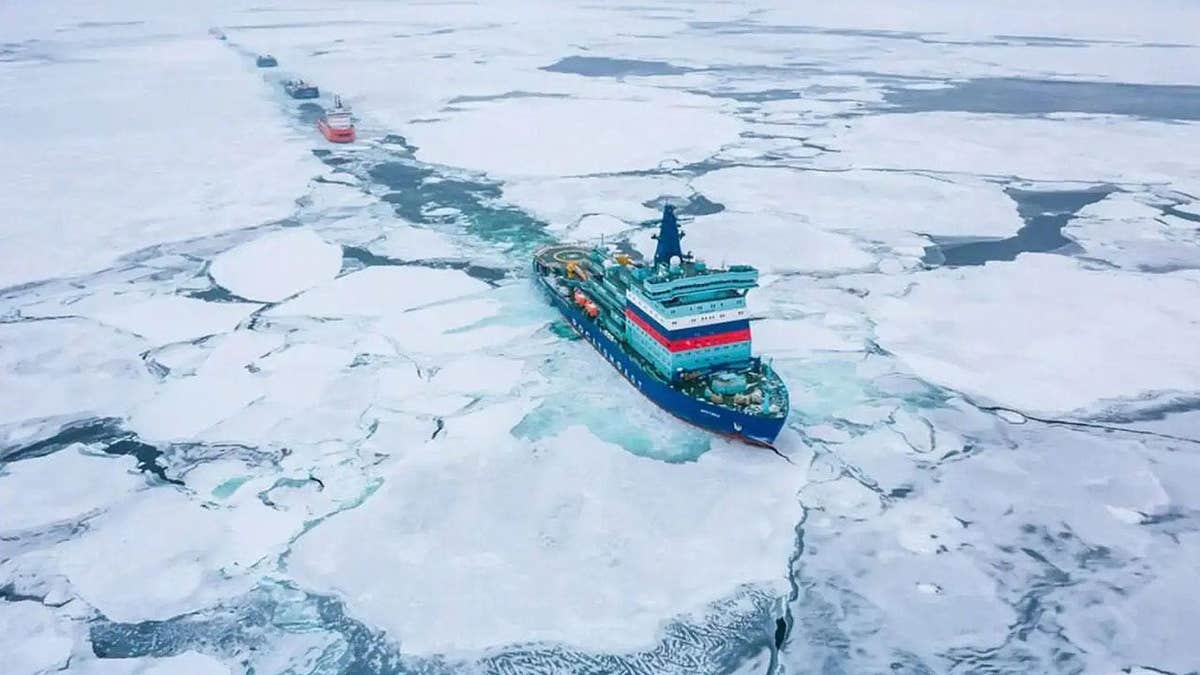
China is exploring the possibility of transforming the Arctic into a strategic trade corridor. The country has initiated a regular seasonal container service to Europe via Russia’s Arctic region. This development aligns with a deeper commercial and military collaboration between Beijing and Moscow, which concerns Washington due to its strategic implications for U.S. security.
Arctic Route: Potential and Current Scope
The Arctic container service is currently limited, with only around eight voyages planned for this season. However, analyst Gordon Chang emphasized to Fox News Digital that the initiative’s strategic value transcends the current scale.
Chang explained, “China is strategically focused on the Arctic for multiple reasons. As Arctic ice recedes, the Northern Sea Route along Russia’s northern coast becomes viable, at least during the summer months.”
A recent voyage by Sea Legend Shipping’s vessel, Dubai Tower, exemplifies this strategy. It departed from the Ningbo-Zhoushan Port on August 15, heading to Felixstowe, England, through Russia’s Northern Sea Route. China Daily reported this 20-day journey as another step in enhancing China’s Arctic presence.
Geopolitical Implications and U.S. Concerns
This Arctic endeavor comes at a time when a U.S. congressional report highlights increasing Russian reliance on China due to Western sanctions. This dependency potentially offers China more influence over the Arctic region.
Chang cautioned that the U.S. needs to bolster its physical presence in the Arctic. “We need to be in the Arctic, and President Trump has authorized more icebreakers. We currently fall short in this department,” he stated.
An official from the White House reiterated, “The Arctic is crucial for U.S. national security and economic interests. As an Arctic nation, it is our priority to maintain safety, stability, and prosperity as competition with China and Russia grows.”
China-Russia Cooperation and Economic Dynamics
The U.S.-China Economic and Security Review Commission noted that China benefits from Russia’s economic isolation. China now has a significant stake in the Arctic LNG 2 project, as well as in the Northern Sea Route’s commercialization. A joint venture between China and Russia will produce ice-class vessels starting in 2027.
The Pentagon’s 2024 Arctic Strategy outlines climate changes increasing accessibility to the Arctic while China seeks enhanced influence there. It points to initiatives like the “Polar Silk Road” as potential risks to the region’s stability.
For trade, the Northern Sea Route offers an alternative to traditional routes like the Strait of Malacca and the Suez Canal, sidestepping several critical choke points.
Military Cooperation and Strategic Concerns
An emerging military collaboration between China and Russia adds to the complexity. They’ve engaged in 119 joint military exercises by 2026, with increased naval operations in the region.
Chang underscored the strategic significance of the Bering Strait as a possible vulnerability for the Arctic route. He remarked that U.S. leverage exists due to this geographical factor but warned of the pressing Chinese and Russian presence.
With the Arctic receiving more focus from Russia and China, Chang emphasized that the U.S. must respond strategically regardless of its perception of the Arctic’s importance.