
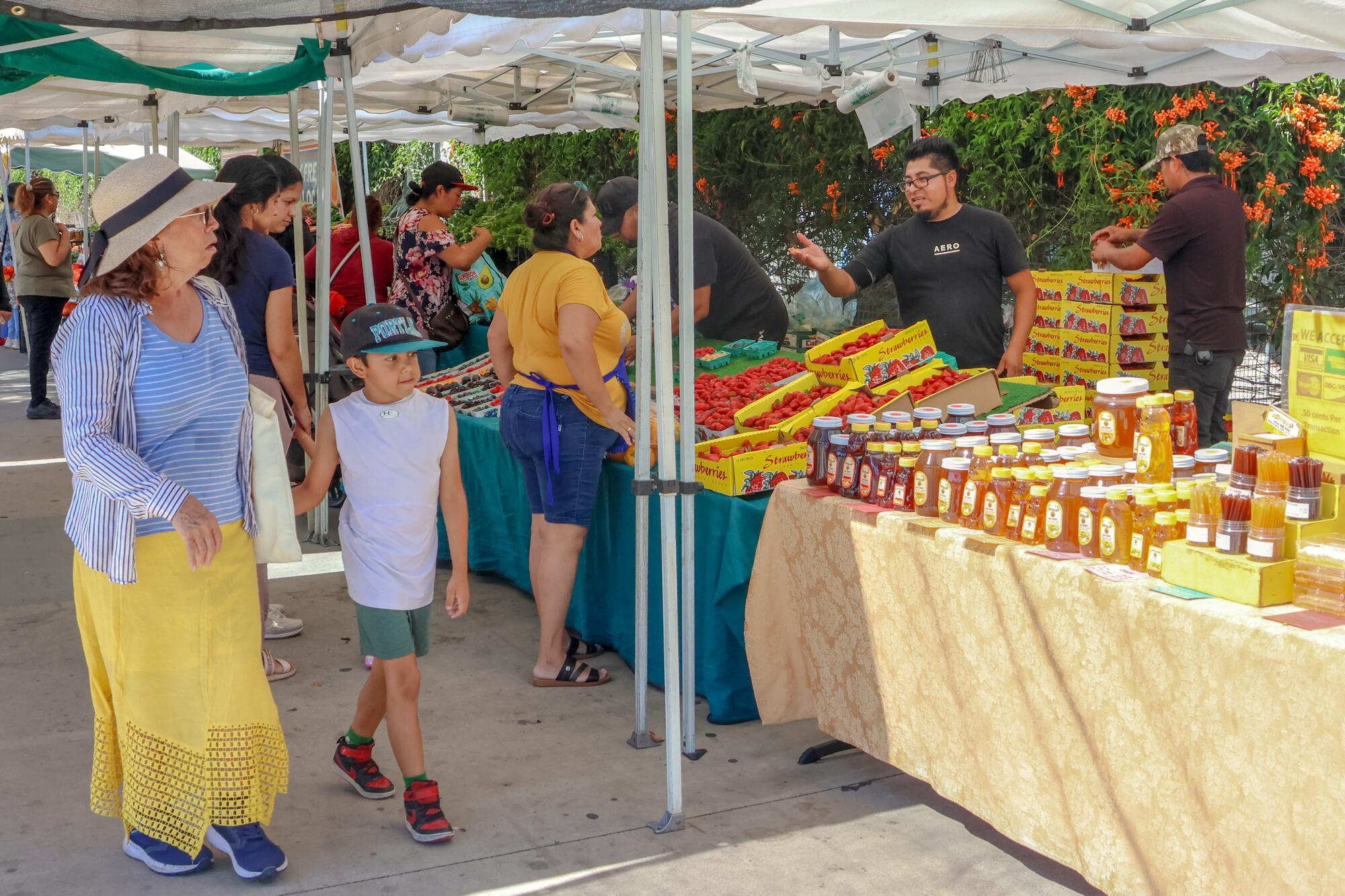
On a hot Thursday morning, Central Avenue Farmers Market bustled with activity. Children out of school for summer either chased each other or dozed in strollers beside their parents. Spanish and English voices intermingled, creating a vibrant atmosphere. A year after ICE raids shook the South L.A. community, the market returned to its public location with renewed energy.
Previously moved to a secluded courtyard for safety, the market had been a hidden presence. Market manager Alejandro Corona recalled the alarming day when authorities detained a woman right off a bus. Concerns for safety prompted the change of location.
Now easily visible, the market features bilingual signs promoting EBT, agricultural programs, and social services. “We’re celebrating today,” Corona noted, distributing refreshments to vendors as a gesture of gratitude for their resilience. Though ICE raids have decreased, the community faces challenges due to federal budget shifts.
The recent HR 1 legislation, effective from July 4, 2025, severely reduced EBT (CalFresh in California) funding. ICE received an increase, becoming the most funded federal law enforcement agency. Over a quarter of Los Angeles County residents depend on CalFresh. However, April 1 cuts eliminated aid for many immigrant groups, including refugees.
CIELO, a nonprofit aiding Indigenous communities, reported 80% of surveyed migrants struggle with food and housing. Language barriers complicate access to resources. “We see more people lining up for food boxes,” noted co-founder Janet Martinez. Offering 150 boxes weekly, the organization reaches out through digital communication.
Vendor Yoana Luvian, reliant on the market for sustenance, emphasized its importance. She mentioned the Market Match program, doubling EBT benefits. Others ineligible for federal benefits, like Blanca, turn to the market for aid. Navigating paperwork for her children’s benefits remains challenging due to immigration anxieties.
Even before HR 1, applying for and retaining CalFresh benefits was complex. Jennifer Grissom from Food Access Los Angeles highlighted the bureaucracy involved. The nonprofit’s booth assists with CalFresh registration annually. Emergency food providers, unprepared for sustained crises like HR 1’s impact, face new demands.
Michael Flood, CEO of L.A. Regional Food Bank, remarked on the strain, as assistance demand aligns with past emergency levels. Changes in work requirements for CalFresh recipients require them to find volunteer or part-time opportunities for benefits retention, challenging in the current job market.
The reduction in CalFresh funding affects vendors too. Brian Griffith from Griffith Family Farms noted a 50% drop in profits, directly linked to customer EBT usage. Some vendors compensate with barter or discounts for regulars, a crucial adjustment in resource-scarce areas.
Chef Amin Muhammad, associated with the Crenshaw Food Hub, observed increased bartering in response to community needs. He cited examples of exchanging homemade produce for other goods. Resource sharing has become essential in these neighborhoods.
Community support networks have formed as individuals like LaTonia Beason navigate food aid programs. Sharing resources with friends, she attends regularly to maximize benefits. Looming CalFresh cuts in October 2026 will reduce federal funding, further burdening local and state entities.
Grissom emphasized the widespread anxiety and administrative strain resulting from these changes, affecting individuals and organizations alike.