
Nuclear Plant Remains Intact
Japan’s Nuclear Regulatory Authority informed the International Atomic Energy Agency (IAEA) that the Sendai Nuclear Power Plant remained undamaged following the earthquake. The IAEA has committed to ongoing monitoring of the situation. Since the 2011 disaster at Fukushima, Japan’s nuclear facilities receive heightened attention during seismic events.
Military Mobilization for Disaster Relief
Prime Minister Sanae Takaichi announced the deployment of 300 Japan Self-Defense Forces members to assist with relief efforts in southern Japan. Their presence aims to address the needs arising from the disaster.
Trapped Mall Shoppers
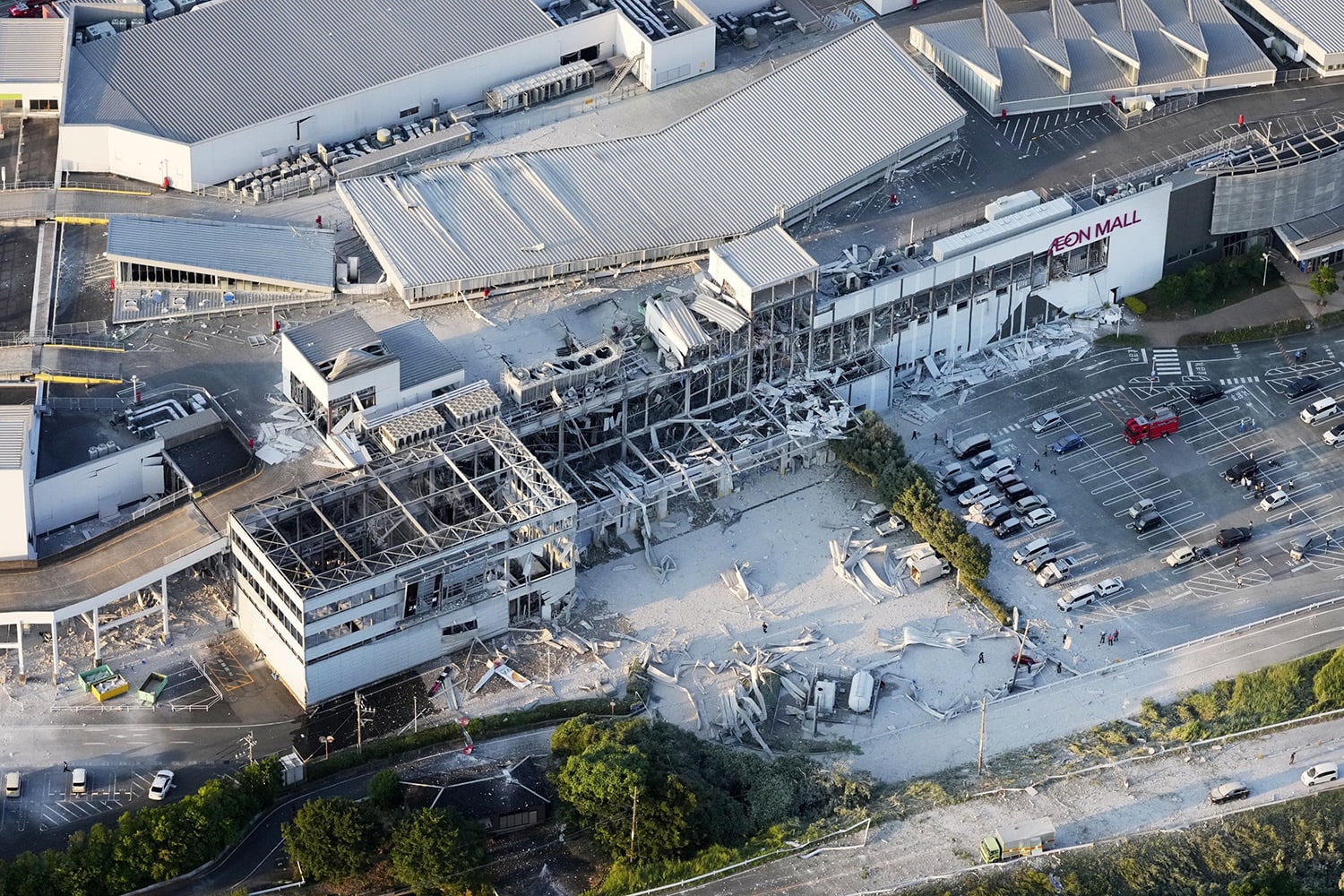
Local fire officials report multiple individuals trapped inside AEON Mall after the earthquake caused partial destruction. Footage from NHK shows extensive damage, including collapsed ceilings and debris, with reports of explosions heard on the second floor. Several fire trucks responded swiftly to the scene.
Transportation Disruption
Following the 7.1-magnitude earthquake in Fukuoka, bullet train services at JR Hakata Station were temporarily suspended. Many passengers found themselves stranded as they awaited service resumption.
Damage Across the Region
State broadcaster NHK identified at least 12 collapsed buildings, with four sites where individuals remain trapped. Additionally, aerial footage shows significant damage to a commercial facility in Kumamoto Prefecture. The broadcaster reported at least seven fires throughout the area.
Tsunami Threat and Earthquake Details
Japan faced a regional tsunami warning after the earthquake, which has since been lifted. The Japan Meteorological Agency classified the 7.1-magnitude earthquake as a high-level seismic event.
Japan’s Earthquake Vulnerability
Japan, located on the ‘Ring of Fire,’ experiences frequent seismic activity due to its position at the convergence of multiple tectonic plates. As a result, nearly 20% of global earthquakes measuring 6.0 or higher occur in the region. Since the Fukushima incident, Japan has improved its earthquake detection and evacuation systems.