
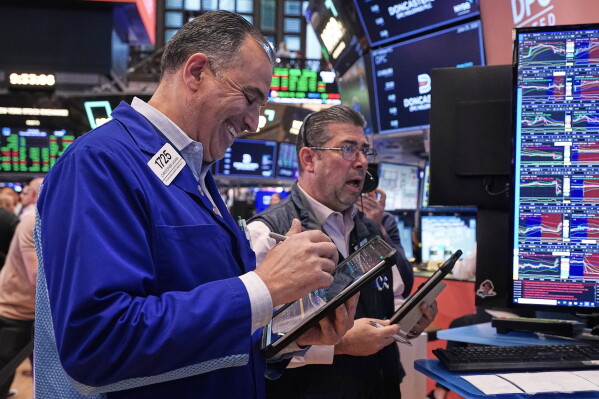
Computer chipmakers, previously beneficiaries of the artificial intelligence surge, are experiencing a downturn, affecting global stock markets. Despite strength in other sectors, U.S. stock indices show mixed results. The S&P 500 dropped 0.2%, falling from its record high last month. Meanwhile, the Dow Jones increased by 0.2%, and the Nasdaq composite slipped by 0.7%.
Many Wall Street stocks saw gains after major companies reported profits exceeding analyst forecasts. Abbott surged 11.1%, surpassing expected earnings and raising its annual forecast. UnitedHealth Group climbed 3.5% with better-than-expected quarterly results. However, Nvidia’s 2.5% decline made a significant impact on the S&P 500 due to the company’s market value. Other AI-related stocks also returned some of their gains. Micron Technology fell 5.7%, lowering its yearly gains to below 200%. Sandisk dropped 10.6%, although its annual rise remains at 500%. Western Digital decreased by 9%, keeping a 170% gain for the year.
AI stocks are under pressure, with concerns about sustainability and the profitability of AI technology. This occurred even as Taiwan Semiconductor Manufacturing Co. reported better-than-expected quarterly earnings. Its stock in Taiwan rose 1.2%, but its U.S.-traded shares fell 2.2%. In South Korea, AI leading companies like Samsung Electronics and SK Hynix negatively impacted the Kospi index by 6.4%. The Kospi index has experienced significant volatility, with recent fluctuations including increases and decreases of several percentage points.
The South Korean market faced additional pressure from an interest rate hike by the Bank of Korea, the first since 2023. Though higher rates help curb inflation, they can hinder economic growth and reduce investment returns. Concerns grow regarding potential rate increases by the Federal Reserve and other central banks due to rising oil prices. Oil prices surged, influenced by worries about the Iran conflict potentially disrupting tanker passage through the Strait of Hormuz. Brent crude’s price briefly surpassed $86 per barrel before retreating to $84.75 by the end of the day.
In the bond market, the 10-year Treasury yield increased to 4.57% from 4.55% and up from 3.97% before the Iran conflict. Reports on the U.S. economy were mixed, affecting the bond market. Consumer spending fell short of expectations, yet remained stable when excluding gas station sales. Additionally, fewer U.S. workers filed for unemployment benefits, indicating a stable job market. Another report showed stronger-than-expected manufacturing activity in the mid-Atlantic region.
Globally, European and Asian stock markets mostly declined. Shanghai and Tokyo indices fell by 1.8% and 2.8%, respectively. Conversely, Hong Kong’s Hang Seng increased by 1.3%, buoyed by China’s approval of an Apple Intelligence AI tool. Alibaba’s stock rose, with news of its Qwen model’s integration into Apple Intelligence.
AP Business Writers Chan Ho-him and Matt Ott contributed to this report.