
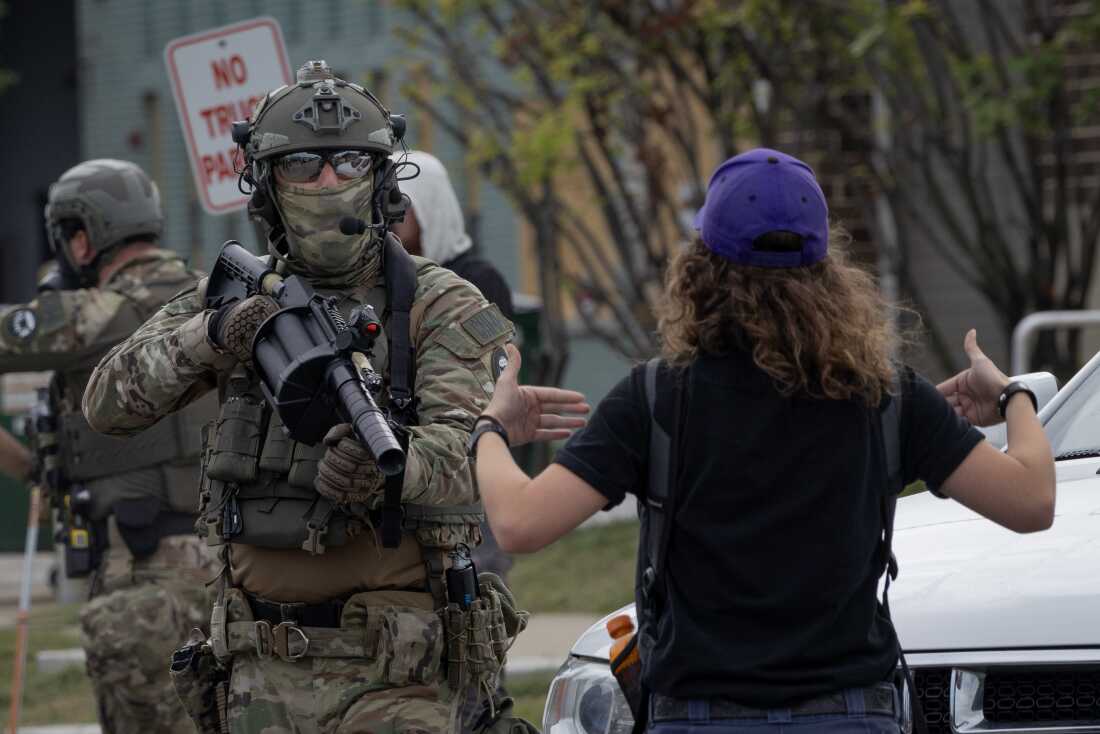
On September 19, 2025, federal law enforcement agents confronted demonstrators outside an immigration processing center in Broadview, Illinois. The protestors opposed a recent increase in Immigration and Customs Enforcement (ICE) activity in the Chicago area. This surge was part of the Trump administration’s Operation Midway Blitz, targeting undocumented immigrants.
Following two recent fatalities involving ICE officers, a report by the American Civil Liberties Union (ACLU) highlights extensive force use by the agency. Released on Thursday, the report examines over 1,200 immigration operations involving ICE across eight states. It covers the period from President Trump’s re-entry into office in January 2025 to the end of the previous year.
The findings resonate with fears voiced by immigrant advocates regarding the Trump administration’s aggressive deportation efforts. Nearly a third of the incidents studied involved use or threat of force. Naureen Shah, the ACLU’s director of policy and government affairs for immigration, criticizes the prevalent use of force as the default method by enforcement agents.
You’re seeing the threat of using force and actually using it become the default tool for immigration enforcement agents.
The report’s analysis spans news coverage, press releases from institutions, community reports, and other sources, detailing how and where these enforcement actions unfolded. Law Professor Seth Stoughton remarks on the ACLU’s role in exposing such information, suggesting it should instead come from federal authorities.
ICE officers employed a variety of forceful tactics, the ACLU found. These included pushing, tackling, pinning, and using weapons like chemical irritants and tasers. Alarmingly, instances of potentially lethal actions like knee-on-neck and chokeholds were documented.
The report reveals these actions often took place in everyday settings—bus stops, grocery stores, and along roadways. The ACLU noted significant encounters involving children, U.S. citizens, protestors, and journalists. Despite the detailed findings, ICE and the Department of Homeland Security have not commented on the report.
Since Trump’s return to office, ICE enforcement has intensified, partly due to increased federal funding. Experts like Naureen Shah fear more fatalities, pointing to a culture of abuse driven by pressure to meet arrest quotas coupled with aggressive tactics.
Former New York City police officer Jillian Snider observes changes in ICE’s operational approach, noting a shift from targeted actions to community presence and car stops. This change raises concerns about inadequate training for such operations.
In recent incidents, ICE’s use of force in car stops led to two deaths. In Texas and Maine, ICE officers fatally shot Lorenzo Salgado Araujo and Joan Durán Guerrero during car incidents unrelated to targeted operations.
Stoughton highlights operational issues, noting that ICE officers in car stops often engage in hazardous maneuvers. The issue, he says, reflects broader problems in training and supervision.
Amid mounting scrutiny, ICE announced a pause on non-urgent traffic stops. The specifics of this change remain unclear. Meanwhile, President Trump expressed support for continued ICE operations in a statement on Truth Social.