
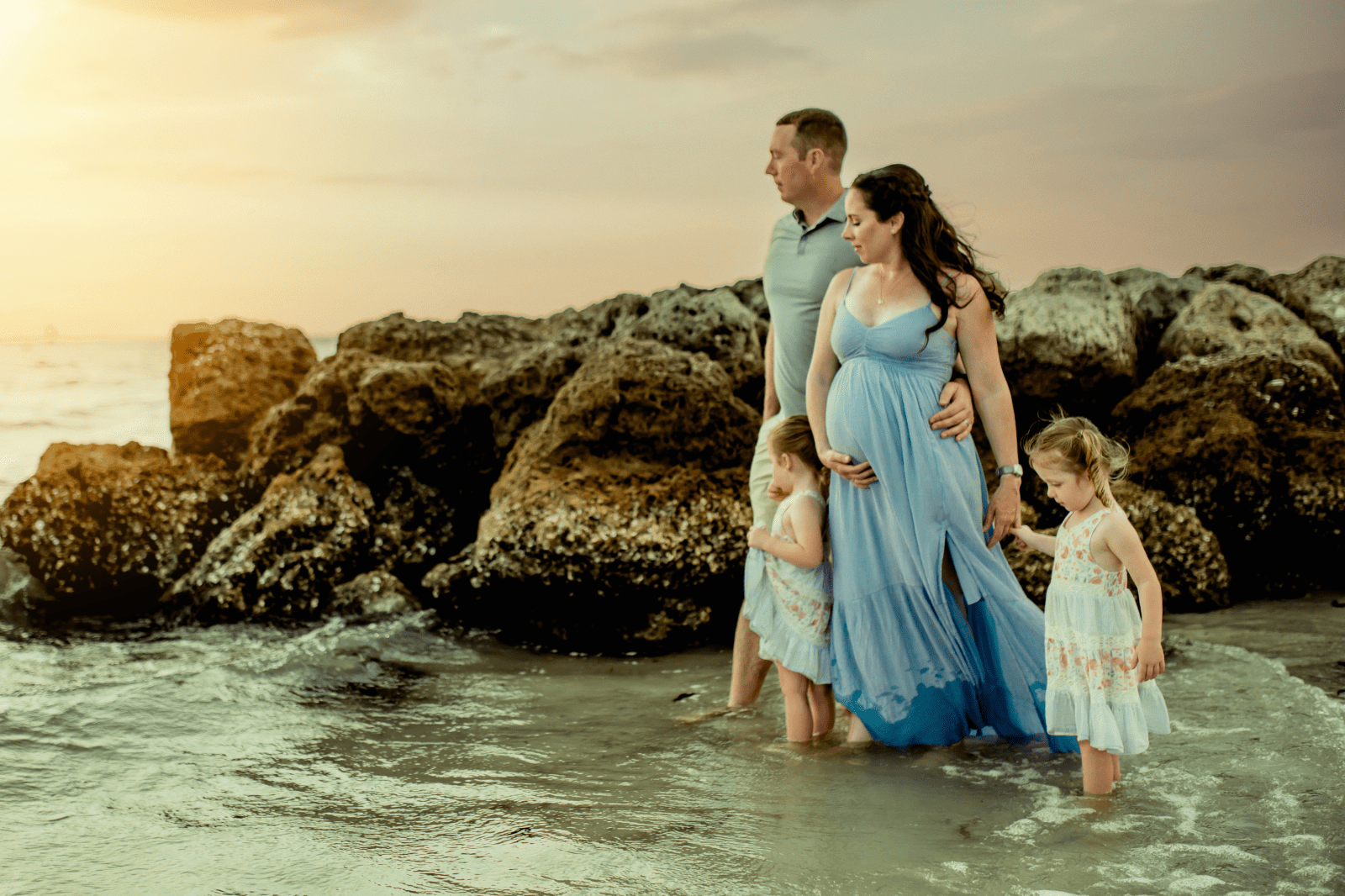
When my husband and I discovered we were having our first child in 2016, we envisioned a future filled with joy. We celebrated a gender reveal, discovering we were expecting a boy. We eagerly prepared for his arrival. However, at our 20-week anatomy scan, our world shifted dramatically.
The doctors diagnosed our baby with Meckel-Gruber syndrome, a rare and always fatal genetic disorder. Affected organs, enlarged and non-functional kidneys, and an improperly developed skull marked our son’s condition. We made the heartbreaking decision to terminate the pregnancy for medical reasons. Compounding the loss, we learned that both my husband and I were carriers of the disorder, indicating a one-in-four chance of recurrence in future pregnancies.
After careful consideration, we pursued having another child with medical advice to undergo IVF and preimplantation genetic testing for monogenic disorders, PGT-M. This testing screens embryos for a specific inherited condition before transfer. Initially, I hesitated due to the invasive and costly nature of IVF. However, after over a year of unsuccessful natural conception attempts, we accepted that this was our best option.
We trusted in the advances of science.
Through three rounds of IVF, we produced 20 embryos. Most were unsuitable due to Meckel-Gruber syndrome or other genetic issues. Yet, four embryos offered hope. Three were unaffected, and one was a carrier, similar to us but not anticipated to develop the disease. The relief was profound.
In 2019, we transferred an unaffected embryo, resulting in healthy identical twins. This felt like a miracle after our painful journey. Even when one daughter battled epileptic seizures and a brain tumor, her recovery showed the strength we hadn’t anticipated. Years elapsed before we transferred another embryo, cautious from past experiences.
In 2023, heartbreak struck again. At 17 weeks pregnant with a seemingly healthy embryo, we were told our baby boy, Everston, had Meckel-Gruber syndrome. This devastating news came despite past testing certainties. Our trusted screening method had failed us.
PGT-M tests focus on identifying specific genetic conditions. Our trust was complete, yet this tragic outcome unfolded. Losing Everston was painful and underscored the sacrifices made to prevent such loss. Suggestions of trying again missed acknowledging the $100,000+ spent in pursuit of our dream family.
Our continued IVF efforts yielded no viable embryos. Sharing this struggle with my children proved difficult, more so than public declarations. I began documenting our challenges online, seeking understanding and community. This path revealed connections with others facing similar battles.
Though Meckel-Gruber syndrome is rare, families facing it often feel isolated. Many reached out to share their own diagnoses. My story, though unique in its hardships, highlights the limits of genetic testing. Despite our diligent efforts, we faced the loss we sought to prevent.
Reflecting today, I question the untransferred embryos and those test results we trusted implicitly. My hope rests on no family enduring what we have experienced.
Ansley Van Epps works as a newborn photographer in Tampa, Florida, sharing her life with her husband David and twin daughters Savannah and Sydney. Her journey unfolds online under the handle @ansleysadventures.