
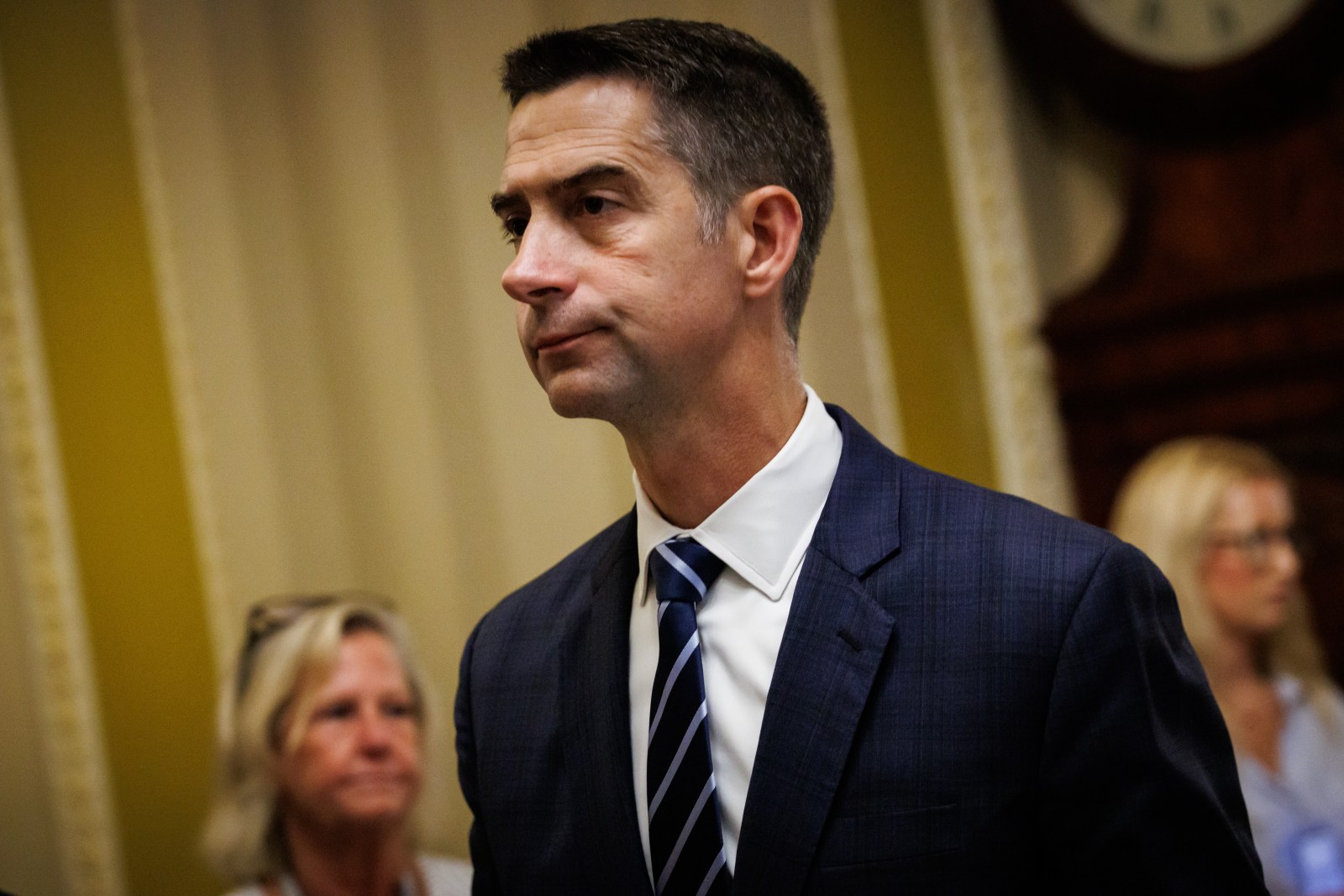
President Donald Trump recently posted on Truth Social, revealing Senator Tom Cotton’s cellphone number. The intention was to pressure lawmakers to support legislation that would make daylight saving time (DST) permanent. Previously, Trump criticized the Arkansas Republican for hindering the Sunshine Protection Act. This bipartisan bill aims to end the recurring clock changes and keep the nation on DST throughout the year.
In Trump’s post, he referred to Cotton as “a friend” and encouraged supporters to contact the senator. “For some reason, Tom is stopping the Bill, and in the Senate, it’s very easy to do, it only takes one! It should pass overwhelmingly, in a Bipartisan fashion,” Trump wrote. When Newsweek attempted to call the number Trump shared, the call went to voicemail. Senator Cotton did not comment on the incident.
On November 1, Americans are slated to revert to standard time. The Senate, currently in recess until after midterm elections, presents procedural and political challenges to the legislation, despite its bipartisan approval in the House with a 308-117 vote in July.
Fight Over Daylight Saving Time
The president has advocated for ending clock changes, citing benefits such as improved public health, reduced crime rates, fewer traffic accidents, and increased economic activity. “Nobody wants to spend their precious time running all over the place, turning Clocks back twice a year and, having sunshine in the afternoon is better than early in the morning!” Trump remarked. He also mentioned the PGA TOUR, which seeks more daylight to conclude tournaments.
Opposition came from sleep medicine experts who were among the primary critics of permanent DST. In July, the American Academy of Sleep Medicine endorsed an alternative bill establishing permanent standard time. AASM spokesperson Karin Johnson noted that permanent DST could misalign our biological clocks by delaying daylight exposure.
Senate Opposition to Permanent DST
The debate has revealed a division among Republicans. A YouGov poll from February showed that 64 percent of Americans prefer to eliminate biannual clock changes. Trump branded the proposal as the “No More Changing of Clocks Act,” yet Cotton remains a notable opponent.
Senator Cotton has argued that permanent DST could lead to dangerously dark mornings in winter. During a Senate speech, he pointed out that children would start school in the dark. Similarly, Senator Mike Rounds expressed concerns for northern states where sunrise might occur as late as 9:30 a.m. Republicans like Ted Budd, Deb Fischer, and others have opposed the bill, along with Democrats such as Lisa Blunt Rochester and Tammy Duckworth.
History of Daylight Saving Time
The discussion around eliminating biannual clock changes has persisted for over a century. According to U.S. Department of Transportation records, several attempts at permanent DST met with backlash.
- 1918: DST was first introduced during World War I to conserve resources, but it was repealed post-war due to unpopularity.
- 1942-1945: During World War II, the federal government mandated year-round DST.
- 1966: The Uniform Time Act standardized DST schedules but allowed states to opt out.
- 1974: A short-lived experiment with permanent DST ended due to concerns about dark winter mornings. Congress reversed this within a year.
- 2007: The Energy Policy Act extended DST by several weeks. Currently, clocks change in March and November.
- 2022: The Senate passed the Sunshine Protection Act, aiming for permanent DST, but the House stalled it.
- July 2026: The House passed a permanent DST bill, moving it to the Senate.
November 1, 2026: Under existing law, Americans must turn clocks back unless Congress takes action.
What Happens Next
The bill is still with the Senate’s Committee on Commerce, Science, and Transportation. However, no vote has been scheduled. Senate Majority Leader John Thune doubts the bill’s ability to secure the 60 votes required for advancement, saying, “I just don’t think we want a mandate.”