
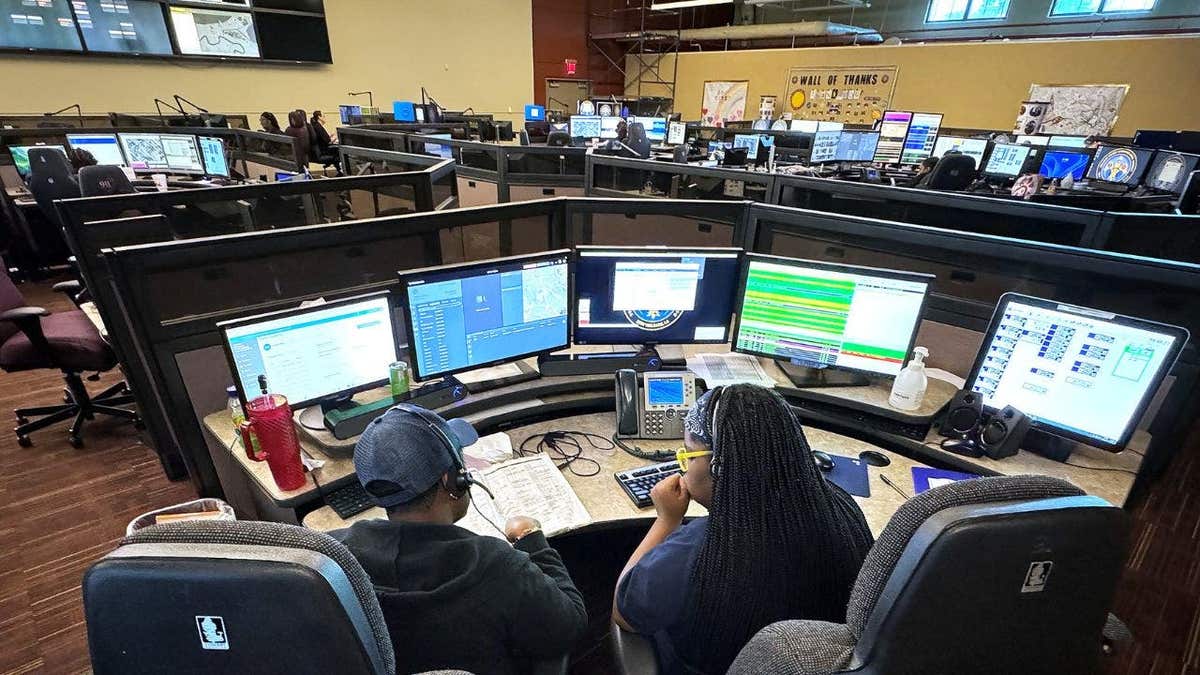
When you dial 911, you often expect to speak with a human. However, in New Orleans, artificial intelligence might answer the call in specific instances of repeat auto crash reports. The Orleans Parish Communication District (OPCD) manages 911 communications and employs AI to assist with repeat crash reports. This is done to ensure human call-takers remain available for urgent emergencies.
What The AI System Does
OPCD collaborated with Carbyne to develop the AI-V Emergency Call Triage system, launched in 2023. This technology addresses sudden influxes of calls concerning the same auto crash. A single accident can generate many calls from nearby drivers, especially during busy periods. The system identifies calls within 200 meters, about 650 feet, of a known crash. It intervenes only when all human call-takers are occupied. OPCD has not expanded this approach to other types of emergency calls.
AI Call Handling Process
When AI answers a call, it identifies itself as New Orleans 911 and asks whether a call is about a crash at a specific location. If the caller responds negatively, the call returns to the queue for a human responder. If the caller confirms the crash, the AI informs them that 911 is already aware of it. Those involved in the accident or callers with new information can wait for a human responder. If not, they decide when to hang up since the AI cannot end the call.
Limitations of the AI System
The AI cannot dispatch emergency responders or prioritize call urgency. It is not a large language model like ChatGPT but focuses on managing repeat crash reports within the emergency network. If the AI does not understand a caller, the call returns to the human queue. The system was trained on local 911 recordings to better understand New Orleans accents and street names.
Call Recording and Privacy
All calls, including those handled by AI, get recorded with normal metadata and audio for later review if needed. These records are not uploaded to external large language models, addressing privacy concerns.
AI Performance and Future Use
Before deployment, OPCD tested the technology thoroughly. During its initial live months, all calls managed by AI were reviewed, showing no significant errors. This approach shows promise, reducing redundant calls and answering distressed callers faster. Carbyne reports that 3,500 events were triaged over a 90-day period, with redundant calls dropping over 30% and calls answered up to 40 seconds quicker.
AI’s Role in the Future of Emergency Communication
OPCD views AI as support for humans rather than replacement. Staffing shortages are a challenge across the 911 industry. AI aims to manage repeat reports during surges so human call-takers can handle urgent needs. While OPCD studies possible expansions, AI’s live use remains limited to auto-crash scenarios. Communities might need to evaluate how AI integrates into public services, ensuring easy access to human responders when critical.
As AI becomes more integrated into emergency responses, understanding its role and limitations is crucial. New Orleans provides a specific test case, showing AI’s potential in managing call surges efficiently.