
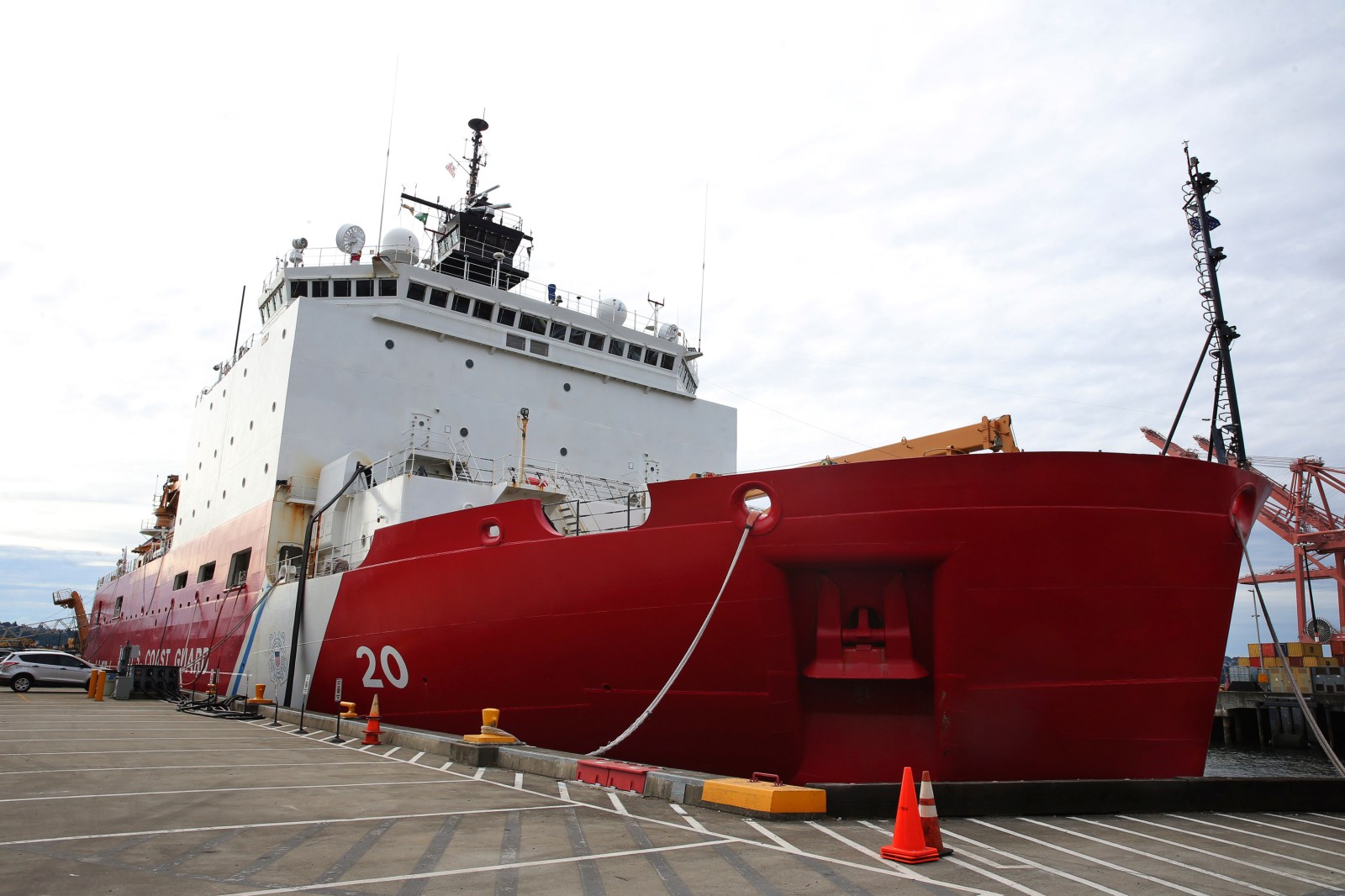
The United States faces challenges in building icebreakers. The Government Accountability Office (GAO) highlights delays, cost overruns, and lack of skilled workers in a report on U.S. icebreaker construction. Seven years after commissioning, the first of three heavy icebreakers may not be ready until 2033. Canada also announced an $11 billion program to build six icebreakers for its Coast Guard, with the first expected by 2032 and the fleet by 2038.
As the Arctic gains importance due to climate, research, security, and economic interests, the U.S. must learn from Finland, a nation experienced in icebreaker construction. Finland is building four icebreakers for the U.S., expecting completion by 2028. Robin Häggblom, a senior adviser at Risk Intelligence, notes Finland’s expertise, with approximately 60% of the world’s icebreakers built there.
Finland’s Role in U.S. Icebreaker Program
The U.S. relies on Finland to build icebreakers due to a lack of domestic expertise. In 2023, following Finland’s NATO membership, the U.S. partnered with Finland in a $6.8 billion deal involving two U.S. companies: Bollinger Shipyards and Davie Defense. Technology and skills will transfer from Finland to the U.S. during this program, aiming to develop U.S. capabilities.
Arctic’s Global Importance
Climate change and geopolitical dynamics make the Arctic crucial. Häggblom emphasizes that understanding climate impacts and accessing minerals and energy resources in the Arctic are urgent tasks. The Arctic is strategically important for defense, particularly concerning the U.S.-Russia security dynamic, given the transpolar route between the two countries.
Russia, with the longest Arctic coastline, possesses the most icebreakers. Finland contributed to building some of them. The U.S. has an Arctic coastline in Alaska, yet maintains only about two operational polar icebreakers. Häggblom underscores the diminished capability of the U.S. to engage in Arctic ventures.
China’s Interest in the Arctic
China, lacking Arctic territory, engages in the region through research and shipping activities. It has multiple icebreakers and tests shipping routes such as the Northeastern Passage, as illustrated by Sea Legend’s commercial cargo service test.
Häggblom highlights the growing significance of the Arctic for various global interests. At this time, U.S. capabilities in the Arctic have deteriorated. The Arctic Security Cutter program is viewed as a practical step forward, in contrast with other expensive defense programs.
The future remains uncertain regarding U.S.-built follow-up icebreakers. Bollinger is set to build four in Louisiana with Finnish assistance, with Davie constructing three in Texas. The main question is whether the U.S. can meet schedules and budgets effectively.