
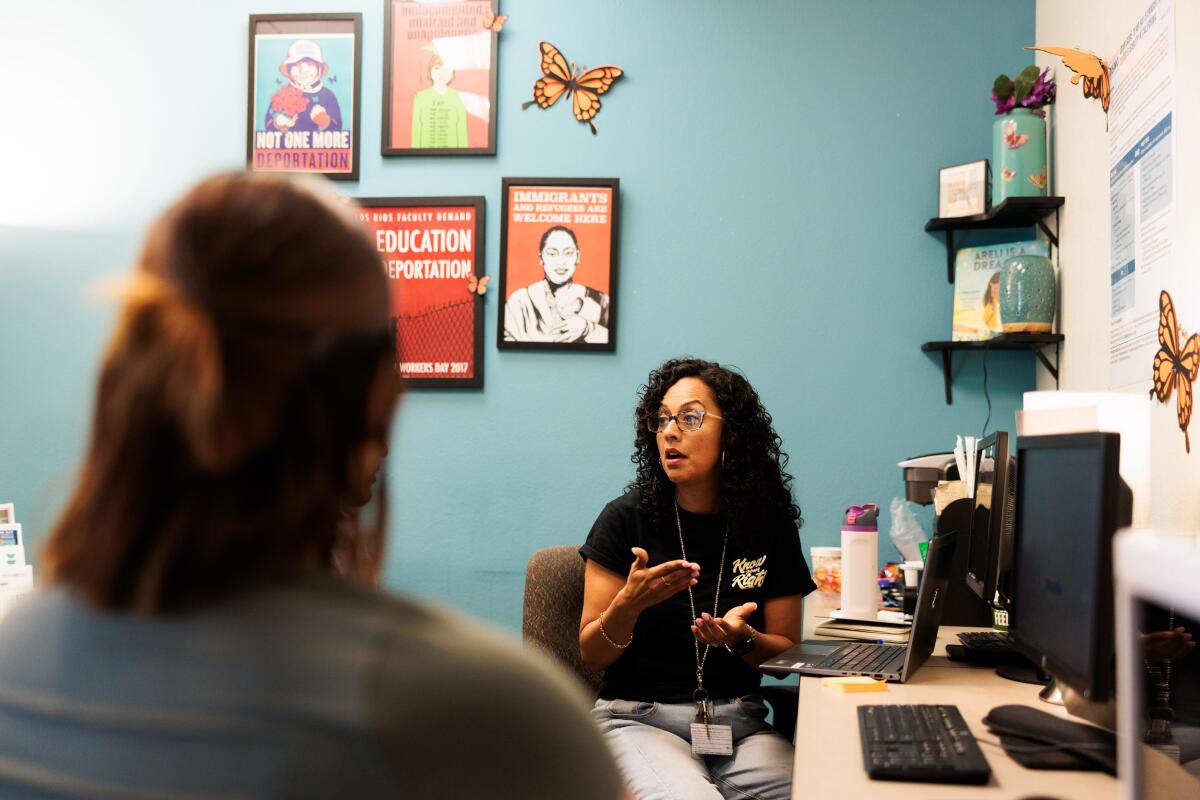
At Folsom Lake College, a notice on the main administrative building wall encourages students without legal status in the U.S. to continue their education, assuring them they are not alone. This message resonates in Alicia Alejo’s office at the Undocu-Falcons Center, where she aids undocumented students. She helps them access legal consultations, mental health services, and financial aid. However, during the Trump administration’s deportation efforts, these students often remained unnoticed, preferring online classes and avoiding campus activities.
California stands apart nationwide by offering significant support to undocumented college students. The state ensures in-state tuition and state-based financial aid through the California Dream Act. Enrollment fees at community colleges are waived, and specialized staff assist undocumented students. Yet, President Trump’s immigration policies led to a decline in state financial aid applications from these students.
The California Student Aid Commission reports a drop in applications from 35,949 last academic year compared to nearly 50,000 five years earlier. Additionally, between 2016 and 2022, the enrollment of low-income undocumented students in the University of California and California State University systems halved. Experts cite the pandemic and Trump’s immigration strategies as contributing factors. With the end of Deferred Action for Childhood Arrivals (DACA) for first-time applicants, students face uncertainty about future lawful employment.
“Undocumented students have become less vocal,” Alicia Alejo remarks.
The Department of Justice suing California and 16 other states over tuition support for undocumented students creates further hesitation among families about pursuing higher education.
Christian Espinoza’s Journey
Moving from Mexico to California’s Inland Empire at nine, Christian Espinoza excelled in school and made the most of available resources for undocumented students. Dream Act grants and institutional aid helped him earn degrees from UCLA. However, during his doctoral studies at Claremont Graduate University, federal challenges impacted his immigration status. After detention by U.S. immigration authorities, Espinoza had to leave the country amid re-election of Trump.
Espinoza completed his doctorate while in Mexico City but struggles with finding employment due to Mexico’s educational system differences. He remains hopeful for change in both countries’ treatment of undocumented individuals.
Work Permit Challenges
Many students lack work permits necessary for internships and jobs. California universities and lawmakers have created opportunities that do not require federal authorization. Dream Summer fellowship by the UCLA Labor Center awarded over $6 million to around 1,000 students in social justice roles. State and university policies on hiring undocumented students remain contested. The University of California abstains from employing students without federal work permits despite advocacy efforts.
California is also fostering entrepreneurial skills since undocumented people can legally start businesses. A 2020 grant program aids those facing employment barriers in establishing or maintaining businesses.
These initiatives aim to encourage college attendance among undocumented students. Failing to engage this demographic may mean losing potential talent, according to experts.
“Could they become the next researchers or trailblazers?” asks Parshan Khosravi of uAspire. “Absolutely, they can.”
This story, produced by The Hechinger Report, emphasizes inequality and innovation in education. Contributions from Times staff writer Jaweed Kaleem.