
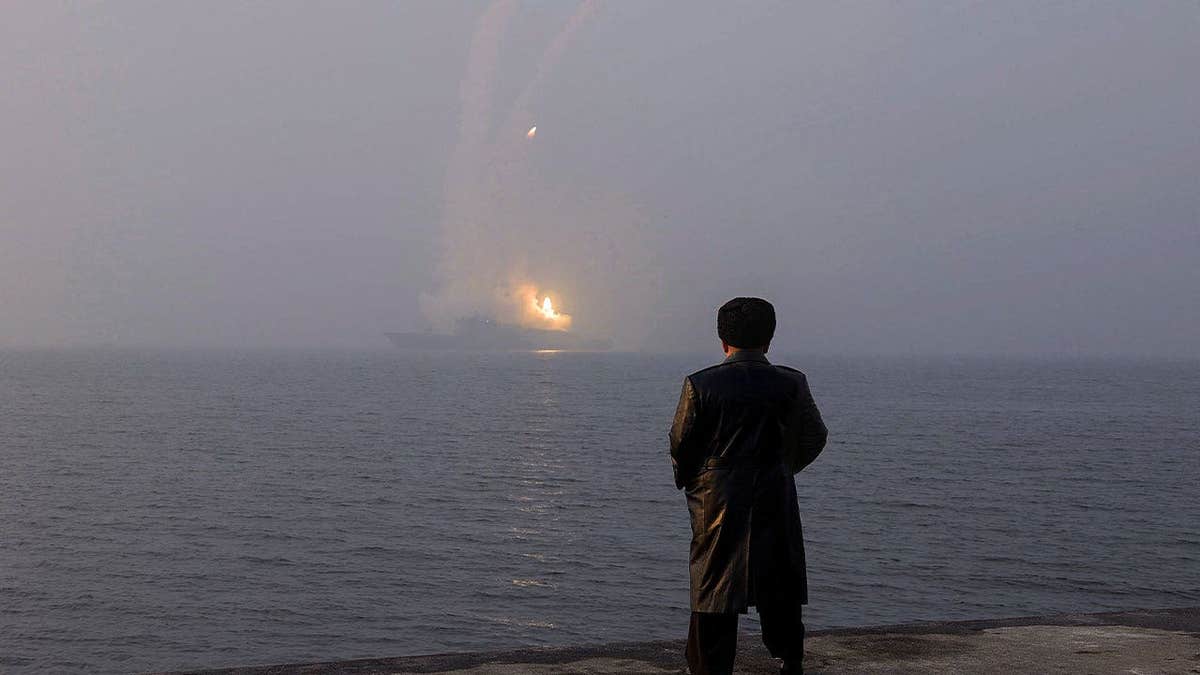
North Korea recently carried out a new ballistic missile launch, marking the second such event in under a week. This launch was announced by Japan’s prime minister’s office on Tuesday. Specifics about the missile’s path, distance, and landing site were not immediately disclosed.
The U.S. military is actively monitoring the situation and is in communication with allies and regional partners. According to the U.S. Pacific Command, current evaluations suggest these missile activities don’t pose an immediate threat to U.S. personnel, territory, or allies. The United States maintains its commitment to defending its homeland and allies in the region.
The new launch follows a previous ballistic missile test by North Korea from its eastern Wonsan area on August 5. That missile landed in waters off North Korea’s east coast, without reaching Japanese territory. Japan’s Defense Minister Shinjiro Koizumi emphasized that these repeated missile activities by North Korea threaten the security of Japan and the region. As a response, Japan lodged a diplomatic protest with Pyongyang via their Beijing embassies.
In response to the August 5 launch, South Korea enhanced its surveillance and coordination with the U.S. and Japan, as reported by South Korea’s Joint Chiefs of Staff. South Korea’s national security council labeled this action a violation of U.N. Security Council resolutions and urged North Korea to halt its missile launches.
These missile tests occur in anticipation of the annual joint military exercises between the U.S. and South Korea, typically conducted in the latter part of August. The Ulchi Freedom Shield exercises aim to build mutual understanding and defense capabilities among the Combined Forces Command, United States Forces Korea, the United Nations Command, and South Korea’s Joint Chiefs of Staff, as well as other government agencies. This exercise is designed to strengthen combined defense postures against a wide range of security threats.
The training includes live, virtual, and constructive field-based exercises engaging personnel from various military services. While U.S. and South Korean officials assert the training is defensive, North Korea perceives these drills as invasion preparations, often reacting with missile launches in response.
Prior to the August 5 test, North Korea had not launched a ballistic missile since late June, during which it tested a tactical ballistic missile with a ‘special mission’ warhead as per state media reports. Following these tests, North Korean leader Kim Jong Un underscored the need to enhance the military’s offensive capabilities.