
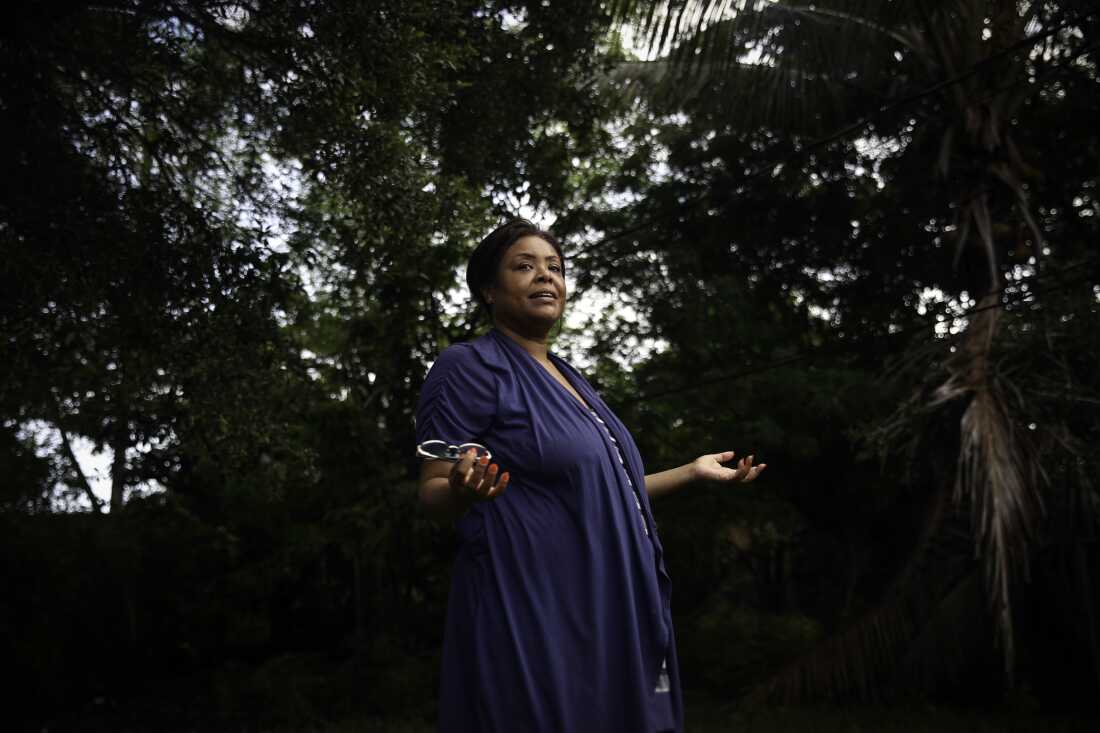
Farah Larrieux stood in her South Florida backyard on a July morning. Despite the early hour, fatigue marked her features as she moved trash and recycling bins to the curb. A throbbing headache was her companion after finishing her overnight hotel shift. As a Haitian immigrant in the U.S., Larrieux faces the loss of her legal status due to recent changes to Temporary Protected Status (TPS).
TPS was initially granted to Haitians following the devastating 2010 earthquake. The Supreme Court recently allowed the Trump administration to end these protections, leaving around 300,000 Haitians like Larrieux unsure about their future. This decision has deeply affected South Florida’s Haitian community, where many work in health care, hospitality, and construction.
The Department of Homeland Security stated that conditions in Haiti have improved enough to support the return of Haitian nationals. They emphasized that TPS was never meant to become a de facto asylum program.
Larrieux, who has lived in the United States for nearly two decades, struggles with insomnia and an overwhelming sense of fear. Her home is a refuge stocked with supplies, as she dreads a visit from Immigration and Customs Enforcement (ICE). She has memorized her attorney’s number for use in case of detention.
Larrieux has put her communications business on hold to focus on applying for asylum. She fears that returning to Haiti could be deadly due to her public criticism of the government. “If detained by ICE or returned to Haiti, my safety is at risk,” she expressed with emotion.
The apprehension of many Haitians across Florida, where about 500,000 individuals of Haitian descent reside, intensifies as TPS protections end. Over 150,000 Haitian TPS holders live in South Florida alone. Miami-Dade County Mayor Daniella Levine Cava highlighted their significance to the economy, explaining that their labor in sectors like health and senior care is integral.
Paul Christian Namphy, from Family Action Network Movement, estimated that Haitian TPS holders contribute billions to local economies, including Miami’s. He warned of catastrophic economic consequences if these individuals are removed.
Father Reginald Jean-Mary, pastor at Notre Dame D’Haiti Catholic Mission, observed the growing fear and uncertainty in his community. He questioned the federal government’s decision and pointed to the U.S. State Department’s current travel warnings against Haiti due to ongoing violence and instability.
Jean-Mary criticized the lack of humanity in asking Haitians to return to unsafe conditions, which the U.S. government itself advises against.
The Department of Homeland Security did not disclose plans regarding enforcement involving Haitian nationals. The agency maintains its operations remain standard nationwide.
After her shift, Larrieux took solace in her backyard, reminiscing about Haiti as she smelled the rain-soaked earth and saw mangoes hanging from trees. Despite the nostalgic moment, she knew the realities of returning. Armed gangs, widespread violence, and a national state of emergency since March 2024 make Haiti unsafe for many.