
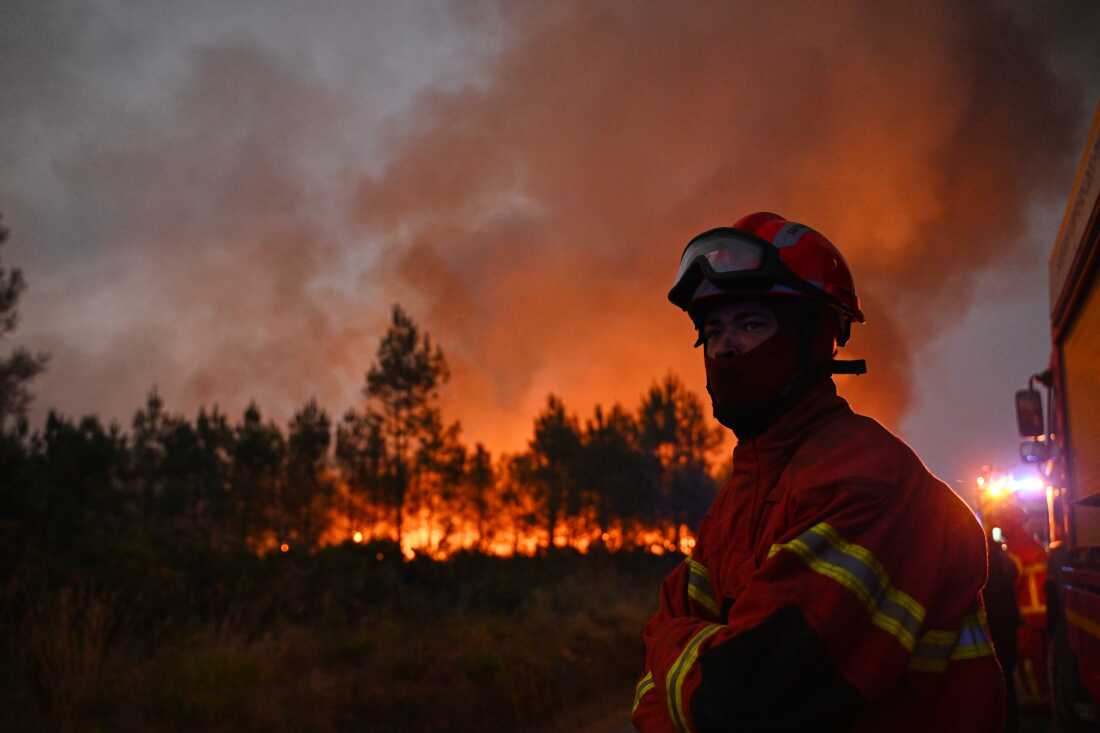
LEGE-CAP FERRET, France — French authorities evacuated an additional 4,000 people from tourist spots on the Atlantic coast on Tuesday, as surging heat jeopardized control over a massive wildfire west of Bordeaux. New fires erupted near Grand Crohot beach on the Lège-Cap-Ferret peninsula, according to local officials.
A fleet of 23 aircraft, up from 18, deployed water and fire retardants to contain the blaze. Gironde prefect Sophie Brocas stated the situation remained precarious, highlighting that around 60,000 evacuees from Le Haillan and nearby areas could return, though they should remain alert. The dual actions of evacuating coastal resorts while allowing some residents back revealed the fire’s volatile nature.
Across France and Spain, about 330,000 people have been displaced by large wildfires. Spain prepared for its fourth summer heat wave while several blazes continued to rage. Despite this, Spanish authorities began lifting some evacuation and stay-at-home orders, thanks to the efforts made overnight by firefighters.
Challenges in the Gironde Region
The Gironde fire has consumed land four times the size of Paris, forcing 220,000 evacuations. Interior Minister Laurent Nuñez noted this likely represents the largest civilian evacuation in France outside of wartime.
We are at a point of fragility,said Eric Brocardi, spokesperson for France’s national firefighters federation. He emphasized continued efforts against the blaze despite rising temperatures.
Some tourists persisted with their vacations despite the fires, unwilling to forfeit costly fees. The fires generated a unique weather phenomenon known as a pyrocumulonimbus cloud, causing lightning and new fires.
France’s national weather service issued a yellow heat warning for Gironde, predicting temperatures up to 35°C (95°F). France has seen more than 1,160 square kilometers (448 square miles) burn this year, per the Interior Ministry. The European Union’s Copernicus climate service reported Europe is warming faster than the global average, affecting fire intensity and spread.
Efforts to Control the Blazes
In Le Porge, approximately 150 homes were destroyed. Officials warned that smoldering vegetation and changing weather could trigger new fires. Military and fire-prevention teams cut over 103 kilometers (64 miles) of firebreaks. At least 110 firefighters have suffered injuries according to the prefecture.
Progress and Continuing Risks
In the Landes region, 15,000 out of 30,000 evacuees were allowed to return after a fire stopped spreading. French President Emmanuel Macron noted the contained fire in the Landes, yet authorities confirmed it wasn’t extinguished, and risks remained.
Spanish firefighters made headway, allowing evacuation orders to lift for 20,000 individuals. Despite controlled burns, smoke reached Madrid, with residents experiencing smoke and ash. Spanish Interior Minister Fernando Grande-Marlaska reported optimism about progress, though the country braced for severe heat.
Spain declared a national emergency due to the fires. Thirteen deaths have resulted from wildfires this year, marking 2026 as a particularly deadly fire season.
The greatest threat surrounds Madrid, with two major fires close to merging into one. In Ávila, a massive fire has scorched over 500 square kilometers (193 square miles), the largest in Spain’s history. Spain has recorded several instances of fire-induced thunderstorms in recent years.
Residents, like David Gonzalez, expressed frustration over the fire’s devastation. Ecology Minister Sara Aagesen reported 1,530 square kilometers (590 square miles) burned this year in Spain, prompting Prime Minister Pedro Sánchez to call for a national wildfire strategy in the face of worsening conditions from climate change.