
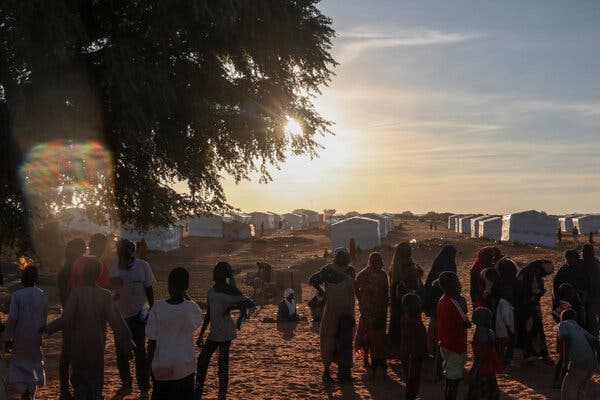
Five months after the United Nations highlighted acts of genocide in Sudan, the country edges closer to another human rights disaster. The Rapid Support Forces, a rebel group with a history of committing atrocities, have positioned themselves around El Obeid, effectively surrounding it. Approximately 600,000 people in the city are grappling with severe shortages of food, water, and medicine. The R.S.F. has already executed drone attacks, resulting in civilian casualties.
The United Nations’ high commissioner for human rights, Volker Türk, has emphasized the urgency of the situation: “The signs from El Obeid are clear and unmistakable: Another human rights catastrophe is unfolding in Sudan.”
Despite the severe nature of the conflict, Sudan’s plight is often overshadowed by other global events. Unlike the wars in Ukraine or the Middle East, Sudan does not easily align with larger global political narratives. This oversight is partly due to racial and economic biases that lead to Africa being neglected by the international community.
The war in Sudan is devastating. It ranks among the world’s deadliest, with an estimated death toll between 150,000 and 400,000, as reported by independent monitors. The conflict has displaced millions, many seeking refuge in neighboring countries. The prolonged fighting raises concerns about regional instability spreading beyond Sudan’s borders.
International efforts must intensify to stop the violence and prevent further mass displacements in Sudan. The threat looming over El Obeid demands immediate action. The United States is in a strategic position to influence regional powers to mediate the conflict. American influence over countries such as Egypt, Saudi Arabia, and the United Arab Emirates—who have been involved with the warring factions—can reignite peace talks and lead to a cease-fire. The U.S. government must renew its commitment to securing peace in Sudan to protect the innocent civilians at risk of sexual assault, torture, and death.
Achieving peace in Sudan presents significant challenges. Since gaining independence in 1956, the nation has endured political instability, marked by coups, lengthy civil wars, and the Darfur genocide in the early 2000s. The primary conflict in Sudan is ethnic rather than religious. Although over 90 percent of Sudan’s population is Muslim, they are divided between an Arab majority and several non-Arab Black ethnic groups. During the Darfur genocide, government-backed Arab militias killed hundreds of thousands of Black civilians.
The current conflict erupted after Omar al-Bashir, who led Sudan for thirty years, slashed fuel and wheat subsidies in 2018, sparking protests. In 2019, the military and private militias, historically influential in parts of Sudan, overthrew the government. However, the brief alliance soon dissolved, leading to a civil war driven by territorial control and access to natural resources like gold, oil, and agricultural products. Both factions have committed atrocities.
The Sudanese Armed Forces, led by Gen. Abdel Fattah al-Burhan, fight on one side. Recognized by many nations as the official head of state, this military entity maintains connections with the Muslim Brotherhood and has received support from Iran and Egypt. The United Nations has accused them of war crimes, including torture, sexual violence, and using chemical weapons.