
U.S. stock markets faced declines on Wednesday amid speculation that the Federal Reserve might increase interest rates this year to control inflation. While higher rates can help manage rising prices, they can also slow economic growth and impact investment prices negatively.
The S&P 500 index fell by 1.2%, reversing a modest earlier gain after the Federal Reserve’s new projections indicated that nine of 18 policymakers expected at least one rate hike this year. The Dow Jones Industrial Average also shifted from a morning gain of 280 points to a loss of 507 points, a 1% drop, while the Nasdaq composite decreased by 1.3%.
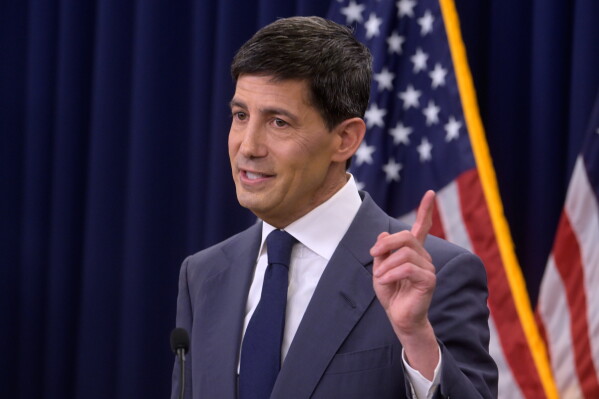
Federal Reserve Chairman Kevin Warsh, in his first press conference, did not provide a forecast for the federal funds rate’s position through 2026. Warsh is considering revising how the Fed communicates with financial markets and the public. One immediate change was the removal of ‘forward guidance’ in Fed statements, which previously hinted at potential future interest rate changes.
Warsh emphasized that market reactions should be based on actual economic data, such as inflation and job market reports, rather than anticipated Fed actions. He also mentioned potential changes to the quarterly release of projections surrounding interest rates, economic growth, and inflation. Despite the unease, Warsh noted there wasn’t a strong consensus behind the latest projections.
Following the release, stocks fluctuated several times. Meanwhile, the Fed decided to keep the federal funds rate steady at this meeting, consistent with decisions earlier this year. Treasury yields moved upwards, highlighting market expectations. The yield on the 10-year Treasury rose to 4.49% from 4.43% the previous day, while the two-year Treasury yield increased to 4.21% from 4.05%.
Market participants now estimate an 84% chance of a rate hike this year, up from 59.5% a day earlier, based on CME Group data. Concerns about inflation are driving high yields globally, posing a potential risk to economic growth and investment values.
In the U.S. stock market, some companies faced significant drops. SpaceX experienced a 4.9% decrease after a previously successful market debut. Microsoft, Amazon, and Nvidia also recorded declines of 3.8%, 3.5%, and 1.3%, respectively. These losses overshadowed La-Z-Boy’s notable 14.8% increase in response to better-than-expected profits and revenue, helped by new store openings. However, La-Z-Boy’s CFO Taylor Luebke expressed a cautious outlook on the broader sales environment.
Ultimately, the S&P 500 lost 91.25 points to end at 7,420.10. The Dow Jones fell 507.12 points to 51,492.55, and the Nasdaq composite dropped 354.69 points to 26,021.66.
A report released Wednesday showed that retailers nationwide saw revenue growth in May exceed economists’ predictions, suggesting consumer spending might support economic health. However, high inflation is causing financial concerns among shoppers.
Oil prices remained stable on Wednesday after earlier declines, reflecting optimism about a potential U.S.-Iran deal aimed at reinstating global oil flows. Once the agreement is finalized, Iran is expected to reopen the Strait of Hormuz, facilitating crude shipments from the Persian Gulf and potentially easing inflationary pressures. Brent crude oil prices rose by 0.7% to $79.55 per barrel, still higher than pre-war levels but lower than recent highs exceeding $100.
International stock markets saw varied performances. In Asia, South Korea’s Kospi index climbed by 1.6%, while Hong Kong’s Hang Seng index dropped by 0.7%, marking significant movements globally.