
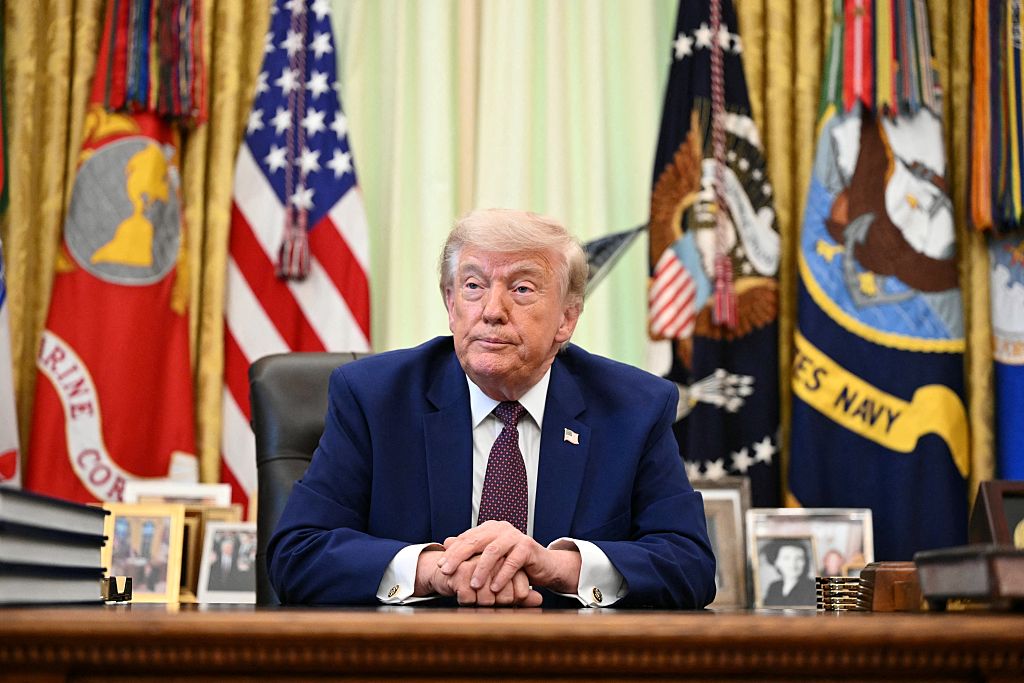
President Donald Trump has enacted a significant executive order, removing civil-service protections for around 8,000 federal employees. These employees will transition to a new ‘at-will’ employment category, enabling rapid dismissals. This order broadens the administration’s capability to replace career officials in influential roles, reminiscent of the Schedule F framework from Trump’s first term.
The order impacts various departments, including cybersecurity, data systems, and emerging technologies. It is expected to trigger legal challenges and disruptions within the federal workforce. Roles affected include chief information officers, deputy CIOs, a chief information security officer, a chief technology officer, and key senior staff managing IT modernization, data governance, and artificial intelligence.
What Is Trump’s Latest ‘At-Will’ Employment Order?
The executive order reclassifies thousands of senior career officials into the Schedule Policy/Career category, established in Trump’s second term for roles significantly influencing federal policy. Employees in this category lack the traditional appeals process available to other civil servants, making them vulnerable to dismissal without recourse.
Most affected positions are at the GS-15 level, covering directors, deputy directors, chiefs of staff, senior advisers, regulatory analysts, public-affairs heads, and overseers of major federal grant programs. These roles typically earn near $200,000 annually.
At the signing ceremony, White House officials contended that the change allows senior career staff to implement policy without internal hindrance. Critics argue the order revives Schedule F’s core elements and risks introducing political bias into roles meant to remain impartial. Scott Kupor, Director of the Office of Personnel Management (OPM), supported the shift, emphasizing a need for position holders eager and capable of carrying out the administration’s objectives.
Impact on Federal Agencies
The repercussions of Trump’s ‘at-will’ employment order vary across federal agencies. Departments with senior civil servants involved in national security, scientific, regulatory duties, or technology management face the most risk. These departments could experience significant disruption and politicization as they lose established civil-service protections.
Department of Homeland Security (DHS)
DHS, employing one of the largest senior workforces, includes tens of thousands from GS-12 to GS-15 levels. Many reclassified roles are in cybersecurity, intelligence, border security strategy, and technology infrastructure. Continuity is crucial in these fields, and political changes could disrupt national security operations.
Department of Defense (DOD)
The DOD employs numerous senior analysts, modernization leads, and policy advisers shaping military strategy and procurement. The DOD has one of the most extensive GS-14 and GS-15 workforces, making it highly susceptible to the impacts of the at-will classification.
Department of Health and Human Services (HHS)
HHS staffs over 25,000 employees in GS-13 and GS-14 grades. These positions manage public health analytics, data governance, and regulatory policy, all reliant on scientific objectivity, which could be destabilized by frequent personnel changes.
Department of the Treasury
The Treasury houses significant clusters of GS-13 and GS-14 officials in sanctions enforcement, financial systems oversight, and economic policy analysis. Their roles engage with global markets and national security, leaving the department vulnerable to political turnover.
Department of Justice (DOJ)
DOJ’s senior positions, predominantly GS-12 to GS-14, span more than 40,000 legal and policy staff. They influence enforcement priorities and regulatory interpretation, meaning at-will status could affect how laws are implemented and legal judgments determined.
Department of Energy (DOE)
DOE employs significant numbers of GS-13 to GS-15 level employees in cybersecurity, grid security, and nuclear policy. These positions are critical to safeguarding infrastructure and national-security programs, which could suffer if expert personnel are quickly removed.
Environmental Protection Agency (EPA)
The EPA’s workforce is concentrated in GS-12 and GS-13 levels, responsible for environmental enforcement, public health protections, and scientific integrity. Politicization could directly impact regulatory development and data interpretation.
Office of Management and Budget (OMB)
OMB has influential GS-13 to GS-15 officials in regulatory review and data policy, shaping federal regulations and assessing agency performance. At-will status might change how regulations are assessed government-wide.
General Services Administration (GSA)
GSA’s senior workforce in GS-12 to GS-14 levels handle modernization, cloud strategy, and AI governance, which support federal agency technology infrastructure. At-will classification might impact procurement, cybersecurity, and technology initiatives rollout.