
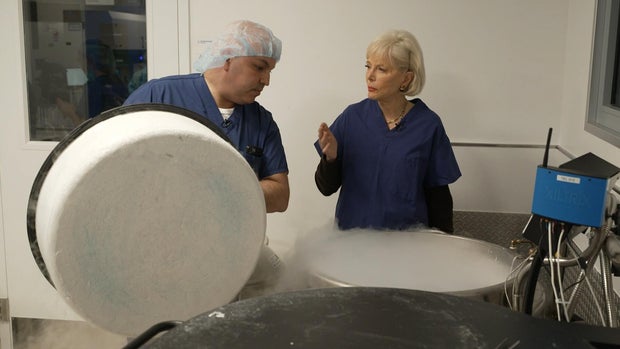
The fertility rates in the United States are declining. A significant factor is a decrease in the number of women having children in their 20s over the past 30 years. Egg freezing has emerged as a solution, allowing women to delay childbearing. This option was previously reserved for medical conditions but has gained popularity for personal choice over the past decade.
The Egg Freezing Process
Patients undergo hormone treatments over nearly two weeks leading to egg retrieval, where a minor surgical procedure extracts and freezes the eggs. This process, similar to IVF, involves delicate work by embryologists to isolate viable eggs. The eggs are then stored in liquid nitrogen at extremely low temperatures.
Considerations and Criticisms
Dr. Tomer Singer, a fertility expert, believes egg freezing offers women more control over their reproductive timeline. However, critics caution that this technology isn’t guaranteed to work for everyone. Dr. Lucky Sekhon explains that the egg count and quality decrease with age, making the 20s an optimal time for freezing.
Personal Experiences
Women like Kate Sonderegger and Katherine Schneider have chosen egg freezing to align their reproductive plans with career goals. Yet not everyone experiences success. Evelyn Gosnell’s experience highlights the unpredictability of using frozen eggs, as many do not survive the thaw or lead to viable pregnancies.
Financial and Social Implications
Egg freezing is expensive, with a single cycle costing upwards of $12,000 plus additional storage fees. Some companies offer this as a benefit, potentially to retain employees longer. There are criticisms that this might discourage women from having children earlier, integrating into workplace culture.
The Future of Reproduction
Dr. Singer speculates that, as technology improves, more women will choose egg freezing. Insurance coverage and reduced costs might see egg freezing become a standard practice for future generations. Yet, as Vardit Ravitsky points out, society might need to focus on making workplaces more accommodating for young mothers, instead of relying heavily on egg freezing.
Conclusion
Egg freezing offers potential but remains a gamble with financial, emotional, and medical risks. Education on fertility options is vital, as is policy change to better support women in balancing family and career aspirations. Despite challenges, many women find reassurance in having the choice, while experts emphasize informed decisions are crucial.