
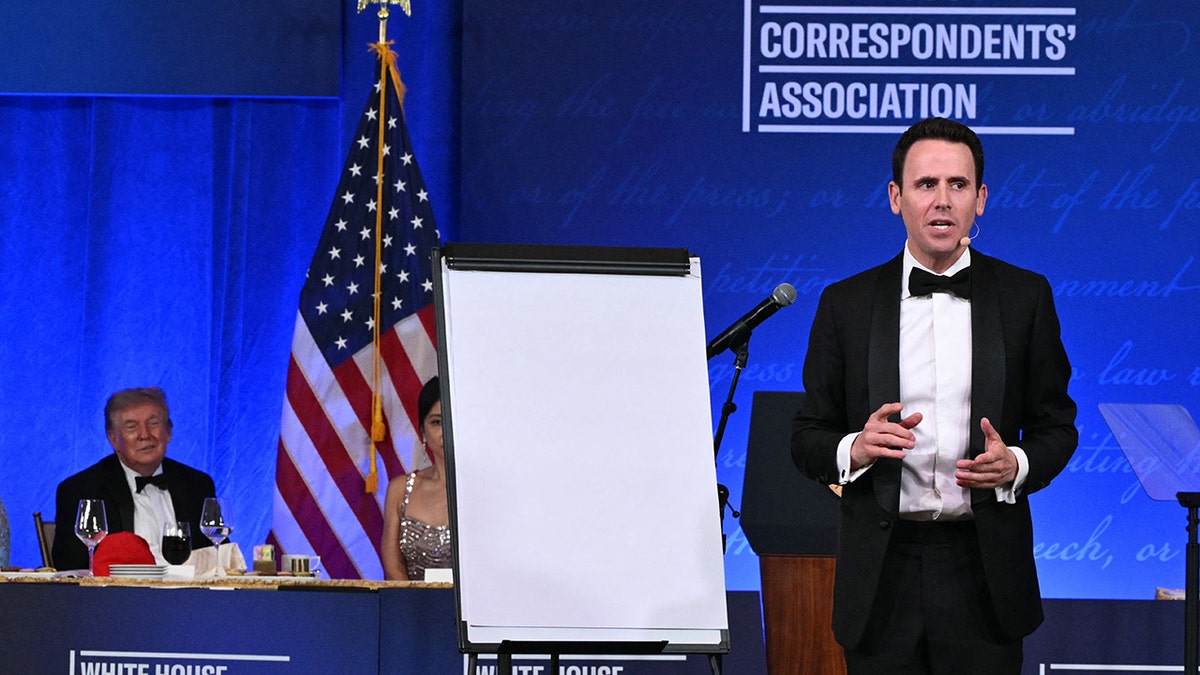
The White House Correspondents’ Association Dinner recently featured mentalist Oz Pearlman. This choice of entertainment holds particular relevance. Mentalists use psychology, suggestion, and observation to create the illusion of mind reading. Pearlman’s performance serves as a metaphor for how the press often reports on political figures like President Donald Trump and Vice President JD Vance.
Reports frequently characterize what these leaders are ‘thinking’ or ‘feeling,’ not simply what they have said or done. Such narratives often begin with phrases like ‘sources close to Mr. Trump’ or ‘White House aides say.’ This approach underscores a reliance on anonymous sources and speculation.
President Trump is known for his accessibility. However, reporters still tend to rely on conjecture and unnamed sources, rather than on direct quotes and actions. In the Executive Office, thousands of employees and a handful of trusted Republicans interact with the president. Yet most stories derive from a broad mixture of individuals and unofficial sources who may not even directly communicate with him.
The event also highlighted the motivations for why sources might share such speculative details. Everyone involved often has a personal agenda, wanting to influence media narratives or advance their careers. As a result, the media sometimes presents these opinions as facts, driven by the highly competitive nature of journalism.
The dinner mirrors the challenges journalists face in distinguishing between speculation and actual reporting. While some journalists resist this trend, others may find themselves exaggerating or predicting in efforts to stand out. This behavior diverts from true journalism, which should focus on verified facts.
The presence of a mind-reader at an event filled with elite journalists seemed particularly fitting. Did any of them notice the parallels?