
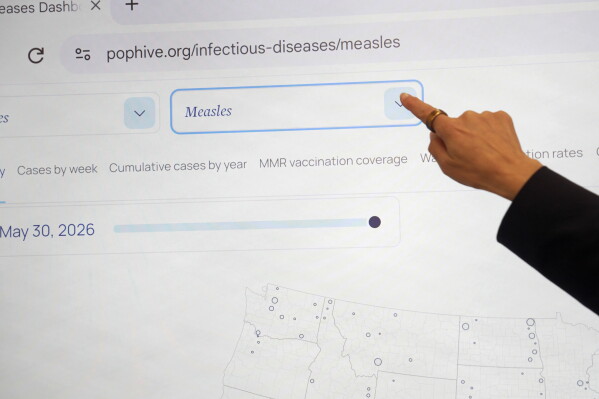
Utah has faced a challenging year combating measles outbreaks, posing a risk to the United States’ measles-free status. Over 680 individuals have been affected since the state’s initial outbreak began on June 20, 2025. Unlike outbreaks in Texas, South Carolina, and Arizona, Utah has struggled to confine the virus to a single area, with infections reported in undervaccinated communities across nearly every county.
The disease has surfaced in various public spaces, such as healthcare facilities, retail stores, and dining establishments, as well as at youth sporting events. A significant exposure event at a state high school wrestling championship in February resulted in at least 46 cases among those who attended.
Measles is highly contagious and presents symptoms like a distinctive rash, high fever, coughing, ear infections, and diarrhea. While many individuals recover, vulnerable groups such as infants, pregnant women, and those with weakened immune systems face severe complications. These may include pneumonia, brain swelling, blindness, or death. Even in healthy individuals, a rare fatal brain disease may develop years after infection.
The measles vaccine is safe and offers 97% protection after two doses. Although infections in Utah have decreased recently, state epidemiologist Leisha Nolen warns that the start of the school year and the cold season may trigger another surge in cases. “It’s still here, it’s still transmitting,” she noted. “We just need those few cases to hit the wrong community and it could flare up really big again.”
Impact of Declining Vaccination Rates in Utah
The highest concentration of cases occurred in the state’s southwest, where 265 individuals contracted the preventable virus since last summer. Measles infections have been reported in 22 of Utah’s 29 counties. In the rural northeast, conditions also favored the virus’s spread.
The so-called “tricounty” health region, comprising Daggett, Duchesne, and Uintah counties, experienced the second-largest decline in childhood vaccination rates statewide. More than 16% of the region’s kindergarteners were unvaccinated last year, while the state averaged 12.8%, falling short of the 95% vaccination rate needed to prevent outbreaks.
The TriCounty Health Department recorded 74 measles cases this spring, largely linked to the youth wrestling tournament. The virus spread from schools to homes, impacting many within the region. Sydnee Lyons, a public information officer, noted that vaccine hesitancy had been rising for some time. Despite this, local and state officials view the region’s response as a success.
Efforts focused on minimizing spread by excluding unvaccinated students from school and advising infected individuals to isolate. Community appeals to prioritize neighborly care succeeded in increasing vaccinations.
TriCounty’s infectious disease specialist Cyndie Mattinson recounts a conversation with a hesitant parent, who feared judgment for not vaccinating. Assurances from the health department helped change misconceptions about their intentions.
U.S. Measles Status Under Review
Utah’s lengthy struggle with measles could impact the U.S.’s measles-free classification. A region is deemed measles-free when local transmission halts for at least a year. The nationwide case count reached 2,104 as of June 18, nearing last year’s total.
Though Utah has battled measles for a year, linkage between the state’s initial clusters and a major outbreak near the Arizona border remains uncertain, according to Nolen. Most Utah cases have originated from within the state.
In November, international health experts will evaluate whether the U.S. and Mexico retain their status. Canada lost its elimination status last year. In Utah, doctors continue educating worried patients and advocating for stronger public health policies.
Dr. Ellie Brownstein, leader of the state chapter of the American Academy of Pediatrics, opposed a failed bill that would have eased vaccine waiver availability. She acknowledges the lack of societal recognition regarding the return of measles. “I don’t know that we get it to end,” Brownstein remarked. “I don’t know that we’re going to get this genie back in the box because there’s enough people out there to spread it.”