
Perseid Meteor Shower Graces the Skies
Today brings a double treat for skywatchers as the Perseid meteor shower coincides with the solar eclipse. This well-loved meteor shower, considered one of the finest annually, has been active since mid-July. It will peak overnight from Wednesday into Thursday.
In areas where the eclipse occurs around sunset, there’s a chance to spot meteors during totality. Under perfect conditions, such as dark skies without light pollution, the Perseids can produce up to 100 meteors per hour. This meteor shower is famous for its fireballs, which are bright meteors that leave luminous trails as they break apart.
Watching the Eclipse Online
If you aren’t located along the path of totality or if weather conditions aren’t favorable, you can still view the eclipse online. Several organizations will broadcast the event live. NASA offers a livestream starting at 1:15 p.m. ET, and the European Space Agency will provide coverage on YouTube beginning at 1:30 p.m. ET (7:30 p.m. CEST).
Understanding Solar Eclipses
A solar eclipse takes place when the sun, moon, and Earth align, with the moon moving in front of the sun and obstructing its light. During a total solar eclipse, the moon completely blocks the sun’s light, darkening the skies as if it’s dawn or dusk. When the sky is clear, the sun’s outer atmosphere becomes visible during totality.
In a partial solar eclipse, the moon covers only part of the sun, creating an impression that the sun has a bite taken out of it. Another type, the annular solar eclipse, occurs when the moon is farther from Earth. Here, the moon doesn’t entirely cover the sun, resulting in a bright ring effect around the moon.
Preparations in Spain for the Eclipse
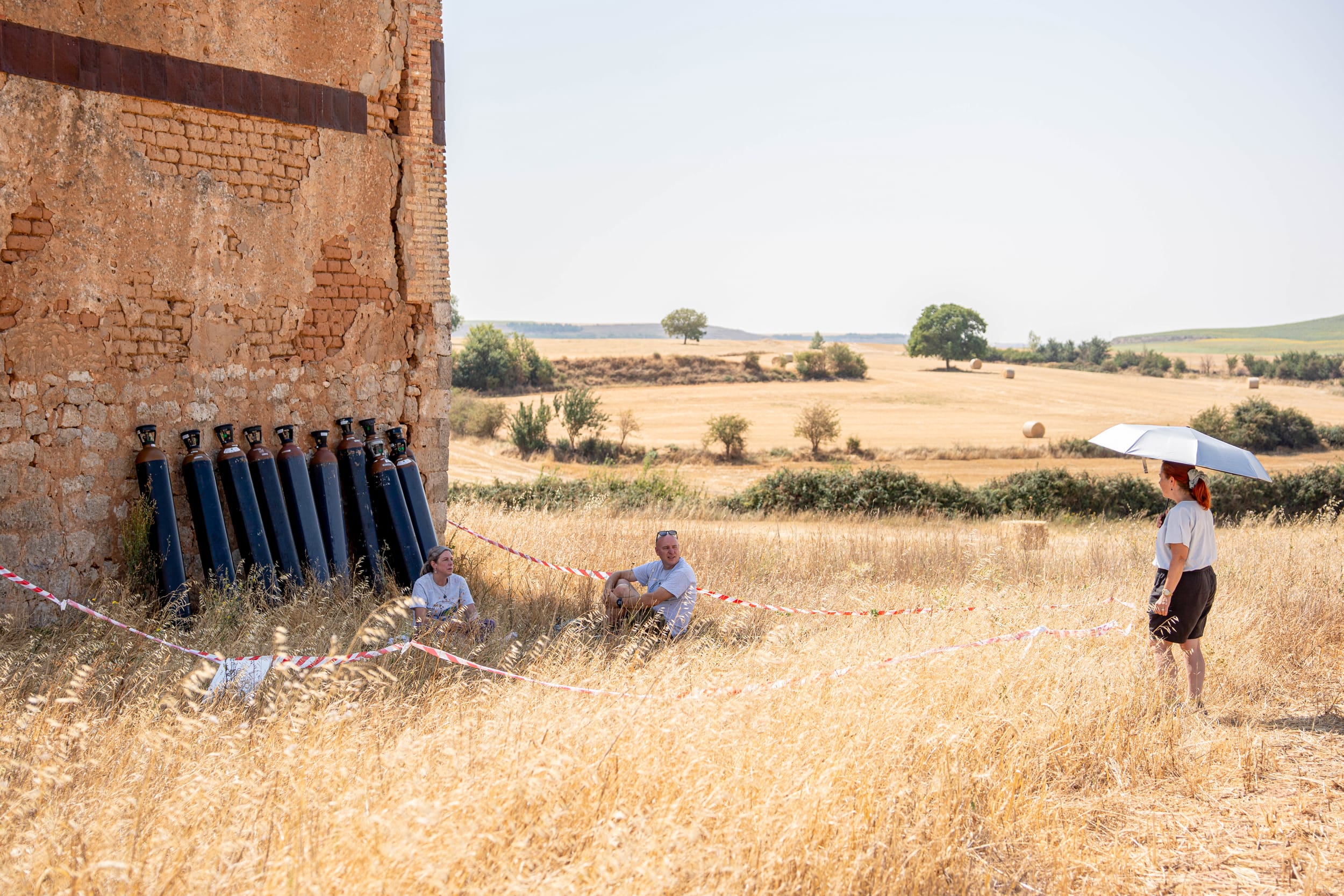
Preparations in Villalibado, Spain, include NASA personnel handling helium cylinders and setting up telescopes for the total solar eclipse. Photos show the enthusiasm and careful arrangements made for this cosmic event.
Eclipse Enthusiasm in Europe
Excitement is high in Europe, with an estimated 450,000 tourists arriving in Spain for the best view of a total solar eclipse visible from mainland Europe since 1999. The path of totality will first pass over Greenland, then parts of Iceland, and finally northern Spain. Spain expects to gain considerable economic benefit from tourism related to the eclipse, with an estimated revenue of 347 million euros, approximately $400 million.
A Grand Event: The Total Solar Eclipse
One of the most awaited skywatching events is the total solar eclipse. It will darken the late afternoon skies for many in Spain, parts of Portugal, Greenland, Iceland, and northern Russia. The path stretches across the Arctic and southern Europe, marking the first total solar eclipse visible from mainland Europe since 1999. Weather permitting, most of Europe, Canada, and northwestern Africa, along with over 20 northern U.S. states, will witness a partial solar eclipse.