
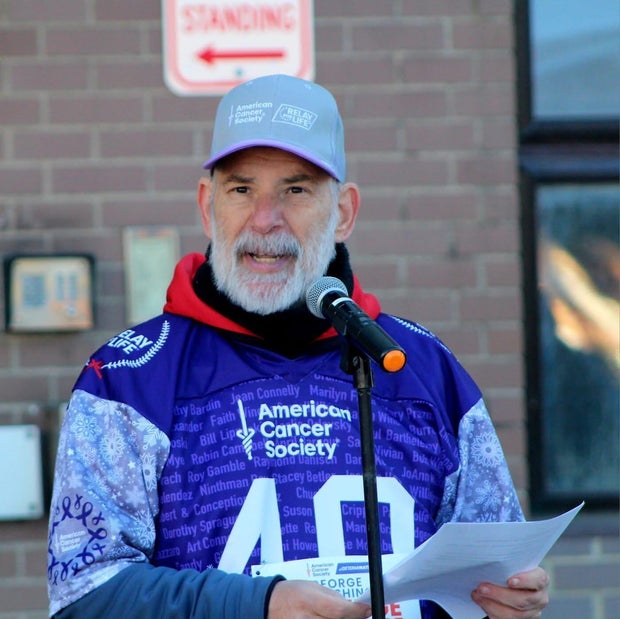
Joe Gillette experienced a strange sensation during his commute one morning. His usual three-lane highway seemed like four. Concerned, he attributed the double vision to a recent bout of COVID-19 and quickly sought medical advice.
Eager to find the cause, Gillette’s doctor referred him to an eye specialist and recommended a brain scan. The eye professional discovered nerve damage in Gillette’s right eye, explaining his vision issues. Although this seemed to answer his concerns, his history with the American Cancer Society urged him to pursue a complete examination.
On his 57th birthday, the results came in. A grim discovery awaited him on his patient portal: he had cancerous tumors in multiple organs, including his kidney, lung, brain, and stomach.
“Cancer, tumor in the kidney, lung, brain, and stomach,” Gillette remembered reading.
His doctor confirmed a diagnosis of Stage IV kidney cancer with multiple metastases. The news was devastating, yet he hadn’t experienced any symptoms other than his vision troubles.
Aggressive Treatment Approach
Dr. Martin Voss, his oncologist at Memorial Sloan Kettering Cancer Center, led his treatment. According to the American Cancer Society, less than a fifth of those with Stage IV kidney cancer survive past five years. Voss initiated a treatment regimen of immunotherapy, followed by radiation and brain surgery. The surgery was complex, requiring Gillette to be in a medically induced coma for ten weeks.
Upon awakening, Gillette was shocked by the passage of time. “I woke up, trying to get out of bed,” Gillette said, astounded by having been unconscious for over two months.
Post-recovery, Gillette underwent additional therapy. The subsequent rounds proved effective, shrinking the tumors substantially. After two years of immunotherapy, he operated again to remove the original kidney tumor. Contrary to his fears, the recovery went smoothly, and he exited the hospital swiftly.
Living with Regular Monitoring
Today, Gillette continues oral immunotherapy and maintains regular check-ups. He meets with Dr. Voss every six to eight weeks along with undergoing MRIs and endoscopies to track any potential new developments.
“There’s a concerted effort to keep things under control and respond promptly to any changes,” Voss explained.
Dr. Alpa Patel of the American Cancer Society emphasizes the significance of groundbreaking treatment options, seeing Gillette’s case as a testament to advancements in cancer care.
Gillette acknowledges feeling anxious during scans but strives to live in the moment. His focus includes family milestones, like welcoming his grandchild and preparing for a child’s wedding. He remains active in cancer survivor groups and continues his volunteer work.
“I’m grateful every day for the support I’ve received,” Gillette stated. “I’m content with my current situation and committed to ongoing treatment.”