
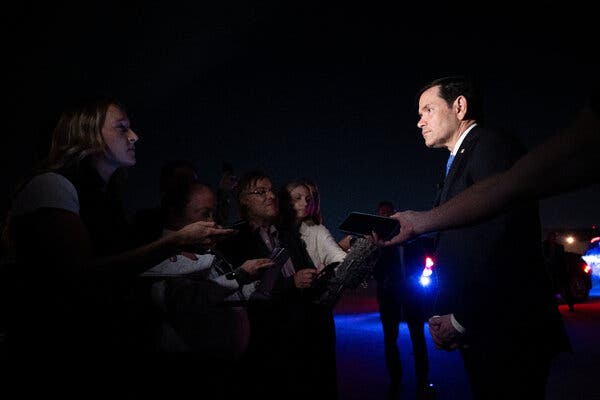
On July 20, 2026, Secretary of State Marco Rubio reaffirmed the United States’ willingness to pursue diplomatic solutions with Iran, amidst ongoing military exchanges. This announcement came after a pattern of nine consecutive nights of U.S. strikes in Iran.
Speaking at Joint Base Andrews in Maryland, Rubio emphasized America’s openness to negotiating with Iran, stating, “We’ve tried multiple times with Iran, and we’ll continue to try. If that door opens, we’ll be happy to see it open.” He also highlighted that changes in Iran’s behavior would be essential for progress, saying, “Their behavior has to change in order for ours to change.”
Despite Iran signaling its desire to negotiate—with efforts reportedly made directly and through mediators—there have been no visible signs of diplomatic progress, and hostilities between the two nations have continued to escalate.
Rubio criticized Iran’s ongoing aggressive actions, including the launch of missiles and drones targeting commercial ships. He noted Iran’s recent provocations, referencing an incident where Iran’s Islamic Revolutionary Guards Corps claimed two oil tankers experienced explosions after attempting to navigate a warning-filled route in the Strait of Hormuz. A British monitoring agency reported a vessel ablaze off Oman’s coastline.
The Strait of Hormuz remains a focal point in the aggression, being critical for global oil passage. Tensions arose after Iran’s attacks on commercial vessels, widening the scope of hostilities. The situation challenges both Iran’s and the U.S.’s affirmations of authority over the waterway.
Rubio reminded that Iran’s actions violated a memorandum of understanding established in June between Washington and Tehran. He asserted that Iran construed the agreement as granting exclusive rights over shipping routes, retaliating against vessels opting for alternatives near Oman’s coast.
Addressing inquiries about President Trump’s previous proposal to impose fees for guiding ships through the strait, Rubio suggested a collaborative international response: “Other countries need to begin to step up and provide—whether it’s hardware or finances—to help carry that burden.” Rubio’s call underscores the necessity for shared responsibility in safeguarding global commerce traversing strategic maritime routes.