
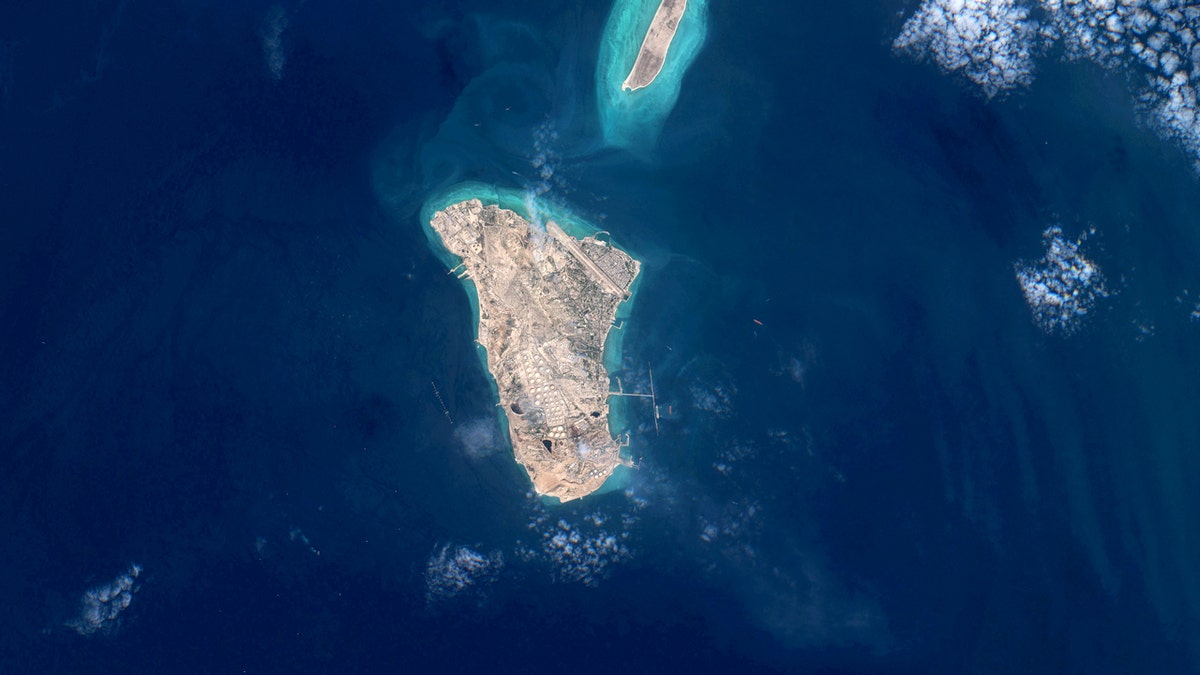
U.S. military experts outline a scenario where Marines and naval forces might execute an operation to take control of Iran’s Kharg Island. This small yet critical island handles about 90% of Iran’s crude oil exports, making it a focal point in the U.S. strategy to economically pressure Tehran.
President Donald Trump sparked attention by not dismissing the idea of seizing the island. During an interview with Fox News, Trump expressed that previous military actions intentionally spared the island’s oil facilities due to their global economic significance.
Vice Adm. (Ret.) Robert Harward, a former U.S. Central Command deputy commander, described how an assault might occur. A Marine Expeditionary Unit could launch an amphibious attack as naval and air forces secure control, giving Iranian forces the chance to surrender. Harward stressed the importance of preserving the island’s oil infrastructure for potential future use by a post-Islamic Republic government.
Kharg Island, located just 16 miles from Iran’s coast, poses challenges for U.S. forces. While experts believe the island could be taken quickly, maintaining control amid Iranian retaliation could prove difficult. Iran’s defense strategy includes missiles, drones, and anti-ship weapons designed to hinder such actions.
Historically, Kharg’s strategic importance has long been recognized. British forces previously occupied it during the 19th century. In the late 1950s, Iran developed it as a major oil terminal. Today, the island represents a key element in Iran’s economic landscape.
Nicholas Carl of the American Enterprise Institute noted Iran’s longstanding investment in defense capabilities to deter U.S. forces. These include anti-ship missiles and other asymmetric weapons.
The U.S. military focus would shift from naval combat to dealing with threats from the mainland. Harward acknowledged that Iran’s lack of air power makes missile and drone attacks on U.S. forces the primary concern.
The strategic complexity involves more than simply capturing the island. Protecting it against sustained attacks and navigating the broader geopolitical implications are critical considerations.
Options beyond a direct military assault are available. For instance, the U.S.-led blockade is already impacting Iran’s oil exports. Additional economic sanctions could target other transport routes without involving ground troops.
Some military strategists, like Mark Fox, suggest that other locations might offer more strategic value. Islands like Greater Tunb and Lesser Tunb, near crucial shipping lanes, could present alternative objectives.
Ultimately, resolving the broader regional issues remains vital. Harward emphasized the importance of a government in Iran that prioritizes its population and ends its contentious foreign policies.
While capturing Kharg Island might happen swiftly, managing the ensuing consequences would demand persistence and strategy beyond the initial military operation.