
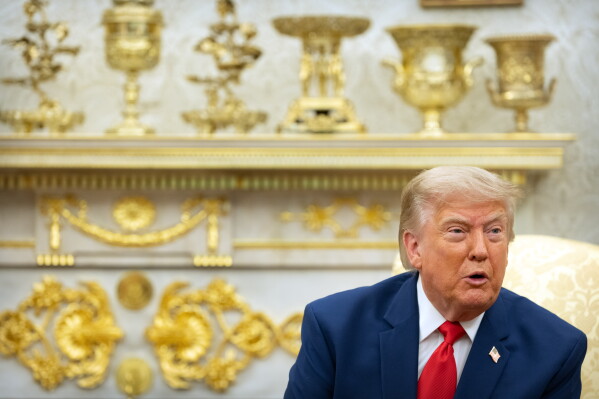
President Donald Trump’s decision to reduce joint military exercises with South Korea has raised significant concerns. The move affects a long-standing ally and brings into question the broader security interests of the United States in Asia and other regions.
Trump justified this decision by pointing out South Korea’s unwillingness to support his stance against Iran. He also cited his favorable relationship with North Korean leader Kim Jong Un. This approach aligns with the personal and transactional nature of his foreign policy during his presidency.
Dan Fried, who served as assistant secretary of state for European affairs under George W. Bush, expressed confusion over the decision. “There is no American interest that I can see in this,” Fried stated. “It undermines the South Koreans, undermines the Japanese, frightens the Taiwanese, unnerves NATO and emboldens the Chinese, not to mention the North Koreans.”
Danny Russel, formerly an assistant secretary of state for East Asia and the Pacific under Obama, criticized the president’s alignment with North Korea. He pointed out that North Korea regularly opposes the annual joint military exercises. “It is tragically upside-down,” Russel said. “Trump is punishing an ally while encouraging an adversary.” Russel currently works at the Asia Society Policy Institute in New York.
On Sunday, Trump ordered a reduction in the 11-day Ulchi Freedom Shield exercises. The specifics of the scaled-back activities were not immediately clear. The move baffled many in South Korea, a country accustomed to prioritizing national security due to threats from North Korea.
Critics, including Democrats in Congress, quickly condemned the decision. Rep. Greg Meeks of New York criticized the move, stating that it “treats one of America’s closest allies like an adversary, weakening our alliances and benefiting China and North Korea.”
Trump further supported his position by posting a photo of Kim Jong Un with the caption, “HEY DONALD … WE COOL, RIGHT?” Such actions raised criticism from officials like retired U.S. Ambassador Robert Wood. Wood emphasized the importance of joint military exercises in deterring North Korea.
Matthew Kroenig, now with the Atlantic Council, noted that South Korean support for developing nuclear weapons has grown. “The United States has been working really hard to try to persuade South Korea that they are protected,” Kroenig said. Scaling back the exercises “potentially undermines that message,” he added.
Trump’s decision followed efforts by South Korea’s new President Lee Jae Myung to win favor with the American president. This included offering praise on Trump’s stances and flattering him with compliments.
Charles Kupchan, a senior fellow at the Council on Foreign Relations, suggested that these actions could lead allies to question their reliance on U.S. support for security. Fried, currently with the Atlantic Council, expressed concern about Trump’s inability to “take a win” after allies increased their defense spending.
John Herbst, a former ambassador to Ukraine, remarked on the inconsistency of Trump’s policy decisions. Despite such inconsistencies, he noted that U.S. alliances have remained largely intact.
The implications of Trump’s message for future U.S.-South Korean relations remain uncertain. Matt Kroenig acknowledged Trump’s unpredictability, stating that whether the exercises proceed as planned or not, remains in question.
Associated Press reporters contributed to the development of this report.