
The ongoing negotiations between the U.S. and Iran to end the conflict have been marked by uncertain progress, interspersed with military actions and diplomatic maneuvers. Following the recent memorandum of understanding (MOU) reached last weekend, the situation has become more confusing.
Discrepancies in Agreement Announcements
Initially, the White House indicated the agreement was finalized on Sunday, with Vice President JD Vance’s signature. Yet, there was an announcement for another signing ceremony on Friday. Concurrently, President Donald Trump expressed his intention to reopen the Strait of Hormuz as part of a finalized deal. However, he later clarified the reopening was contingent on the Friday signing.
Amidst these mixed messages, Trump officials presented conflicting timelines for releasing the MOU text. Some suggested a 24 to 48-hour window; others pointed to a Friday release. During a news conference in France, Trump mentioned the possibility of publicly reading the MOU but ultimately opted for an official to do so over a call with reporters.
MOU Signing and Further Confusion
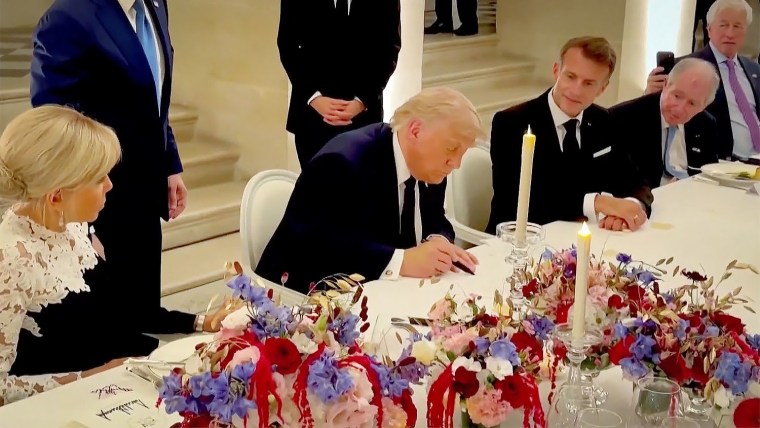
The confusion continued when Trump and Iranian President Masoud Pezeshkian re-signed the MOU, this time at a dinner in Versailles with French President Emmanuel Macron present. This development left questions about the possibility of further signing ceremonies or discussions.
This instability highlights ongoing uncertainties in a conflict marked by the fluctuating reasons Trump has cited for engaging with Iran. Despite a temporary ceasefire announced in April, military strikes have persisted. The MOU’s details also differ from Trump’s initial objectives in the Iran deal negotiations.
Political Reactions and Concerns
As midterm elections approach and gas prices rise, Trump’s war management has drawn criticism, including from supporters within his party. Republican Senator Bill Cassidy criticized the MOU, calling it a significant foreign policy misstep. Senator John Kennedy expressed skepticism about Iran abandoning its nuclear goals.
In contrast, Senator Lindsey Graham viewed the MOU as beneficial, noting that reopening the Strait of Hormuz could decrease hostilities with Iran.
The Path Forward
Vance declared on Thursday that negotiations for a long-term agreement had already commenced. Yet, it took time to confirm the Strait of Hormuz was open, as required by the MOU. While the U.S. lifted its blockade, ongoing military presence aims to protect commercial vessels.
There’s uncertainty about whether sanctions waivers—allowing Iran to trade its oil—have been implemented. These waivers are integral to the MOU, stipulating immediate issuance by the U.S.
Challenges Ahead
Further complications arose as Israeli strikes in Lebanon threatened new discussions slated for Friday in Switzerland. These talks aimed to establish a long-term peace framework. Iran has requested assurances regarding the cessation of hostilities in Lebanon, a condition outlined in the MOU.
U.S. intelligence suggests Israel may continue military actions against Hezbollah in Lebanon, risking the fragile deal between the U.S. and Iran. Israeli Prime Minister Benjamin Netanyahu and his administration have criticized the MOU.
President Trump continues to express optimism, suggesting an easier forthcoming negotiation phase with Iran.