
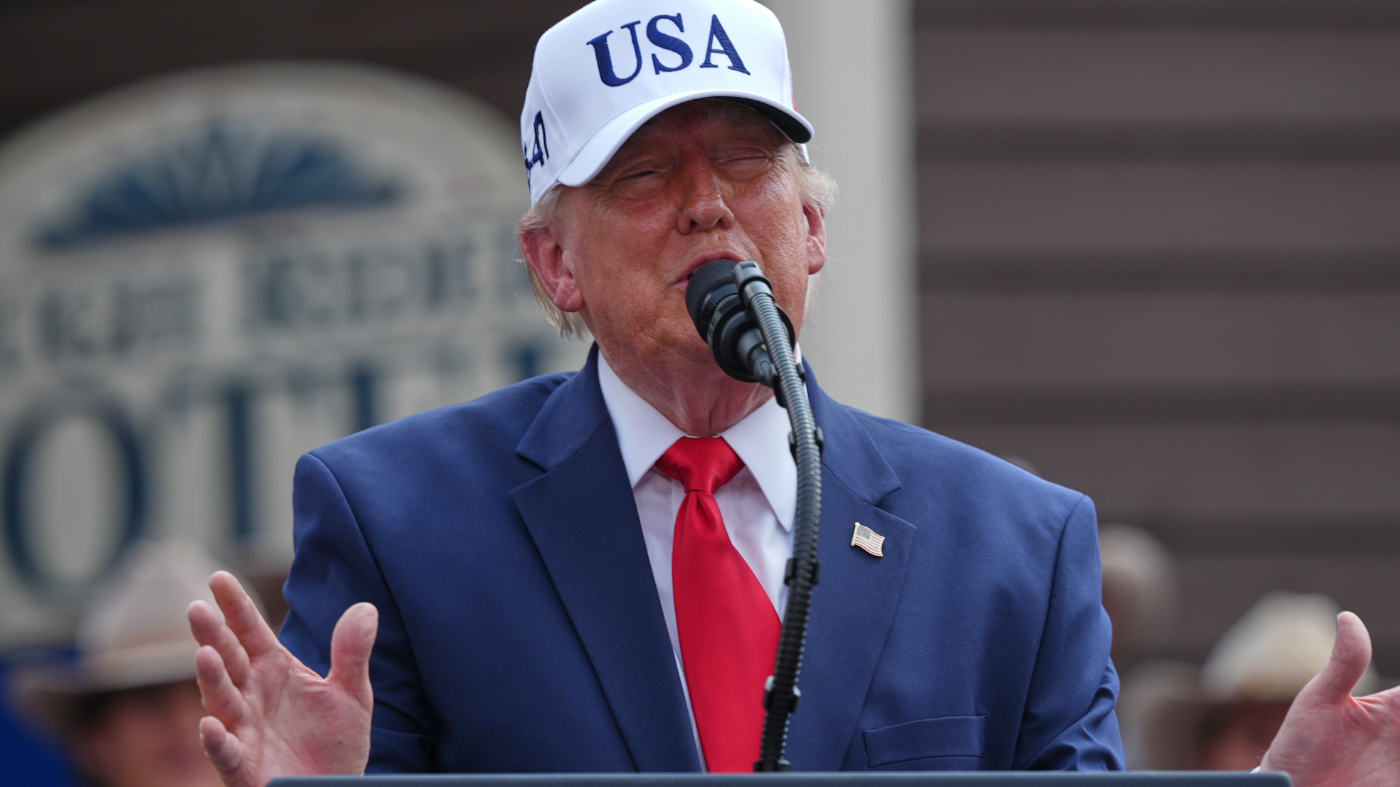
President Donald Trump addressed the crowd at the Burning Hills Amphitheatre during the opening ceremony of the Theodore Roosevelt Presidential Library on July 1, 2026, in Medora, North Dakota. Secretary of State Marco Rubio’s recent visit to Abu Dhabi on June 23 marked his first trip to the Gulf region since the onset of the Iran conflict. Rubio emphasized the importance of considering the perspectives of Gulf states in U.S. decision-making. This commitment came as a relief, though it was delayed.
Throughout the war, Gulf states faced substantial challenges, including attacks on critical infrastructure by Iranian missiles and drones. Their economies suffered from disruptions caused by the closure of the Strait of Hormuz. The U.S. administration, which had not sent high-level officials to support these allies during the conflict, is now recognizing the need to prioritize their interests.
The administration’s newfound focus on engaging with allies marks progress but also highlights past shortcomings. Rubio’s visit contrasted with the U.S. foreign policy approach at the start of the war, which lacked robust diplomatic engagement. This failure to employ effective statecraft was evident in the conflict’s resolution, which favored Iran in many respects.
The U.S. possesses significant diplomatic, military, and economic resources, yet President Trump did not attempt to form a supportive coalition. Allies were not consulted, and their concerns were overlooked. The decision to engage in conflict was made unilaterally. The consequences of this were felt in the Gulf, Europe, and Asia as economic disruptions spread due to the conflict. When support was sought, key NATO allies declined to assist.
The conflict underscored the importance of alliances built over time through mutual respect. Allies should be seen as vital supporters, not adversaries. Treating them as opponents can lead to their absence when they are needed most. Moving forward, the United States must seek to repair relationships and leverage diplomatic opportunities.
The reopening of the Strait of Hormuz and negotiations on Iran’s nuclear program are key areas for focused diplomacy. The memorandum that ended the conflict left the governance of the strait uncertain. Diplomacy can be used to rally global consensus for free and open navigation in the strait.
Regarding Iran’s nuclear program, the U.S. sacrificed economic leverage in early negotiations. Rebuilding leverage involves uniting allies around common objectives to limit Iran’s nuclear capabilities and its support for proxies. Secretary Rubio’s recent collaborative statement with Gulf counterparts highlights important shared goals, setting the stage for strengthened post-war diplomacy.
As the U.S. observes its 250th anniversary, embracing the principle of respecting the opinions of other nations remains critical. Former national security advisor John Hannah underscores this in his analysis. Hannah, a senior fellow at the Jewish Institute for National Security of America, previously served as an advisor to Vice President Dick Cheney.