
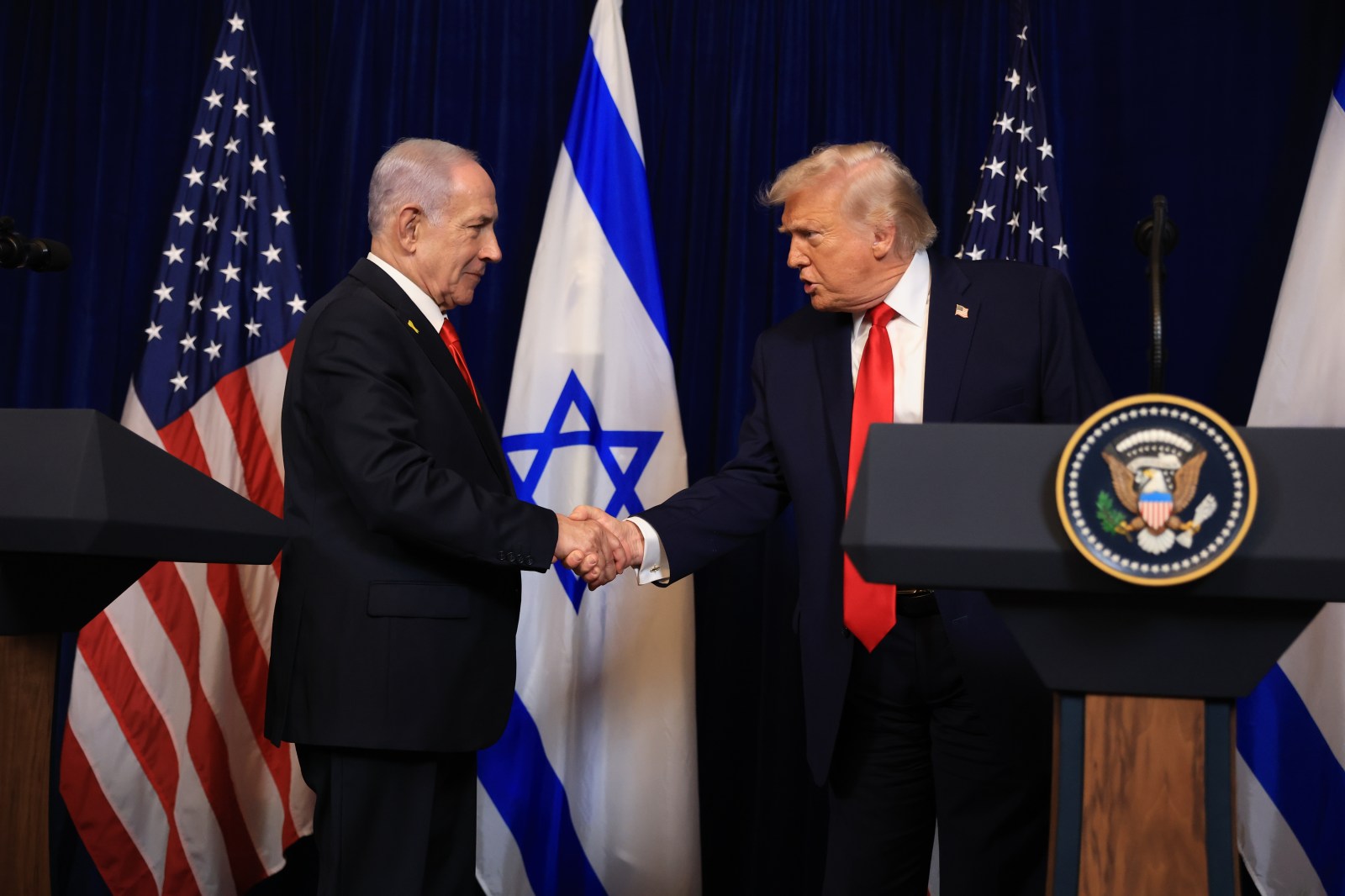
Donald Trump’s Endorsement of Netanyahu:
Donald Trump has recently endorsed Israeli Prime Minister Benjamin Netanyahu. This comes a week before a crucial election in Israel, which may influence the country’s democratic future. Israeli voters are advised to focus on the election’s significance rather than external endorsements.
Trump’s support included praising Netanyahu as a great leader and emphasizing the partnership against Iran. He implied that without Netanyahu, the US might have to face Iran alone. Such remarks from a US president regarding the democratic choices of an allied nation are noteworthy.
Trump’s popularity in Israel remains high. His actions, such as recognizing Jerusalem as Israel’s capital and Israeli sovereignty over the Golan Heights, have garnered appreciation. His diplomatic efforts and stance against Iran are particularly valued. However, supporting Israel and supporting Netanyahu are distinct issues.
Trump’s habit of interfering in other countries’ elections to support right-wing populists is well-documented. Similar actions have been observed in Poland and Hungary, where his administration supported nationalist candidates.
Netanyahu’s Role and Challenges:
Netanyahu’s political trajectory shows similarities with populist leaders who prioritize nationalistic agendas while sidelining opposition and independent institutions. His coalition’s actions, such as undermining judicial independence and concentrating power, align with these practices.
The case against Netanyahu is extensive, encompassing security failures, strategic errors, and controversial alliances. His governance during crises, including the October 7, 2023 security failure, raises significant concerns.
While Netanyahu’s supporters commend his military efforts against groups like Hamas, these actions haven’t resulted in stable regional peace, deteriorating Israel’s international reputation.
Internal Political Pressures:
Netanyahu’s reliance on parties with contentious demands, such as the ultra-Orthodox parties, poses internal threats. These parties advocate for military exemptions and education policies that risk economic and military stability.
The growing Haredi population exacerbates these issues, as the existing economic structure may not sustain their demands indefinitely. Economic consequences like brain drain are possibilities.
Furthermore, Netanyahu’s alliance with far-right figures fosters aggression in the West Bank, risking international condemnation and sanctions.
Election Dynamics and Trump’s Potential Influence:
Current polls indicate that Netanyahu’s bloc might fail to secure a parliamentary majority. The opposing parties, including Israeli-Arab factions, could theoretically command a majority. However, forming a coalition may involve complex compromises.
In this scenario, Trump might exert influence by advocating for a Netanyahu-led coalition under the guise of unity against Iran or strategic cooperation. His administration has demonstrated a willingness to meddle in allied nations’ politics.
Speculation exists that Trump might offer peace agreements with Saudi Arabia as leverage to maintain Netanyahu’s leadership. However, such promises are contingent on actual commitments from Saudi Arabia, not just verbal assurances.
This situation remains speculative. Yet, given Trump’s desire for perceived diplomatic success, the possibility exists, albeit remotely.
While there is also the risk of reigniting the Iran conflict to divert election outcomes, the fundamental choice remains with Israeli leaders. They must decide whether diplomatic gains outweigh perpetuating leadership they aim to replace.
Conclusion:
Ultimately, Israelis should differentiate gratitude toward Trump from succumbing to external pressure. The election outcome belongs to the Israeli electorate, regardless of foreign endorsement.
Dan Perry is a former editor for The Associated Press in Europe, Africa, and the Middle East. He has served as chairman of the Foreign Press Association in Jerusalem and has authored two books. The views expressed are his own.