
Former President Donald Trump has urged that several Arab states, along with Pakistan and Turkey, should be integrated into the Abraham Accords as part of any peace framework with Iran. This addition to the peace negotiations between the United States and Iran may introduce further complexities to reaching an agreement swiftly.
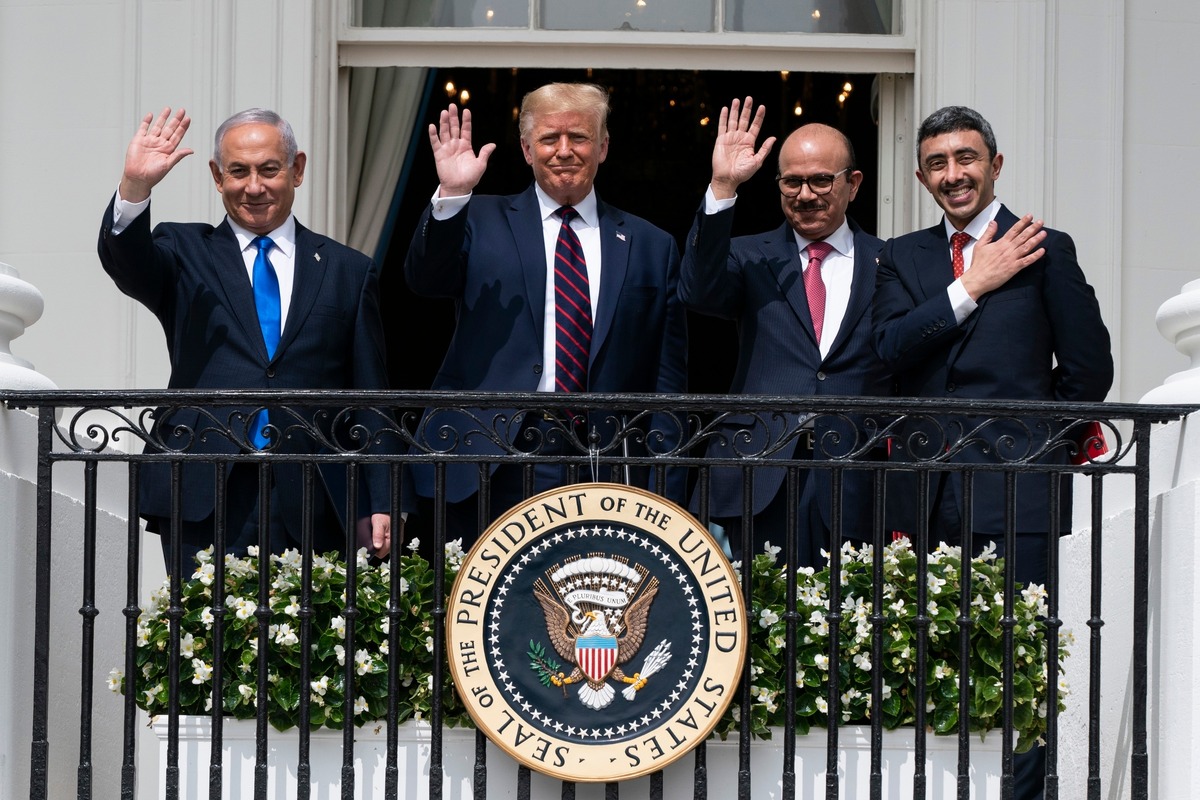
In a recent social media post, Trump suggested that nations such as Saudi Arabia, the United Arab Emirates (UAE), Qatar, Pakistan, Turkey, Egypt, Jordan, and Bahrain should be required to formalize relations with Israel. The UAE and Bahrain are already signatories of the Abraham Accords, established during Trump’s administration, and are viewed as a notable success in U.S. foreign policy.
Saudi Arabia faces challenges in joining these accords, affected by its stance on Palestinian statehood, particularly after the conflict in Gaza in 2023. Trump highlighted that while not all countries listed need to agree, several should ideally be willing and prepared to make the accords a more historic milestone.
U.S. Senator Lindsey Graham called Trump’s proposal ‘simply brilliant’ and suggested it could herald one of the most significant shifts in the Middle East in thousands of years.
The Abraham Accords took years of informal efforts to construct, and current talks involving the U.S. are contending with significant hurdles like Iran’s nuclear aims and control of the Strait of Hormuz. Key issues like uranium enrichment remain unresolved, and Iran has restricted the strait, impacting global markets.
The original Abraham Accords were initiated in 2020, aiming to normalize relations between Israel and several Arab nations, sharing historical and religious links through Abraham, an important figure in Christianity, Judaism, and Islam. Countries such as Morocco and Kazakhstan have since joined, expanding the scope of these accords.
U.S. Secretary of State Marco Rubio mentioned the deal with Iran might only require ‘a few days’ to negotiate, although recent military actions complicate matters. U.S. operations have targeted Iranian missile sites and vessels in acts of self-defense, while Iran maintains its right to respond to breaches of a ceasefire in effect since April.
Despite the ceasefire, incidents of conflict have persisted, with the U.S. claiming actions against Iranian military infrastructure near the strategic Strait of Hormuz, a critical global fuel route. Iran’s military counters these moves, affirming its readiness for a powerful retaliation if provoked.