
The United States and Iran are engaged in talks to cease their ongoing conflict, with President Trump employing his usual strategy for resolving Middle East disputes. This involves agreeing to a cease-fire and postponing the resolution of more difficult issues.
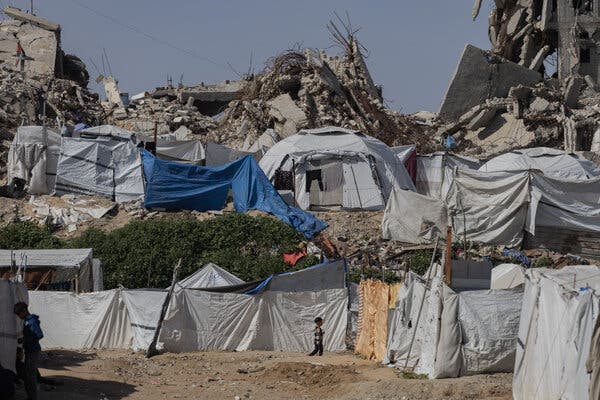
In the Gaza Strip, a similar strategy previously produced mixed outcomes. President Trump had brokered a truce between Israel and Hamas, a group backed by Iran. Although there was a plan for further action, where Hamas would disarm and Israel would aid in rebuilding Gaza post-conflict, progress stalled. This current approach with Iran could encounter the same issues.
The main focus of the Trump administration’s proposed negotiations involves lifting Iran’s obstruction of the Strait of Hormuz. This waterway is vital for oil and gas transportation. Iran imposed severe restrictions on the strait as a response to U.S. and Israeli attacks in late February. This move led to a spike in energy prices, causing domestic challenges for President Trump as citizens faced rising costs.
Some significant challenges, such as dismantling Iran’s nuclear program, addressing its missile reserves, and its support for Middle Eastern militia groups, are deferred to future discussions. Michael Koplow, chief policy officer at the Israel Policy Forum, commented on the phased negotiation approach. He noted that while it could bring benefits, in Trump’s case, it might serve as a method for him to claim success without resolving fundamental issues.
Iran’s leadership feels strengthened by the conflict, which may reduce their willingness to compromise in upcoming negotiations, according to analysts.