
U.S. President Donald Trump announced a decision to halt new military actions against Iran. He cited progress towards a deal with Middle Eastern allies aimed at ending a five-month conflict. The proposed agreement focuses on reopening the Hormuz Strait and eliminating Iran’s nuclear threat, as stated in a social media post on Saturday evening.
Trump emphasized that the decision to cancel the attack was contingent on the possibility of swiftly finalizing a deal. He expressed this move as beneficial for global peace and Iran’s prosperity. Israel has agreed to join efforts with the U.S. to negotiate the agreement intended to end the ongoing conflict. Iran has yet to issue any public response to this announcement.
Recently, Trump hinted at resuming intense military strikes to coerce Iran into negotiations. The conflict began on February 28 when the U.S. and Israel initiated attacks against Iran. The goal was to dismantle Iran’s missile programs, stop its pursuit of nuclear weapons, and reduce support for allied militant groups. However, the objectives and timelines have shifted frequently, and a previous agreement to cease hostilities in mid-June fell apart within weeks.
Regional Concerns and Reactions
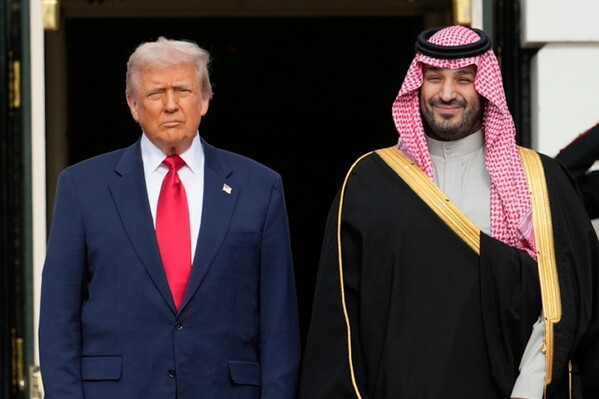
Saudi Crown Prince Mohammed bin Salman, the kingdom’s chief leader, voiced his concerns about potential Iranian retaliation to U.S. military escalation. In a recent phone call with Trump, the Crown Prince sought clarification on proposed actions against Iran. He was concerned about possible responses targeting the energy infrastructure of Saudi Arabia and nearby Gulf states.
A White House official confirmed this discussion took place but withheld further details. Iran has been known to target vessels attempting to navigate the Strait of Hormuz without Iranian consent, which has intensified its conflict with the U.S.
The State Department issued new security advisories warning U.S. citizens in the region to prepare for potential travel disruptions. The alerts apply to Bahrain, Israel, Iraq, Jordan, Kuwait, Lebanon, Oman, Qatar, Saudi Arabia, and the United Arab Emirates.