
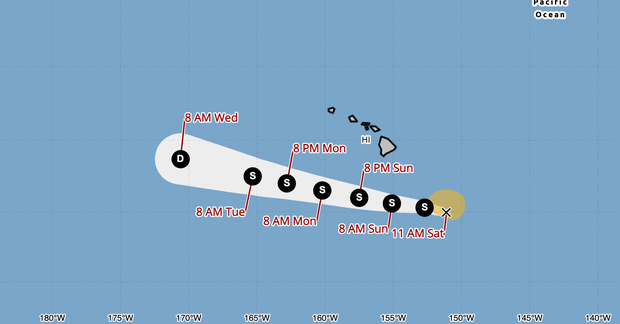
Tropical Storm Moke is set to bring significant rainfall and gusty winds over the weekend, passing just south of the Hawaiian Islands in the aftermath of Hurricane Lala. The storm’s maximum sustained winds reached 50 mph as of midday Saturday, with anticipation of further strengthening, according to the National Hurricane Center.
Though Moke isn’t expected to make landfall in Hawaii, it will affect the Big Island with rain and wind Saturday night and early Sunday, extending to other islands early next week. Maui County Mayor Richard Bissen emphasized the potential for flooding, debris, and power outages due to recent impacts from Hurricane Lala, urging the community to prepare accordingly.
County departments have been preparing for Tropical Storm Moke, and we’re asking our community to do the same,” Mayor Richard Bissen said.
The National Hurricane Center warns of life-threatening flooding and mudslides, especially in windward and southeastern parts of the Big Island, areas still recovering from Hurricane Lala. The Big Island experienced severe conditions when Lala passed close by, with Kapalua in Maui County receiving 48 inches of rain last weekend.
Despite the fatigue from the ongoing weather events, forecasters urge preparedness as the region faces an unusually active hurricane season. Rainfall from Moke is projected to be significant but less than Lala, with the Big Island expected to get 5 to 10 inches and up to 15 inches in certain spots. Eastern Maui might see 3 to 6 inches, while other islands may receive 1 to 2 inches.
Hawaii’s joint information center reactivated on Saturday to keep the public informed, following the deactivation after Lala. This coordination occurs amid an El Niño climate pattern, characterized by warmer Pacific Ocean waters, creating conducive conditions for tropical storm development.
Warm ocean temperatures provide energy for these storms, and reduced vertical wind shear—due to the El Niño pattern—allows them to maintain strength and form without being disrupted.
The islands are experiencing heightened activity due to these climatic conditions, highlighting the need for ongoing vigilance and readiness.