
Throughout much of modern American popular culture, Arabs have often been depicted as threats rather than individuals. For many years, they were shown carrying weapons, holding hostages, or plotting destruction, serving as the faceless enemy in Hollywood narratives following the Cold War, found between Baghdad and Beirut. Political developments soon aligned with these fictional portrayals. The first Gulf War established Saddam Hussein as a notorious villain on American television. The events of September 11 melded terrorism with Muslim identity in the public mindset, influencing aspects from airport security to comedic depictions. Even professional wrestling mirrored American fears, making caricatures literal. The Iron Sheik and later Muhammad Hassan embodied this exaggerated narrative.
Fast forward to today, Michigan voters have considered electing an Egyptian American Muslim to the United States Senate. Abdul El-Sayed won the Democratic Senate primary in Michigan and will face Republican Mike Rogers in November. If victorious, El-Sayed would become the first Muslim senator in a state that supported Donald Trump in 2016 and 2020. This shift from the comic terrorist to a major-party Senate candidate seems like a swift transformation. But it emerges from a gradual process: As Arab and Muslim Americans have become prominent as neighbors, colleagues, doctors, mayors, and lawmakers, their permanent foreigner stereotype diminished, though it hasn’t vanished entirely.
Prior to the Gulf War, Arabs were often portrayed as exotic or menacing figures. Conflicts of the 1980s and 1990s amplified this stereotype with political urgency. Events such as hijackings and hostage crises, along with Hussein’s Kuwait invasion, provided fiction creators with a familiar enemy as the Cold War ended. Movies like “True Lies,” “Executive Decision,” and “The Siege” depicted Arab or Muslim terrorism in recognizable American settings, instilling fear due to its perceived ability to cross borders unnoticed. Wrestling also capitalized on this anxiety, amplifying it theatrically.
WWE described the Iranian-born Iron Sheik’s pairing with Nikolai Volkoff as an “anti-American” duo intended to agitate patriotic crowds during the 1980s. Later, Muhammad Hassan’s Arab American character emerged, initially complaining about discrimination post-September 11 before being linked to Islamic militancy. This character was removed after a terrorism-themed segment aired close to the July 2005 London bombings.
These depictions resonated because many viewers had few competing images. For Americans with limited personal contact with Arabs or Muslims, media defined their entire perception.
September 11 solidified this association. While Muslims became more visible in American public life, it was often through negative contexts such as airport scrutiny, surveillance debates, military actions, and debates on Islam’s place in the country. However, change stemmed from Arab Americans embedding within American life beyond abstractions. The growth in communities was not sudden but rather a maturation process.
The descendants of immigrants began integrating into schools, professions, and institutions. They spoke like Americans, debated politics, and developed careers beyond the conflicts often shown on TV regarding their ancestral lands. Arab Americans’ public visibility in everyday life increased, reflecting in places like Michigan.
Census data from 2023 revealed that 54.5% of Dearborn residents identified as Middle Eastern or North African. The majority possessed Arab ancestry, rendering Dearborn a city with a significant Arab majority. Dearborn transitioned from an ethnic enclave to a locality where national candidates visited and courted.
Exposure alone does not eliminate prejudice entirely, but research generally suggests sustained interaction under appropriate conditions can reduce hostility despite political polarization and stressful news events potentially reversing these impacts. Daily experiences offered Americans insights beyond Hollywood’s narratives: Muslim Americans became familiar faces before becoming campaign symbols, healthcare providers, business patrons, and school-board participants.
As a result, post-9/11 America exposed children to contradictions their parents rarely encountered: Television could depict Muslims as threats, while everyday life presented them as friends.
Political power followed. Keith Ellison became Congress’s first Muslim member in 2006, succeeded by André Carson in 2008. In 2019, Ilhan Omar and Rashida Tlaib joined the House, facing religious attacks, ethnic criticism, and censure over views but normalizing Muslim representation in politics.
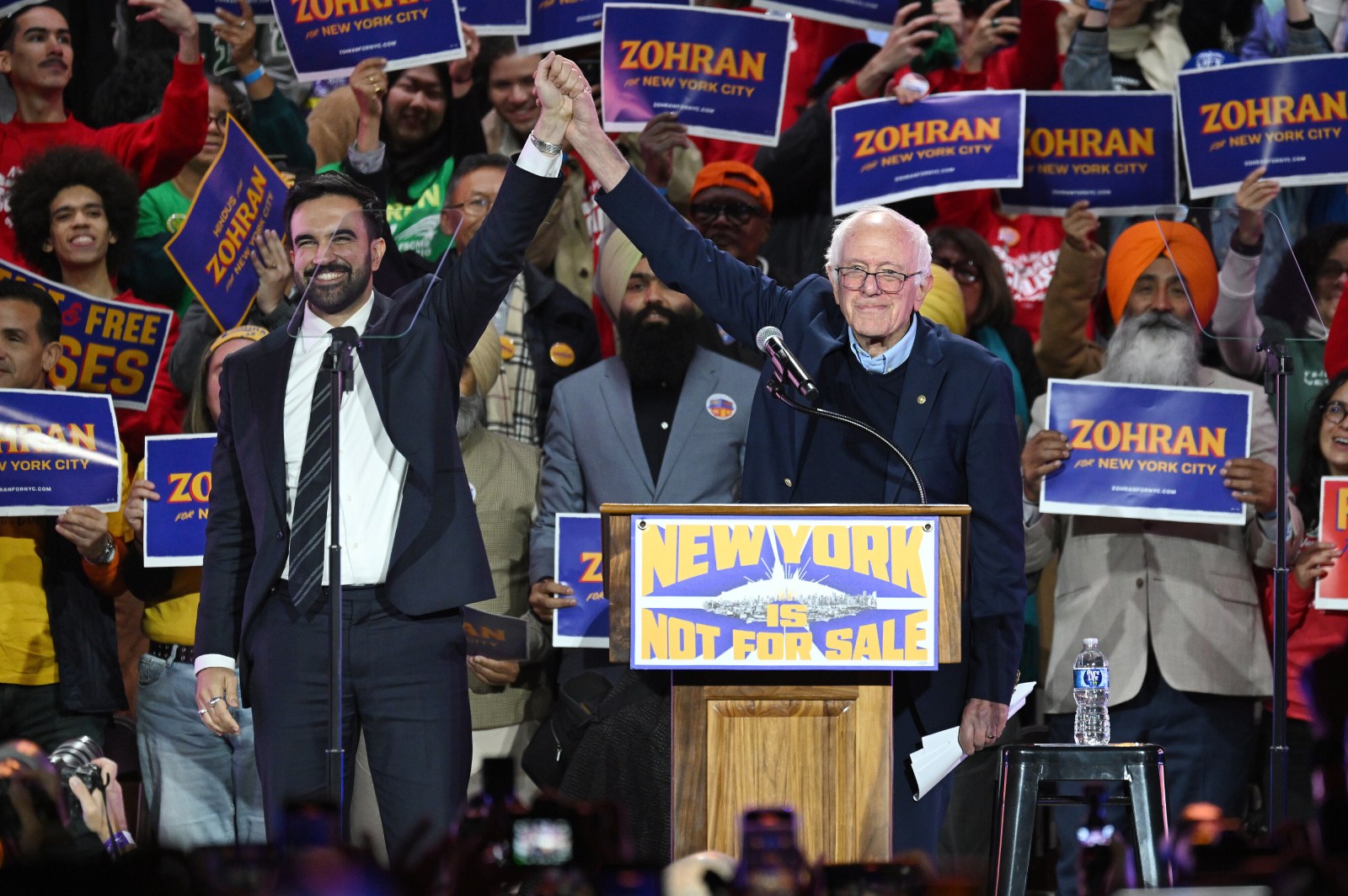
New York City elected Zohran Mamdani as its first Muslim mayor. Campaigning on rent, transport, and child care costs helped secure this municipal spot. El-Sayed represents similar political ideals, emphasizing Medicare, affordability, and electoral reform. While his Muslim identity remains significant, especially amid Gaza disputes and U.S. relations with Israel, it does not monopolize his platform, although it surfaces during opposition discussions.
This marks a shift: Muslim candidates, formerly considered outsiders, now face attacks within conventional partisan rhetoric, potentially emphasizing aspects like progressivism or inexperience.
El-Sayed’s triumph advocates that representation is about building alliances and organizing constituencies. Progressive organizations grant volunteers, donors, and a language focused on discrimination, economic disparity, and Palestinian rights. The imperfect alliance exists with consideration that many Muslims maintain conservative views amid divisive elections. In 2025, a Pew survey found 53% of Muslim adults identified as Democratic-leaning, whereas 42% favored Republicans. Additional representation hasn’t erased lingering suspicion. Public attitudes toward Muslims remain polarized.
El-Sayed’s potential loss could illustrate diverse meanings encompassing concerns over socialism, foreign policies, party dynamics, or individual politics. Though his candidacy can’t prove anti-Muslim bias receding, it signifies the dramatic cultural evolution within America recently, situating figures like El-Sayed and Mamdani central to national dialogues. In previous decades, an outspoken Arab contender with an anti-Israel stance seemed improbable.
Today, instead of envisioning Arabs as outsiders, America visualizes them among its leaders.