
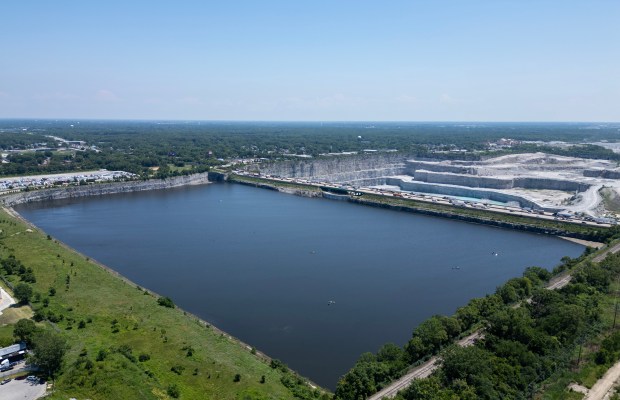
The Thornton Composite Reservoir is reaching a critical point, sparking concern among residents due to the risk of flooding and the strong odor emitted from the site. Over the weekend, persistent rainfall brought the reservoir to 94% capacity, a historic high since its activation in 2015. As reported by the Metropolitan Water Reclamation District of Greater Chicago, the water level slightly decreased to 93% as of Tuesday morning, representing 7.3 billion gallons.
Previously, the reservoir’s maximum capacity was recorded at 54.5% in 2019, emphasizing the current situation’s severity. The open sewer water emits a pungent smell affecting the lives of those living nearby. Nikki Kitakis, the village clerk of Thornton, highlighted how the stench is compromising daily life. Measures are being attempted by the water reclamation district to alleviate the smell, yet the issue remains pervasive due to the sheer volume and staleness of the waters.
Efforts are underway to manage the situation efficiently. The Metropolitan Water Reclamation District is fully committed to pumping down not only the Thornton Composite Reservoir but also the McCook Reservoir in Bedford Park. The Thornton reservoir, noted as the largest combined sewer reservoir globally, collects wastewater from 14 communities, covering an area with a population of more than half a million.
Residents in Dolton have reported flooding incidents to their local authorities, with Mayor Jason House showing sympathy for their plight. The village faces substantial challenges in updating their flood management infrastructure, which would require approximately $50 million.
Matt Stacy, recently appointed as the village’s public works superintendent, has been in constant communication with the water reclamation district, underscoring the urgency of the scenario. For the weekend, forecasts show potential rainfall in the Chicago region, fostering apprehension in the impacted areas.
A rain gauge registered 6.37 inches over the weekend in Flossmoor, a significant volume contributing to the elevated reservoir levels. Water drainage is facilitated via a gravity-fed tunnel leading to the Calumet Water Reclamation Plant, where it undergoes a purification process before being released back into the Little Calumet River.
Holding a massive 7.9 billion gallons, the reservoir still possesses limited capacity for additional storage. The water reclamation district has not disclosed specific timelines for complete drainage of the current volume.