
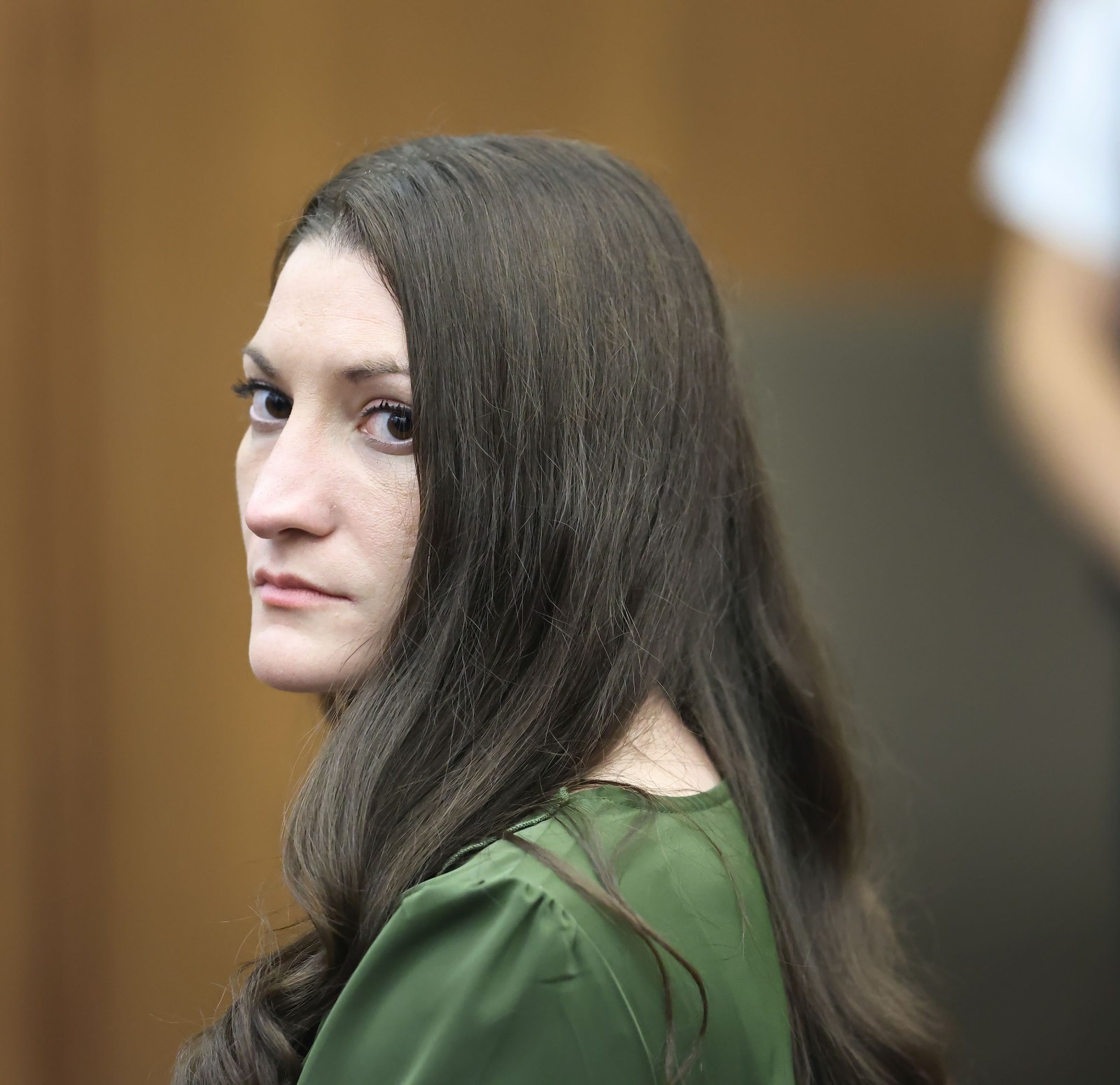
The Lindsay Clancy Trial Updates
Deliberations are ongoing in the Lindsay Clancy murder trial following three days of discussion among jurors. Starting on Thursday, August 27, these deliberations follow more than five weeks of testimonies presented in Plymouth Superior Court. The jury is set to continue deliberations on Tuesday.
Clancy, a 36-year-old former labor and delivery nurse, faces charges in the deaths of her three children: Cora, age 5; Dawson, age 3; and Callan, age 8 months. She has pleaded not guilty due to a lack of criminal responsibility, citing severe postpartum psychosis and other mental health issues that allegedly compromised her grasp on reality.
Defense vs. Prosecution
While Clancy’s defense acknowledges her role in the children’s deaths, they emphasize her mental state at the time, arguing she lacked criminal responsibility due to a break from reality caused by postpartum psychosis. They claim she used exercise bands during the incident and attempted suicide, resulting in paralysis.
Prosecutors, however, contend that despite her mental health issues, Clancy understood her actions and planned the killings. They highlight her pre-murder behavior, including orchestrating her husband’s absence from the home, as evidence of premeditation.
Potential Verdicts
Several outcomes are possible in this trial. The jury has six potential decisions for each child’s case. These are:
- Not guilty by reason of lack of criminal responsibility: This would imply Clancy’s mental disease or defect prevented her appreciation of her actions’ wrongfulness or conforming to the law. This outcome may lead to her commitment to a psychiatric facility rather than immediate release.
- Not guilty: A conventional acquittal where jurors find insufficient evidence against Clancy beyond a reasonable doubt, although this focuses less on criminal responsibility.
- Guilty of first-degree murder: Conviction here means life imprisonment without parole, assuming jurors reject the lack of criminal responsibility defense.
- Guilty of second-degree murder: This carries a life sentence but allows for potential parole, recognizing criminal responsibility but not meeting first-degree murder criteria.
- Guilty of manslaughter: The least severe, implying criminal responsibility but insufficient evidence for murder. It carries up to 20 years per conviction.
- Hung jury: Failure to reach consensus, possibly leading to a mistrial and options for re-trial.
Lindsay Clancy’s Emotional State
As deliberations continue, Clancy’s attorney Kevin Reddington describes her as frightened and exhausted. The potential verdict outcomes, including multiple life sentences, intimidate her. Reddington critiques media portrayals of Clancy and expresses uncertainty about jury decisions.
Trial Overview
The trial, spanning roughly five weeks, involves over 80 witnesses and extensive testimonies concerning Clancy’s mental health following Callan’s birth in May 2022. The defense used forensic psychiatrist Dr. Phillip Resnick, who described her as psychotic during the incident.
Meanwhile, the prosecution highlighted her actions before the killings and argued her ability to organize the crime, countering Clancy’s claim of hearing voices.
The Central Issue
Critical to the case is not whether Clancy killed her children, which she acknowledges, but her mental state at the time. Prosecutors claim she maintained control, while the defense argues she experienced delusions due to postpartum psychosis.
The case remains unresolved, with jurors yet to decide if mental health issues exonerate Clancy from responsibility. The courthouse anticipates a verdict with jurors continuing on Tuesday. Jurors must deliver a unanimous verdict; otherwise, a mistrial may occur.
Considerations for a Verdict
While there is no timeline for verdict delivery, jurors review weeks of evidence and testimonies. Jury consensus is essential, and deadlock could lead to a mistrial.
Patrick Clancy, husband and father, emerged as a complex witness. Despite testifying, he voiced forgiveness toward Lindsay and denied her intent to harm their children, given her mental-health conditions.
His account combines with psychiatric evidence, debating whether Lindsay’s postpartum psychosis absolves her of liability.
If facing suicidal thoughts, contact the 988 Suicide and Crisis Lifeline at 988, text ‘988’ to 741741, or visit 988lifeline.org.