
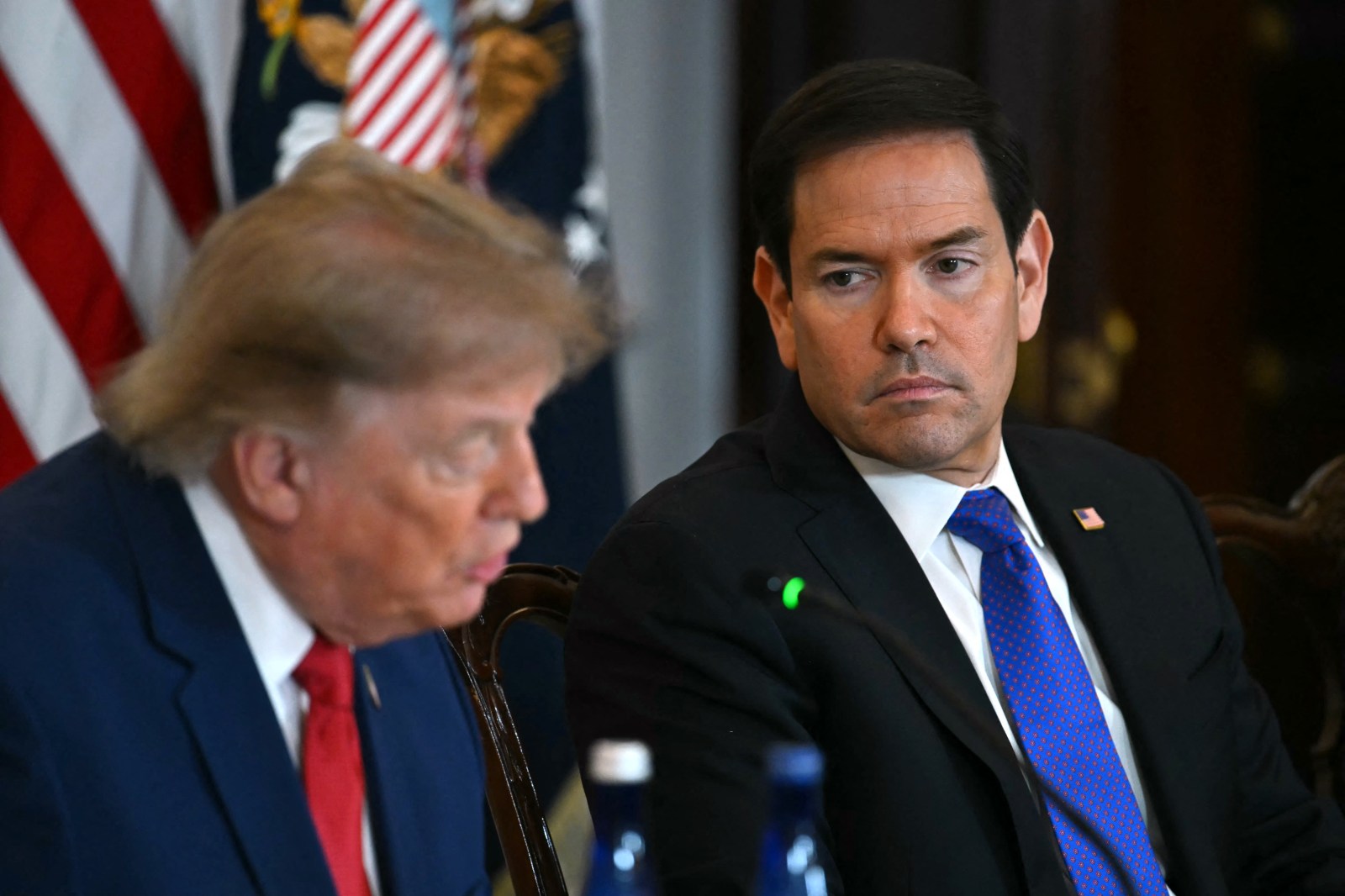
Secretary of State Marco Rubio, after spending more than a decade advocating a firm stance against Chavismo, faces a new dilemma following an oil agreement negotiated with the government of interim President Delcy Rodríguez, the former vice president under Nicolás Maduro.
The Trump administration’s recent agreement places Rubio in a precarious position. Despite Maduro’s capture eight months ago, Washington is now collaborating with the regime, a move contrary to Rubio’s long-standing political identity. This shift sparks questions about its impact on Rubio’s support among Venezuelan and Cuban voters, key communities in his political career.
President Donald Trump announced the agreement, labeling it “the biggest oil deal in world history.” This deal involves a joint venture developing 17 Venezuelan oil fields with a proven potential of 65 billion barrels. The U.S. is set to receive a 55 percent stake in the output, blending direct ownership with rights to purchase crude at production cost.
Concession Duration
Rodríguez outlined a 25-year concession, though a U.S. official indicated a 100-year agreement. This discrepancy remains unresolved as neither government has released official documentation.
Trump credited Marco Rubio and Defense Secretary Pete Hegseth for negotiating the deal with Rodríguez. Rubio termed it “a huge win for both the American and Venezuelan people,” while Trump referred to it as a major success.
Despite the agreement, critics express dissatisfaction over Washington’s cooperation with Chávez’s political successors. Some Venezuelans have called the deal “shameful,” directing criticism at Rubio, given his previous opposition to Chavismo.
Venezuelan Sentiment
Polling by the Venezuelan firm Meganálisis earlier this year found over 90 percent of Venezuelans appreciate Maduro’s departure. Nonetheless, Trump’s approval inside Venezuela has steadily diminished since January, as noted by Eduardo Gamarra, a political scientist and director of the Latino Public Opinion Forum at Florida International University.
“People are still supportive of Maduro’s removal,” Gamarra informed Newsweek. “However, trust in Delcy and Trump’s actions has waned.”
Political prisoners remain incarcerated or are only released conditionally. Diosdado Cabello, facing legal issues in the U.S. and Spain, is now recognized by Washington, a shift troubling for many.
Gamarra highlighted how oil symbolizes a historic struggle in Venezuela, tracing it back to figures like Juan Vicente Gómez and Carlos Andrés Pérez, who sought to nationalize the industry. Chavismo itself emerged from debates around oil. He remarked that nationalist sentiments underlying Chavismo have now been handed over to Trump.
Conservative commentators in Miami mirror these concerns, casting doubt on Rubio’s trustworthiness among Venezuelans.
Harvard economist and former Venezuelan planning minister Ricardo Hausmann addressed Rubio via X, warning, “You’ve lost the trust Venezuelans had in you, and it will haunt you.” He dismissed Rodríguez’s capacity to make such agreements, citing lack of legitimacy and constitutional power.
Betancourt’s Role
Critics have also focused on Alejandro Betancourt López, a Venezuelan businessman leading North American Blue Energy Partners, overseeing the oil field agreement. Betancourt made his fortune under socialist governments and was embroiled in legal issues over alleged money laundering.
Hausmann accused Trump’s administration of “using wanted criminals like Betancourt to secure this controversial deal.”
Michael McFaul, former U.S. ambassador to Russia, criticized Rubio for collaborating with Rodríguez. Describing the arrangement as “immoral and impractical,” McFaul expressed his surprise at Rubio’s involvement.
A Quinnipiac University poll from March highlighted opposition among Americans: 55 percent disapproved of U.S. control over Venezuelan oil sales, and 73 percent rejected deploying military forces in Venezuela.
State Department’s Stand
A U.S. official, speaking anonymously, contested claims that the agreement involved political accommodation with Rodríguez’s government, classifying it as a private deal with a private entity.
The official stated that the U.S. backs separate talks for reconciliation between the Venezuelan government and opposition.
With U.S. backing, interim President Rodríguez granted a private firm—jointly operated with the U.S.—100-year oil field concessions totaling 63 billion barrels in reserves.
The entity would emerge as the second-largest holder of proven reserves globally, following Saudi Aramco, with the U.S. securing a 55 percent output share for military needs and replenishing the Strategic Petroleum Reserve.
No direct response was issued regarding Betancourt’s role in the venture.
Rubio and Community Response
Previous Controversy: Rubio faced previous scrutiny in 2025 when he supported ending Temporary Protected Status for 350,000 Venezuelans. The Miami Herald editorial board condemned him, accusing Rubio of forsaking Venezuelan supporters.
Senator Chris Van Hollen criticized Rubio’s shift from advocating democracy and human rights abroad to opposing them, citing Rubio’s earlier support for TPS.
A 2021 poll revealed 49 percent of Venezuelan Americans in Florida would stop supporting Rubio and Senator Rick Scott if they opposed permanent legal status for TPS holders.
Discontent grows over slow progress, compounded by U.S. ties with Rodríguez and rumors of Rubio’s rapport with Rodríguez. Rubio mentioned that Venezuela’s election resumption would take time.
Rubio emphasized a transition involving three phases post-Maduro’s capture, concluding with a political shift, alongside other strategic measures.
Despite favorability ratings, questions persist about Rubio siding with Chavista elements while neglecting key figures like Nobel Peace Prize candidate María Corina Machado.
Political Pressure in Florida
Rubio’s political prospects remain uncertain, with some Florida district representatives experiencing pressure from Venezuelan and Cuban voter bases.
Representative María Elvira Salazar, despite initially opposing the oil agreement, later termed it favorable, yet critiqued Rodríguez as inappropriate to negotiate with.
Representative Carlos Giménez criticized Rodríguez, outlining unmet conditions for new governance in Venezuela.
While Rubio spent years treating Venezuela as an exception, analysts note the U.S. often partners with regimes like Saudi Arabia when beneficial.
The CIA reported electoral fraud in Venezuela up to 2020, omitting the 2024 fraud tied to Rodríguez.
2028 Election Impact
Marco Rubio remains a frontrunner for the 2028 presidential race, despite the ongoing controversy over the oil deal.
While some warn of risks, analysts like Will Freeman predict Rubio’s support will endure thanks to trust in his long-term strategy.
Rubio has not publicly addressed the political implications of his deal with the interim government amid claims of ignoring prior commitments.
Speculation persists whether the arrangement will influence Rubio’s chances in the upcoming election, or alter his relationship with his base.