
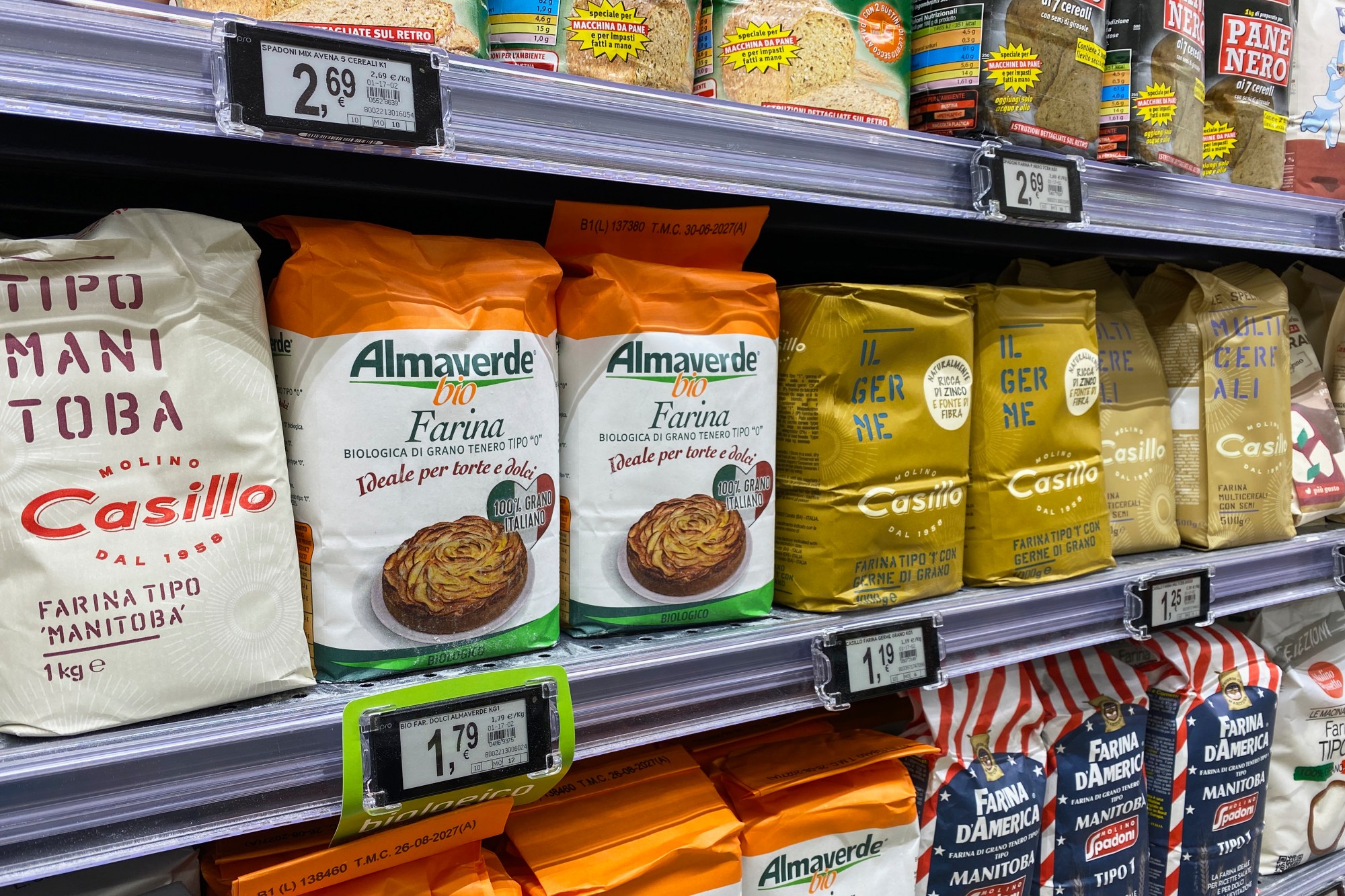
Bags of flour from various Italian brands, such as Casillo and Almaverde Bio, were displayed in a supermarket in Bari, Italy, with digital price tags shown on August 7, 2026. This indicates a growing trend towards electronic shelf labels in stores.
About fifty years ago, consumer advocates raised concerns about bar code scanners in grocery stores. There was fear of increased prices and even anxiety that the lasers could be harmful. Today, electronic shelf labels are gaining popularity globally, replacing traditional printed tags. These digital labels enable retailers to adjust pricing using computers or tablets.
In Europe, around 80 percent of supermarkets have adopted electronic labels. However, the U.S. has been slower in this transition, facing political opposition over potential issues of price gouging and predatory practices. The AFL-CIO has voiced concerns about increased grocery prices and loss of jobs related to this technological shift.
Technological advancements have historically influenced grocery industry transformations. Innovations, such as shopping carts and self-checkouts, have improved consumer experience without eliminating jobs. In states like California, grocery employment has grown by 38 percent since 1992, surpassing the 28 percent population increase during the same period.
Electronic shelf labels are unlikely to reduce job availability in the grocery sector. Despite employment growth, supermarkets face labor challenges, with high turnover rates and issues in recruitment and retention. By reducing the manual task of label replacement, staff can focus on other duties like assisting shoppers and maintaining store cleanliness, improving overall productivity.
Concerns over electronic shelf labels leading to higher prices or unfair practices are unfounded. Research shows food prices are notoriously sticky, often staying unchanged despite shifts in energy or commodity costs. Menu costs contribute to price stickiness, with the labor involved in updating prices being significant.
Electronic labels offer a solution, allowing easier price adjustments, thereby aligning prices with real-time cost pressures. This reduces inefficiencies and potential food waste. Adoption of electronic shelf labels does not inherently lead to surveillance pricing or predatory tactics. Existing regulations can safeguard against such issues, ensuring that profit pursuits do not compromise food security.
Electronic shelf labels have been prevalent in Europe without a documented rise in food prices. Surveillance pricing can be controlled without infringing consumer privacy, and existing laws on price gouging provide frameworks to curb unfair pricing.
The competitive nature of the U.S. grocery sector ensures that most supermarkets operate on narrow margins. Technologies that lower operating costs can stabilize food price inflation, offering retailers a way to manage sales effectively.
The transition from manual to digital pricing reflects an inevitable progression within the industry, akin to past technological shifts like the introduction of barcode scanners. As such, paper price tags and stickers will eventually become seen as outdated and inefficient.
Richard Volpe is a professor of agribusiness at California Polytechnic State University, San Luis Obispo. All rights reserved. This content may not be republished or redistributed.